Veterinary rehabilitation is one of the fastest-growing clinical disciplines in companion animal medicine. As surgical techniques advance — particularly in orthopedics and neurology — the demand for structured post-operative recovery programs has created a compelling clinical and financial case for investing in veterinary rehabilitation equipment.
This guide covers the full spectrum of veterinary rehabilitation and physiotherapy equipment available in 2026: manual therapy aids, therapeutic modalities, hydrotherapy systems, and senior mobility support. Whether you’re building a dedicated rehabilitation room or adding targeted modalities to an existing offering, here’s the framework to invest intelligently.
🚀 Why Veterinary Rehabilitation Matters Now
Three converging factors are driving rehabilitation investment globally:
1. Orthopedic surgery volume: TPLO, THR, fracture repair, and spinal surgery all produce patients who need structured post-operative rehabilitation to reach optimal functional outcomes. Surgery without rehabilitation produces suboptimal results — full stop.
2. Aging companion animal population: Senior dogs and cats carry a growing burden of osteoarthritis, neurological decline, and muscle atrophy — all conditions that respond to rehabilitation therapy.
3. Client expectations: Pet owners who’ve experienced human physical therapy increasingly expect equivalent structured care for their animals. Rehabilitation services command premium pricing and exceptional loyalty.
According to the WSAVA wellness and rehabilitation guidelines, structured rehabilitation programs significantly improve functional outcomes in post-surgical orthopedic and neurological patients.
Put those three forces together and the conclusion writes itself: practices that add rehabilitation capability now are capturing demand that already exists in their client base. The question isn’t whether veterinary rehabilitation equipment pays off — it’s which pieces to buy first, and in what order. That’s exactly what the category framework below answers.
🧰 Core Veterinary Rehabilitation Equipment Categories
Therapeutic Modalities: First-Tier Veterinary Rehabilitation Equipment
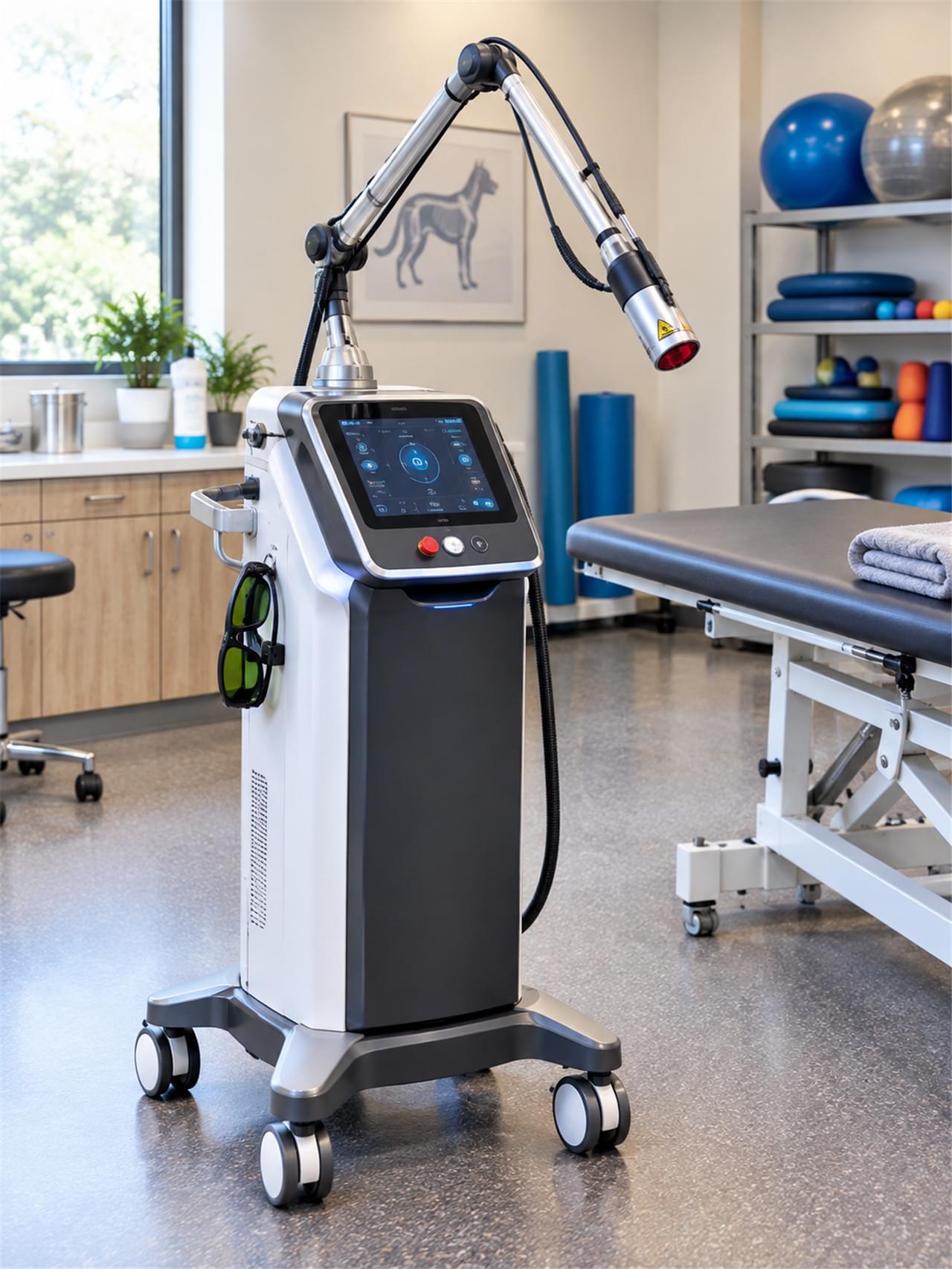
Photobiomodulation (Class IV Laser Therapy for Dogs and Cats)
Class IV therapeutic lasers are the most widely adopted modality in veterinary rehabilitation:
- 🔦 Wavelength: 808–1064 nm (near-infrared penetrates deep tissue)
- ⚡ Power output: 1–15W (Class IV range)
- 🩺 Applications: osteoarthritis pain reduction, wound healing, post-surgical incision management, peripheral neuropathy, muscle recovery
- ⏱️ Treatment time: 3–12 minutes per target area
- 📚 Evidence: Level I evidence from multiple RCTs supports pain reduction in canine osteoarthritis
For a detailed head-to-head, see Laser Therapy vs Ultrasound Therapy in Veterinary Use.
Therapeutic Ultrasound
Not diagnostic ultrasound — this modality uses acoustic energy (1–3 MHz) for deep tissue heating and enhanced tissue healing:
- Continuous mode: thermal effect — increases tissue extensibility, reduces muscle spasm
- Pulsed mode: non-thermal effect — stimulates tissue repair, reduces inflammation
- Applications: joint capsule fibrosis, tendon/ligament injuries, scar tissue mobilization
NMES and TENS
- NMES generates muscle contraction in denervated or weakened muscles — essential for neurological recovery
- TENS delivers sensory-level current for pain management without contraction
- Delivery: adhesive electrode pads on target muscle groups
Extracorporeal Shockwave Therapy (ESWT)
- High-energy acoustic pulses for chronic tendon injuries, calcific tendonopathies, and non-healing wounds
- Particularly effective for shoulder tendinopathy and supraspinatus mineralization in dogs
- Cost: 15,000–15,000–40,000 for radial or focused systems
How to choose among modalities: don’t try to own all four on day one. Most practices sequence them by evidence strength and revenue speed — laser first, ultrasound second, NMES/TENS alongside, and ESWT once case volume justifies the capital. Each addition should map to a condition mix you actually see, because veterinary rehabilitation equipment only earns its keep when the caseload matches the modality.
Hydrotherapy: The Signature Veterinary Rehabilitation Equipment
Underwater Treadmills (UWTM)
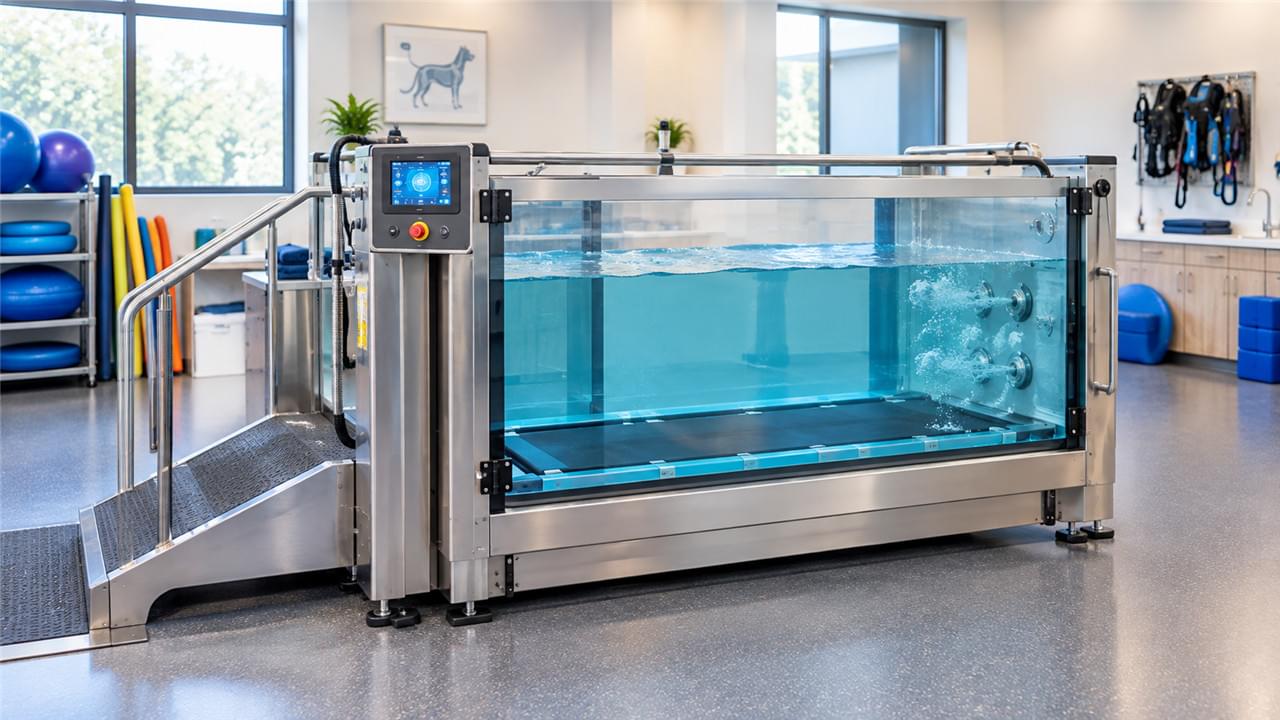
The underwater treadmill is the signature piece of veterinary rehabilitation equipment — and the most requested by clients. Water buoyancy reduces effective body weight by 60–90% (depending on water level), allowing gait training and muscle loading in patients who can’t bear full weight.
For complete selection and use guidance, see Underwater Treadmills in Veterinary Rehabilitation.
Key specifications:
- Chamber dimensions: minimum 100×60×90 cm internal for medium breeds; 140×80×120 cm for large breeds
- Water fill time: <5 minutes at therapeutic depth
- Belt speed: 0.1–3.0 km/hr variable
- Water heating: thermostatically controlled 26–36°C
- Resistance jets: optional, for higher-intensity work in athletic patients
Swim Tanks
Purpose-built veterinary swim tanks enable full unloaded swimming — maximum buoyancy, complete limb range of motion, cardiovascular conditioning. Primarily used for post-TPLO and hip rehabilitation.
The operational reality of hydrotherapy: this is the most infrastructure-hungry veterinary rehabilitation equipment you can buy. Budget for daily water quality management, filter maintenance, deep cleaning between patients, and a trained handler in the room for every session. Practices that under-resource the staffing side end up with an expensive tub that runs three sessions a week instead of the fifteen the ROI model assumed.
Physical Therapy Aids: Everyday Veterinary Rehabilitation Equipment
Balance and Proprioception Tools
- ⚖️ Balance boards (rocker and wobble)
- 🏐 Physio balls and peanut rolls in multiple diameters
- 🚧 Cavaletti rails (adjustable-height ground poles for gait patterning)
- 🎯 BOSU trainers for balance refinement in proprioceptively intact dogs
Parallel Bars and Assisted Ambulation
- Adjustable-height parallel bars for assisted standing and walking
- Non-slip flooring is a prerequisite — rubber matting throughout the room
- Patient carts and wheel carts for non-ambulatory patients
For senior and mobility-impaired patients specifically, see Rehabilitation Aids for Senior and Mobility-Impaired Animals.
Don’t dismiss the low-ticket tier. These aids cost a fraction of a treadmill, but they’re the tools your team will touch in nearly every session — and they’re what turns a modality visit into a structured program. In practice, the cheapest veterinary rehabilitation equipment often does the most daily work: cavaletti rails for gait re-education, physio balls for core strengthening, balance boards for proprioceptive retraining after cruciate surgery.
Post-Operative Phase: Targeted Veterinary Rehabilitation Equipment
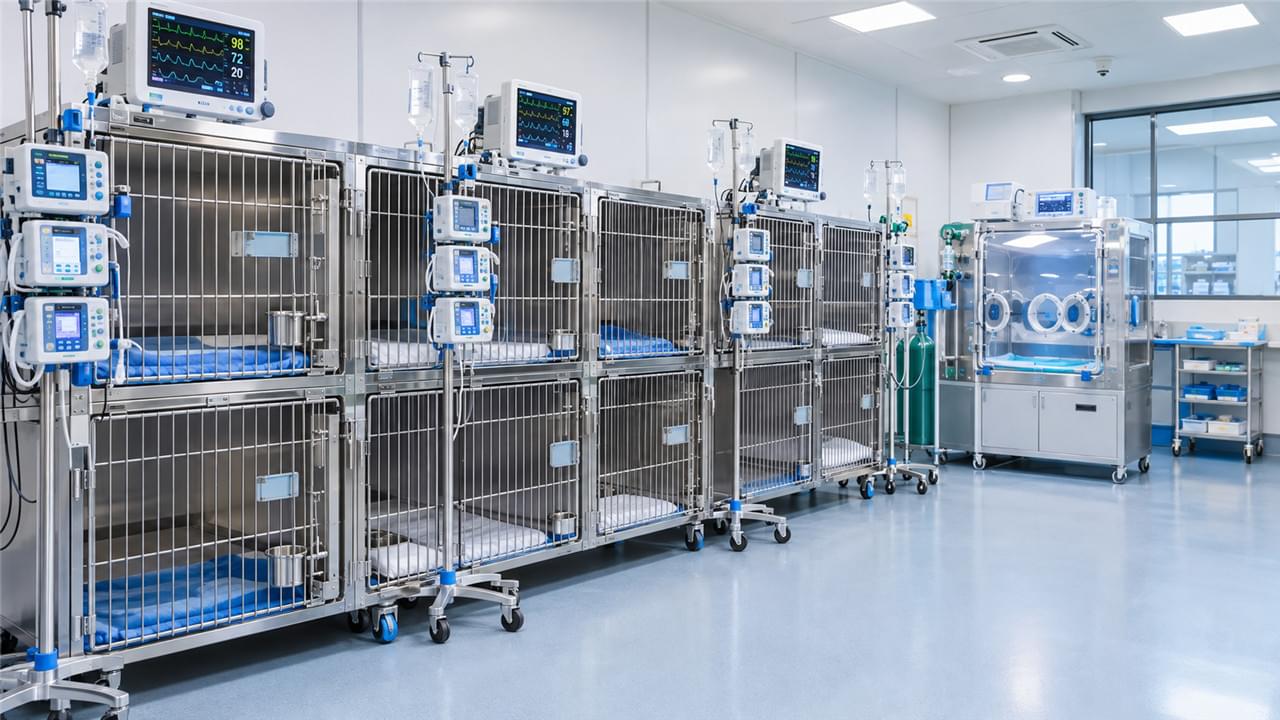
Immediately post-surgical patients need gentle passive and active-assisted therapy before weight-bearing begins:
- Continuous passive motion (CPM) devices for stifle and elbow rehabilitation
- Cryotherapy units for acute post-surgical inflammation control
- Pulsed electromagnetic field (PEMF) therapy — non-invasive, works through bandages
For the complete post-surgical picture, see Post-Operative Rehabilitation Equipment for Animals.
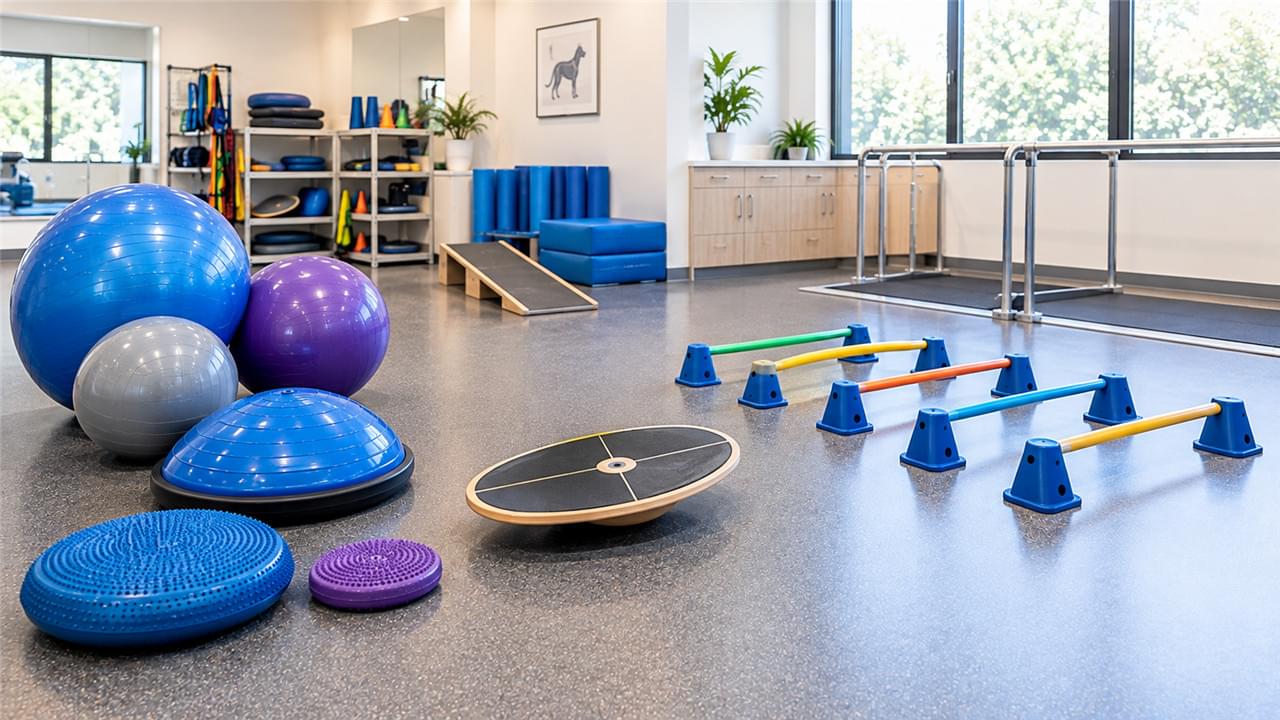
🏗️ Setting Up a Veterinary Rehabilitation Room
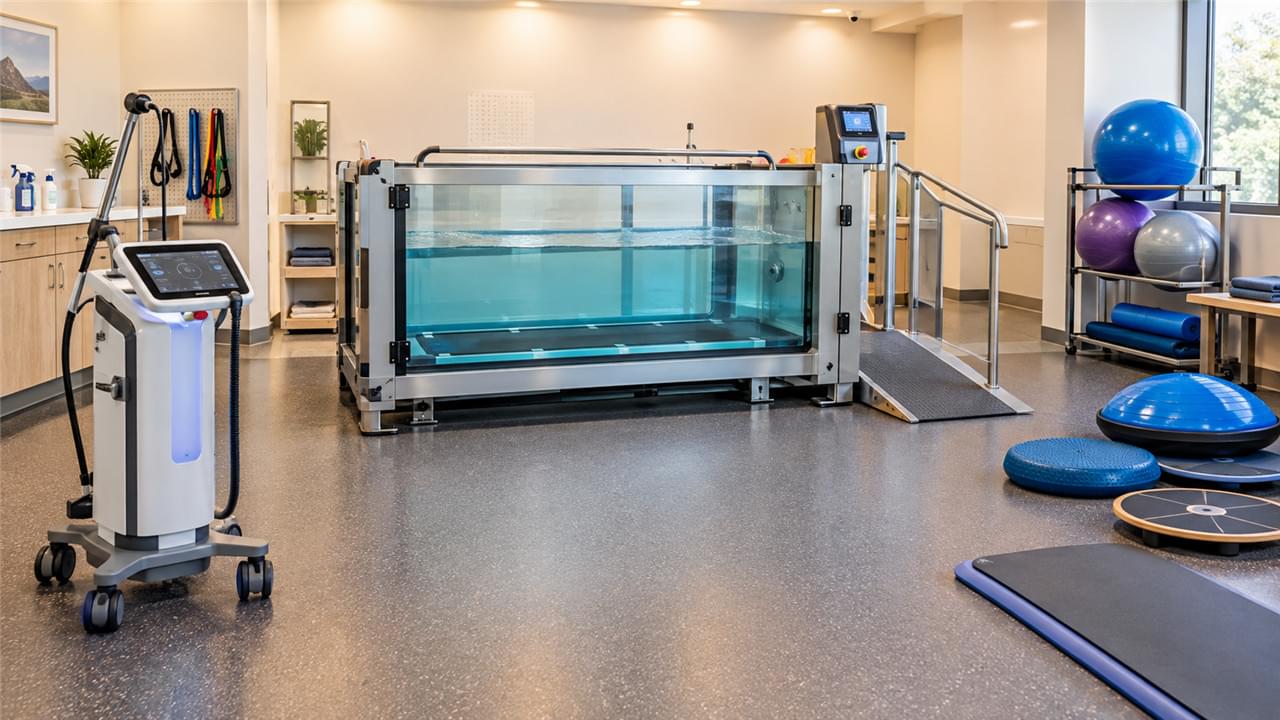
A functional rehab room requires planning before the first purchase order. Key requirements for housing veterinary rehabilitation equipment:
🧱 Flooring: Non-slip rubber throughout — falls during exercises cause setbacks and client incidents. Interlocking mats allow easy cleaning and reconfiguration.
📐 Space: Minimum 20–25 m² for ground exercises plus equipment. An underwater treadmill needs dedicated space with 0.5 m access clearance on all sides, plus drainage and water supply infrastructure.
🚰 Water supply: Hot/cold water at minimum 30 L/min fill rate, a floor drain, and waterproofed surfaces up to 1.0 m height.
⚡ Electrical: Dedicated 20A circuit minimum for the treadmill; standard 10A outlets ×4 for laser and NMES gear. All outlets in the treadmill area must be splash-protected.
👀 Client viewing area: An observation window or dedicated viewing seats let owners watch sessions — a powerful engagement and retention tool.
For the full walkthrough, see Setting Up a Veterinary Rehabilitation Room.
Phase the build. The smartest sequence is: room infrastructure first (flooring, drainage, power), portable modalities second, and the underwater treadmill last — once the caseload proves the room earns its keep. Retrofitting drainage after the flooring is down is exactly as painful as it sounds, and no veterinary rehabilitation equipment warranty covers a bad install.
💰 Rehabilitation Business Model: The Financial Case
Rehabilitation is premium revenue with unusually strong retention:
- 💵 Session fees: 60–60–180 per session (market dependent)
- 📦 Packages: 6- or 12-session bundles improve compliance and create recurring revenue
- 📈 Equipment ROI: an underwater treadmill at 25,000–25,000–50,000 pays back in 18–36 months at 3–5 sessions/day
- 🤝 Client lifetime value: rehab clients stay longer because the multi-week program builds a genuine therapeutic relationship
One more number worth internalizing: rehabilitation patients typically visit weekly for 6–12 weeks. That cadence — not any single transaction — is where the return on veterinary rehabilitation equipment actually lives. A treadmill used twice a week is a cost center; the same treadmill running fifteen sessions a week is your best-performing square meter.
Per the AVMA practice resources, service-line expansion like rehabilitation should be planned against local demand and staffing reality — the equipment is the easy part.
❓ Frequently Asked Questions
Q: What veterinary rehabilitation equipment should a general practice buy first?
A: A Class IV laser. It needs minimal space (portable), no special room infrastructure, generates immediate revenue across multiple indications — arthritis, wound healing, post-surgical — and carries the strongest evidence base. Add an underwater treadmill for veterinary rehabilitation once you have a room with proper drainage and water supply.
Q: Do veterinary rehabilitation therapists need certification?
A: Yes — this is a recognized specialty. The CCRT (Canine Rehabilitation Institute) and CCRP (University of Tennessee) are the most widely recognized credentials. Some jurisdictions also require veterinarian supervision or ownership of the rehabilitation practice.
Q: Can cats benefit from veterinary rehabilitation therapy?
A: Absolutely. Cats with osteoarthritis — over 40% of cats over age 10 show X-ray evidence of OA — benefit from laser therapy, gentle manual therapy, and therapeutic exercise. Hydrotherapy is less common in cats due to stress, but feline patients with severe neurological disease can benefit from water-supported exercise with skilled handling. Feline rehabilitation is an underserved, growing subspecialty.
📚 Related Articles in This Series
- Post-Operative Rehabilitation Equipment for Animals
- Underwater Treadmills in Veterinary Rehabilitation
- Laser Therapy vs Ultrasound Therapy in Veterinary Use
- Rehabilitation Aids for Senior and Mobility-Impaired Animals
- Setting Up a Veterinary Rehabilitation Room
Ready to go deeper? Our cross-cluster guide to the Complete Guide to Veterinary Hospital Equipment Setup shows how the rehab room fits into the whole facility plan.
✅ The Bottom Line
Start with the laser, plan the room before the treadmill, and let package pricing carry the ROI. The practices winning at rehabilitation aren’t the ones with the most impressive veterinary rehabilitation equipment — they’re the ones that match each purchase to a caseload, certify their people, and let clients watch the progress happen.