Laser therapy vs ultrasound therapy is one of the most common comparison searches in veterinary rehabilitation — and one of the most misunderstood. Both modalities reduce pain, accelerate tissue healing, and improve function, and they’re often mentioned in the same breath. But they work through entirely different physical mechanisms, and those differences decide which patients each one helps.
This guide puts laser therapy vs ultrasound therapy in veterinary use head-to-head: mechanisms, clinical indications, equipment costs, and a straight answer on which modality belongs in your practice first. For the complete equipment framework, see the Veterinary Rehabilitation & Physiotherapy Equipment Guide.
⚙️ Mechanism of Action: Two Completely Different Engines
🔦 Laser Therapy vs Ultrasound Therapy: The Core Mechanism Difference
The fundamental distinction comes down to this: laser therapy delivers light energy that triggers photochemical reactions inside cells, while therapeutic ultrasound delivers mechanical acoustic energy that heats and vibrates tissue. One works at the mitochondrial level; the other works at the tissue level — and once you understand laser therapy vs ultrasound therapy at the mechanism level, every downstream decision about indications and protocols gets easier.
🌞 Inside Photobiomodulation (Laser Therapy)
A Class IV therapeutic laser delivers near-infrared photons (808–1064 nm) that penetrate tissue and are absorbed by mitochondrial chromophores — chiefly cytochrome c oxidase. The cascade that follows:
- Increased ATP production — more cellular energy for repair
- Nitric oxide release — vasodilation and improved local blood flow
- Reduced pro-inflammatory cytokines — less acute and chronic inflammation
- Stimulated fibroblast activity — accelerated tissue repair
Net effect: analgesic, anti-inflammatory, and tissue-repair benefits delivered simultaneously, without thermal damage. That triple action in one pass is why Class IV laser therapy for dogs has become the default first-line modality in so many practices.
🔊 Inside Therapeutic Ultrasound
Therapeutic ultrasound in veterinary rehabilitation uses high-frequency acoustic waves (1–3 MHz) delivered through a handheld transducer on the skin surface, with two distinct operating modes:
- Continuous mode (thermal): acoustic energy absorbed by tissue generates deep heat — reaching 2–5 cm at 1 MHz and 1–2 cm at 3 MHz — increasing tissue extensibility, easing muscle spasm, and promoting deep circulation
- Pulsed mode (non-thermal): acoustic cavitation and microstreaming stimulate cellular repair without meaningful heating
Net effect: deep tissue heating and mechanical repair stimulation — a physical, tissue-level intervention rather than a photochemical one.
🩺 Clinical Applications: Where Each Modality Excels
The fastest way to settle laser therapy vs ultrasound therapy for a specific patient is the evidence table:
| Condition | Laser Therapy | Therapeutic Ultrasound |
|---|---|---|
| Osteoarthritis pain | ✓✓ Strong evidence | ✓ Moderate evidence |
| Acute wound healing | ✓✓ Excellent | ✗ Contraindicated over open wounds |
| Chronic tendinopathy | ✓✓ Good | ✓✓ Good (continuous mode) |
| Intervertebral disc disease | ✓✓ Post-surgical and conservative | ✓ Paraspinal muscle management |
| Muscle spasm/fibrosis | ✓ Moderate | ✓✓ Excellent (deep heat) |
| Fracture healing | ✓ LLLT at fracture site | ✗ Avoid over fresh fracture |
| Post-surgical incisions | ✓✓ Ideal (non-contact) | ✗ Avoid over surgical sites |
| Joint capsule contracture | ✓ Moderate | ✓✓ Pre-stretching thermal preparation |
Reading that table through the lens of laser therapy vs ultrasound therapy, the pattern is clear: laser owns the acute, inflamed, and post-surgical cases; ultrasound owns the chronic, deep, and stiff ones.
🥊 Laser Therapy vs Ultrasound Therapy: Unique Strengths Compared
Laser’s edge:
- Non-contact delivery — ideal for painful, bandaged, or freshly surgical areas
- Works through hair without shaving
- Very high patient tolerance; most patients find it genuinely pleasant
- Handles superficial and moderately deep structures in one session
Ultrasound’s edge:
- Superior deep thermal effect — reaches the joint capsule and deep muscle bellies that laser can’t reliably heat
- Pre-stretches joint capsule tissue before manual therapy
- Established evidence base for tendon and ligament injuries
- Equipment costs well below Class IV laser systems
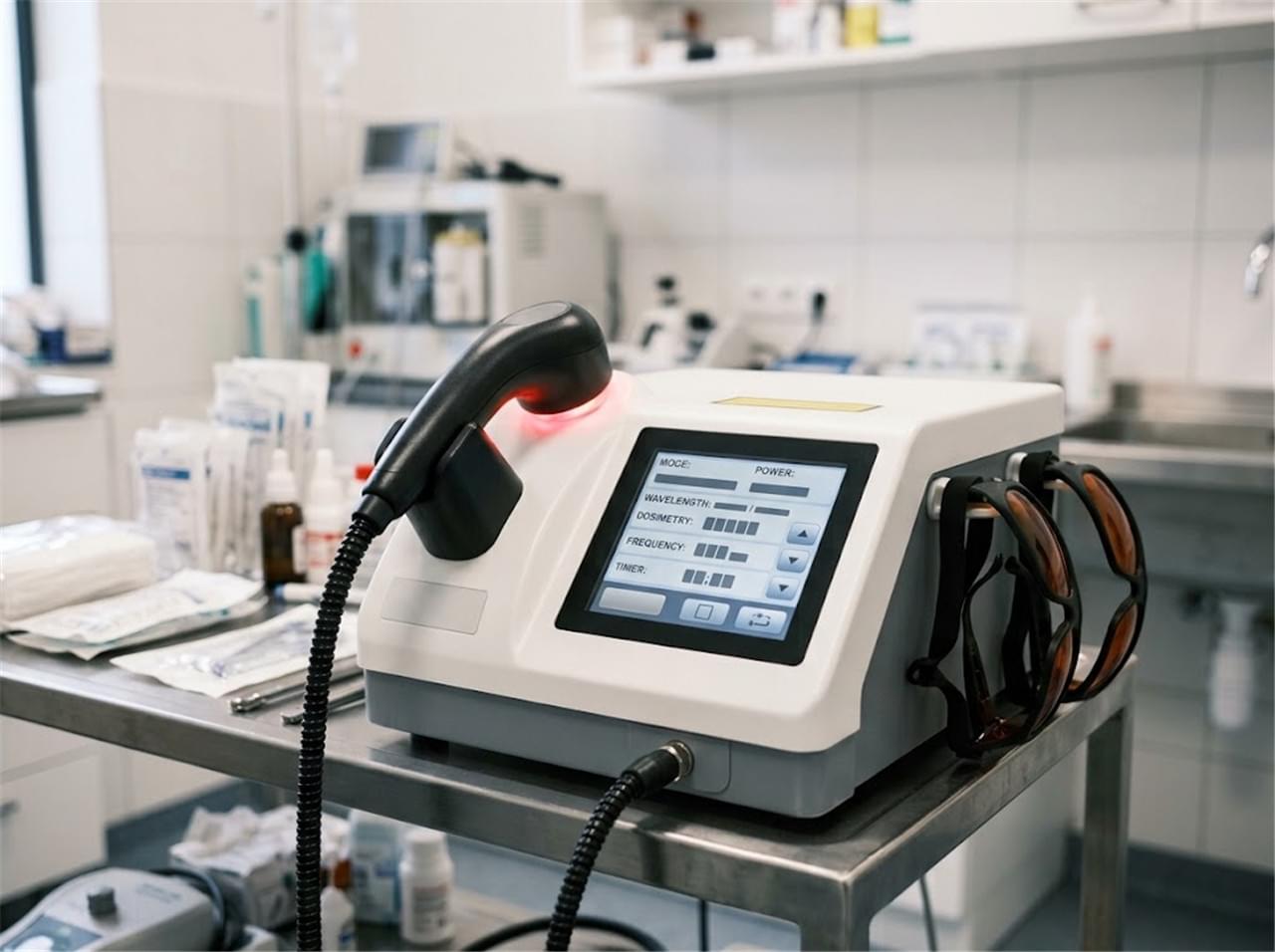
💰 Equipment Comparison
💵 Equipment Cost: Laser Therapy vs Ultrasound Therapy Side by Side
The purchase decision looks like this:
| Feature | Class IV Laser | Therapeutic Ultrasound |
|---|---|---|
| Purchase cost | 8,000–8,000–25,000 | 2,500–2,500–8,000 |
| Running cost | Low (no consumables) | Low (gel only) |
| Training required | Moderate (wavelength/dosimetry) | Moderate (frequency/mode selection) |
| Safety notes | Eye protection mandatory for everyone in the room; Class IV protocols | Avoid over growth plates, implants, tumors, eyes, gravid uterus |
| Portability | Cart or portable units | Handheld portable standard |
| Treatment time | 3–12 minutes per area | 5–10 minutes per area |
🛒 Which Modality Should Your Practice Invest In First?
Strip away the vendor hype, and the laser therapy vs ultrasound therapy investment question has two clean answers depending on what kind of practice you run.
🏥 For a General Practice: Start with Laser Therapy
Class IV laser therapy for dogs is the recommended first purchase for a general practice adding its first rehabilitation modality. It carries the broadest indication range, the strongest current evidence base in companion animal medicine, and near-universal patient tolerance. Better still, it generates revenue across multiple departments at once — post-surgical recovery, dermatology, dentistry, and orthopedics all bill laser sessions.
🎯 For a Dedicated Rehabilitation Practice: Buy Both
In a full rehabilitation service, the laser therapy vs ultrasound therapy debate is a false choice — the two are complementary, not competing. They target different tissues and different pathological mechanisms, and experienced therapists sequence them deliberately: ultrasound to prepare and soften deep tissue first, laser to follow with anti-inflammatory and repair stimulation. A rehab practice without both modalities is leaving treatment outcomes on the table.
❓ Frequently Asked Questions
🥽 Is Class IV Laser Therapy Safe for Veterinary Patients?
Yes, when used correctly. The non-negotiable is eye protection: near-infrared light at Class IV power can cause retinal damage, so wavelength-specific protective eyewear goes on every person in the treatment room, and the patient gets opaque draping or fitted eyewear. Correct dosimetry for tissue depth and condition prevents adverse thermal effects. Guidance from the WSAVA pain management and rehabilitation guidelines is a sound baseline for protocol design.
🔩 Laser Therapy vs Ultrasound Therapy: Which Is Safer Around Metal Implants?
Laser therapy wins this one. It is generally not contraindicated over metal implants, whereas therapeutic ultrasound can cause reflective heating at implant surfaces and is best avoided there. Even with laser, avoid prolonged direct focus over superficial implants and calculate dose appropriately for the area — and always check the manufacturer’s contraindication guidance for your specific unit.
😴 Does Therapeutic Ultrasound Require Sedation?
Generally no. Most patients tolerate therapeutic ultrasound in veterinary rehabilitation well under proper restraint with coupling gel applied — the procedure is non-painful at therapeutic doses. The exception: areas of acute deep pain may be sensitive to transducer pressure, in which case light sedation or analgesic premedication helps achieve full therapeutic effect in highly painful patients. Standards from AVMA complementary and rehabilitation medicine support non-sedated protocols as the norm.
🎯 Key Takeaways
Laser therapy vs ultrasound therapy isn’t a battle with a winner — it’s a division of labor. Laser owns acute inflammation, wounds, and post-surgical tissue with a photochemical triple action; ultrasound owns deep heat, chronic stiffness, and tendon disease with mechanical energy. General practices should buy the laser first; dedicated rehabilitation services should run both and sequence them deliberately. For how these modalities slot into a complete post-surgical toolkit, see Post-Operative Rehabilitation Equipment for Animals. 🐾