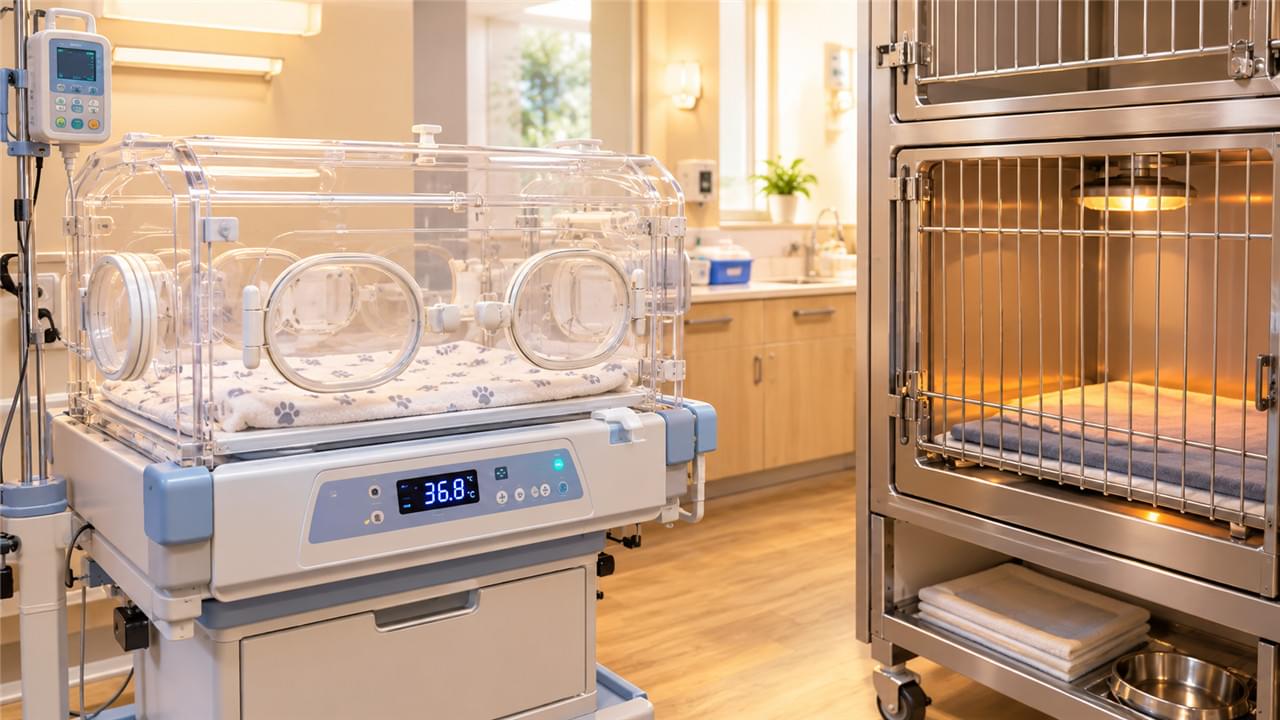
Post-operative rehabilitation equipment is what turns a successful surgery into a successful recovery. Orthopedic and neurological procedures only reach their full clinical potential when structured rehabilitation follows — and without the right tools, muscle loss, joint stiffness, and compensatory movement patterns quietly undo the surgeon’s work. This guide walks through the nine equipment categories that matter most, phase by phase, from the first 48 hours after surgery to the final return to full function.
The goal is the same whether you’re equipping a hospital rehab suite or assembling a home program: reduce pain, protect the surgical site, and rebuild strength in a controlled, evidence-based sequence. For the complete framework behind these recommendations, see the Veterinary Rehabilitation & Physiotherapy Equipment Guide.
🧊 Phase 1: Immediate Post-Operative Care (Days 0–3)
The first three days after surgery are all about pain control, inflammation management, and preventing secondary complications. Three pieces of post-operative rehabilitation equipment dominate this window.
❄️ Cryotherapy Units: First-Line Post-Operative Rehabilitation Equipment
Targeted cold therapy after dog surgery is one of the simplest, most effective interventions available. Purpose-built veterinary cryotherapy units deliver controlled cold (4–10°C) through a circulating fluid pad wrapped around the surgical site. Applied for 15–20 minutes every 4–8 hours during the first 48–72 hours, cryotherapy measurably reduces swelling and edema — and just as importantly for the patient, it lowers opioid analgesic requirements during the earliest, most painful phase of healing.
🧲 PEMF Devices in the Post-Operative Rehabilitation Equipment Toolkit
Pulsed electromagnetic field (PEMF) therapy sends low-frequency electromagnetic pulses through tissue to stimulate cellular repair and calm inflammation. Its biggest practical advantage: the field passes straight through bandages, splints, and cast material, so there’s no need to disturb the wound. Wearable pads and blanket-format devices let patients continue treatment at home between clinic visits, making PEMF one of the most versatile pieces of post-operative rehabilitation equipment for fracture healing, surgical wounds, and post-spinal-surgery neurological recovery.
📐 PROM Tools and Positioning Aids
Passive range of motion (PROM) work isn’t equipment-heavy, but it does require structure. Positioning wedges and foam supports hold the limb correctly during sessions, resistance bands introduce light active-assisted exercise as weight-bearing returns, and a goniometer documents joint angles at every assessment so progress is measured rather than guessed. Ten disciplined minutes of PROM twice daily does more for long-term joint health than an hour of unsupervised wandering around the living room.
🚶 Phase 2: Early Rehabilitation (Days 4–21)
As incisions stabilize, gentle active work begins. This is the phase where the pace of the entire recovery is largely set — and where the underwater treadmill for post-surgical dogs, laser therapy, and CPM machines do their heaviest lifting.
⚙️ CPM Machines: Precision Post-Operative Rehabilitation Equipment
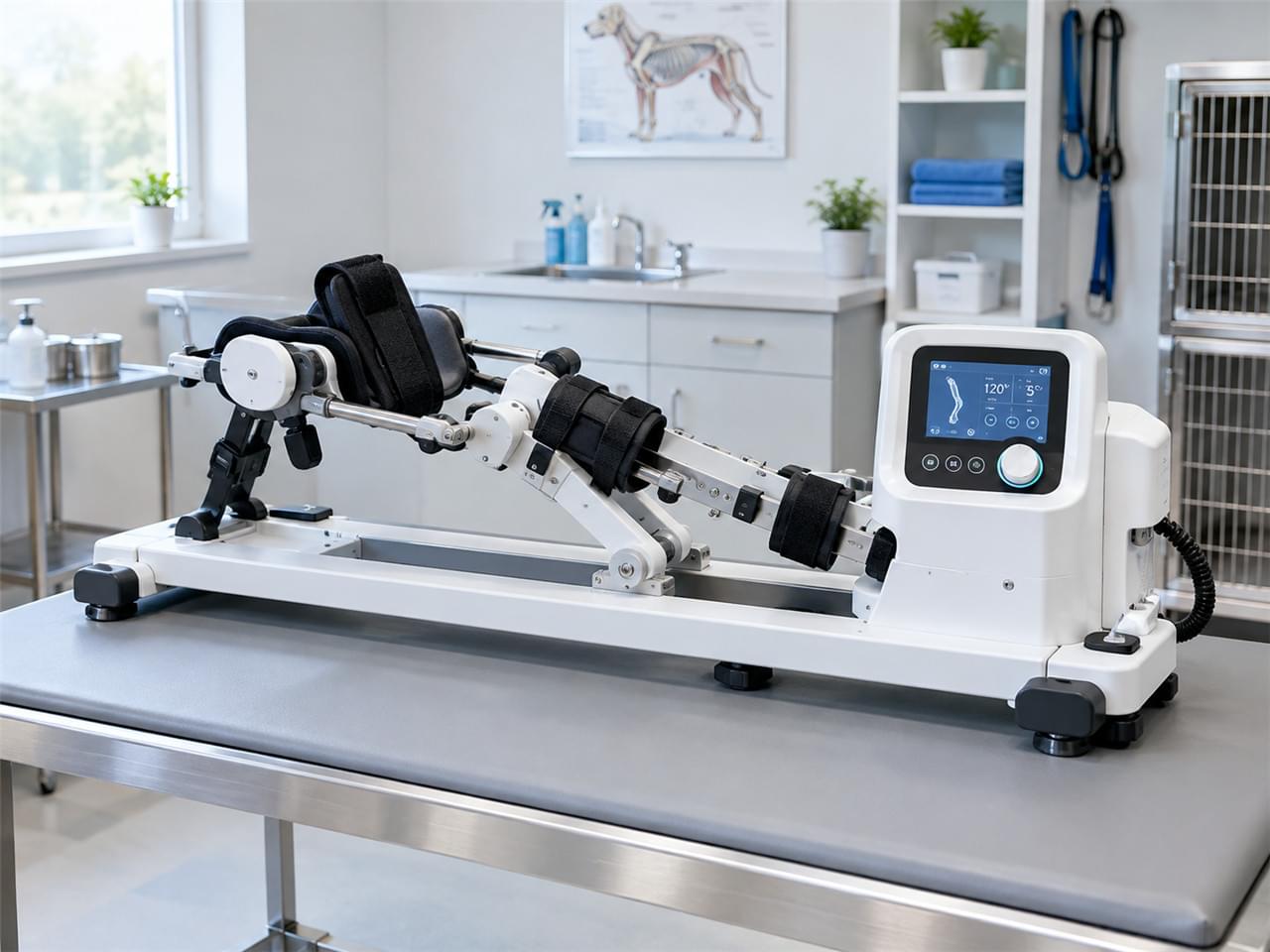
Continuous passive motion (CPM) devices mechanically move a joint through a controlled arc for one to eight hours a day, keeping the joint capsule from fibrosing, maintaining articular cartilage nutrition, and limiting scar tissue adhesion — all without loading the repair. Units built for the canine stifle and elbow are particularly valuable after TPLO and elbow fracture repairs, where post-operative joint stiffness is the classic setback.
🔆 Class IV Laser Therapy
Laser therapy typically starts at day 2–3, once the incision has sealed. Class IV units reduce surgical wound inflammation and accelerate tissue healing, with sessions every 24–48 hours through the first two weeks, then tapering to twice weekly through week eight. It pairs naturally with cryotherapy — one controls heat and swelling, the other drives cellular repair.
💧 Underwater Treadmills for Post-Surgical Dogs
The underwater treadmill for post-surgical dogs usually enters the program between day 5 and day 14, depending on incision location and wound integrity. Water at mid-femur depth removes roughly 60–70% of body weight for TPLO patients, letting them walk earlier and more safely than on land. Early sessions run just 5–10 minutes at 0.5–1.0 km/hr, building toward 20–30 minutes by week four. Warm water (28–32°C) adds a thermal benefit, easing muscle spasm and improving tissue extensibility. For a deeper dive into protocols and patient selection, see Underwater Treadmills in Veterinary Rehabilitation.
🏋️ Phase 3: Progressive Rehabilitation (Weeks 3–12)
The final phase aims at full return to function, and it draws on the widest range of post-operative rehabilitation equipment in the entire program.
⚖️ Balance and Proprioception Tools
Wobble boards, balance discs, and cavaletti rails retrain the nervous system as much as the muscles. Proprioceptive deficits are common after orthopedic and neurological surgery, and a patient can look “walkable” while still placing weight abnormally. Specific balance training corrects gait patterning before compensatory habits harden into long-term joint problems.
⚡ NMES Units
Neuromuscular electrical stimulation (NMES) generates involuntary muscle contractions to maintain and rebuild mass in surgically affected limbs. It’s essential for neurological patients — FCE and IVDD cases especially — where voluntary movement is limited during early recovery and muscle atrophy would otherwise progress unchecked.
🛞 Carts and Support Systems
For patients with significant limb dysfunction, wheeled carts in front-support and rear-support configurations restore safe ambulation. Movement in a cart preserves cardiovascular fitness, provides mental stimulation, and helps prevent pressure sores — benefits that matter enormously for a patient facing weeks of restricted mobility.
❓ Frequently Asked Questions
🗓️ When Should Post-Operative Rehabilitation Equipment Be Introduced?
PROM exercises and cryotherapy can typically begin within 24 hours of surgery. Laser therapy starts at the incision site from day 2–3. Hydrotherapy waits for wound integrity — usually day 5–14 for most orthopedic procedures. The attending surgeon should confirm the timeline for each patient based on procedure type and healing progression.
🐕 Is Post-Operative Rehabilitation Equipment Necessary If My Dog Walks Normally?
Yes — appearing normal is not the same as being recovered. Pressure-mat and force-plate studies consistently show abnormal weight distribution in post-operative patients that look clinically fine. Post-operative rehabilitation equipment for animals exists precisely to correct these subclinical deficits: hidden muscle atrophy, altered gait mechanics, and compensatory patterns that lead to long-term joint trouble if ignored.
🏠 Which Post-Operative Rehabilitation Equipment Can Owners Use at Home?
More than you might expect. Home exercise programs (HEPs) are a core component of structured rehabilitation: clinic-supervised sessions two to three times weekly are combined with daily home work — PROM, weight-shifting, and balance exercises. PEMF pads, resistance bands, balance discs, and cavaletti pole sets extend the therapeutic benefit between visits. Cold therapy after dog surgery can also continue safely at home with a properly fitted cold-compression wrap.
🎯 Key Takeaways
Effective post-operative rehabilitation equipment isn’t about owning everything on the shelf — it’s about using the right tool at the right phase: cryotherapy and PEMF in the first days, CPM and laser therapy as active work begins, and balance training, NMES, and hydrotherapy to finish the job. Follow the sequence, respect the surgical timeline, and keep every decision grounded in WSAVA rehabilitation guidelines and AVMA physical rehabilitation standards. Your patients’ recoveries will show the difference.