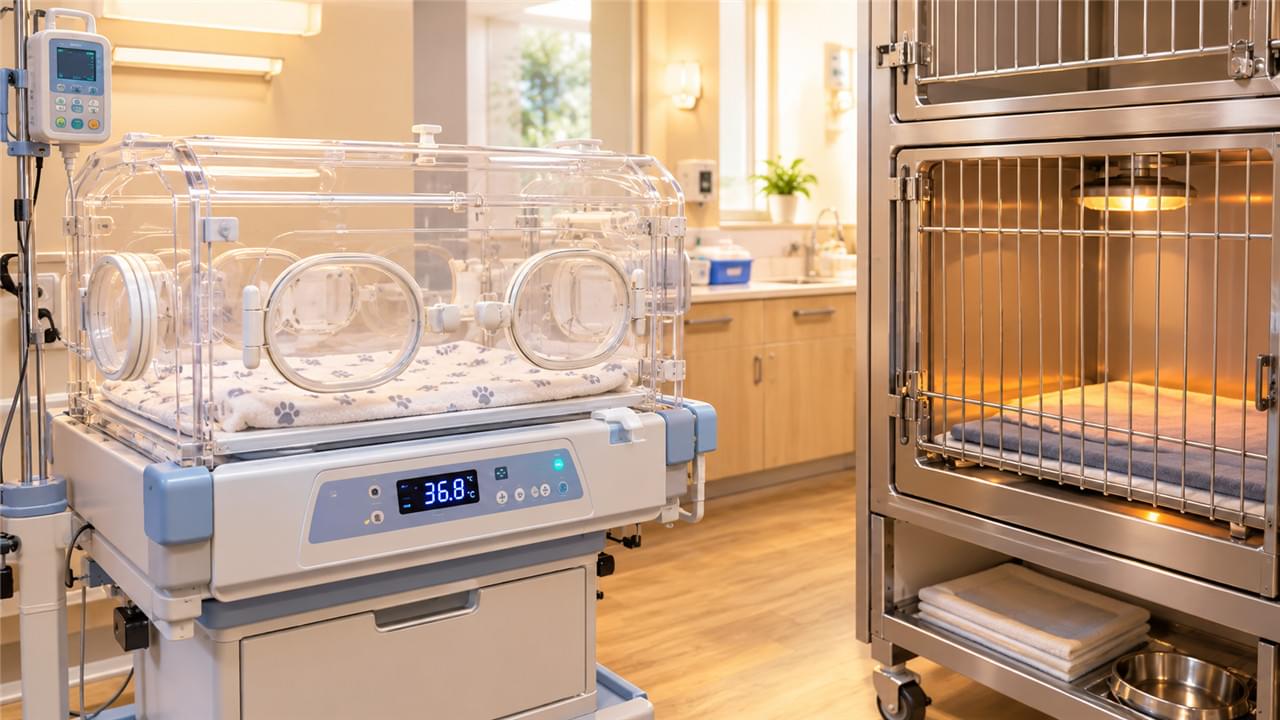
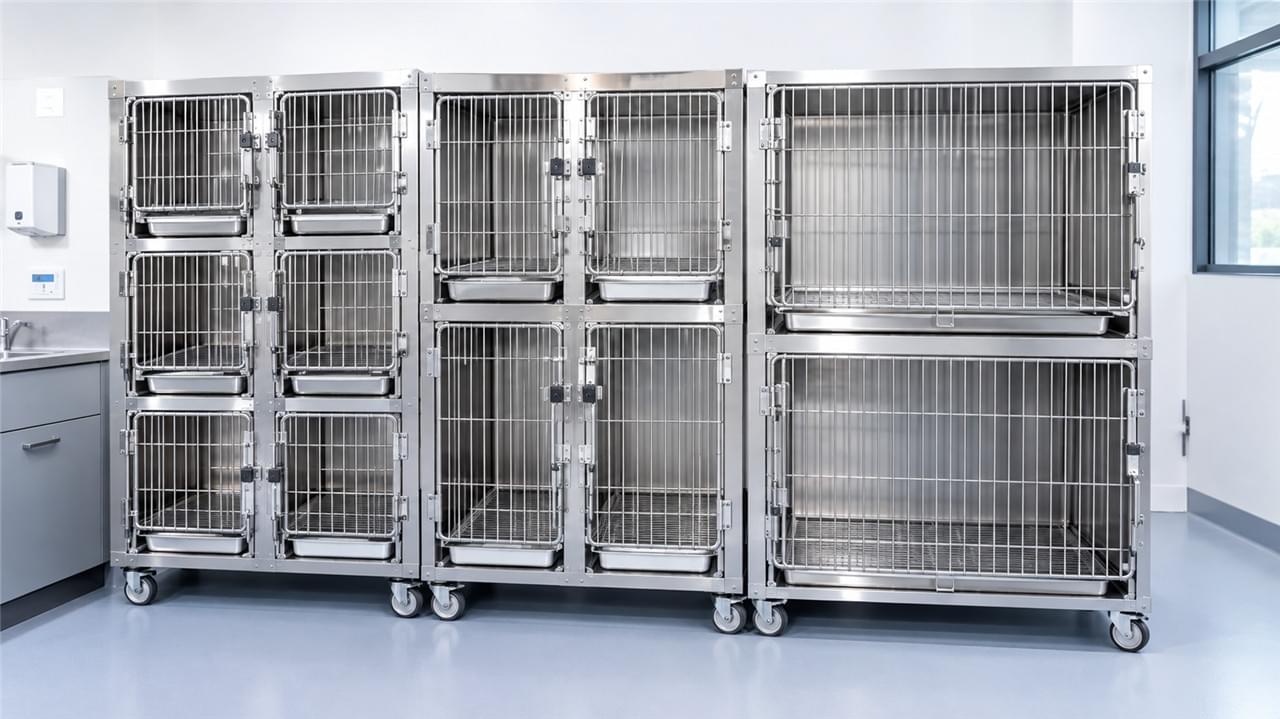
The underwater treadmill is the defining piece of equipment in veterinary rehabilitation. Nothing else packs gait retraining, muscle loading, pain relief, cardiovascular conditioning, and sheer patient motivation into a single session the way it does. If you’re building or expanding a rehab program, understanding how underwater treadmills in veterinary rehabilitation actually work — who benefits, what to buy, and how to run a session — is essential knowledge, not nice-to-have.
For the full equipment context around this modality, see the Veterinary Rehabilitation & Physiotherapy Equipment Guide.
🌊 How the Underwater Treadmill Works 💧
An underwater treadmill (UWTM) is a sealed stainless steel or acrylic chamber with a motorized belt inside. The chamber fills with temperature-controlled water to a therapeutic depth, and the patient walks the belt while the water supports part of its body weight.
⚖️ The Physics of Buoyancy-Assisted Gait
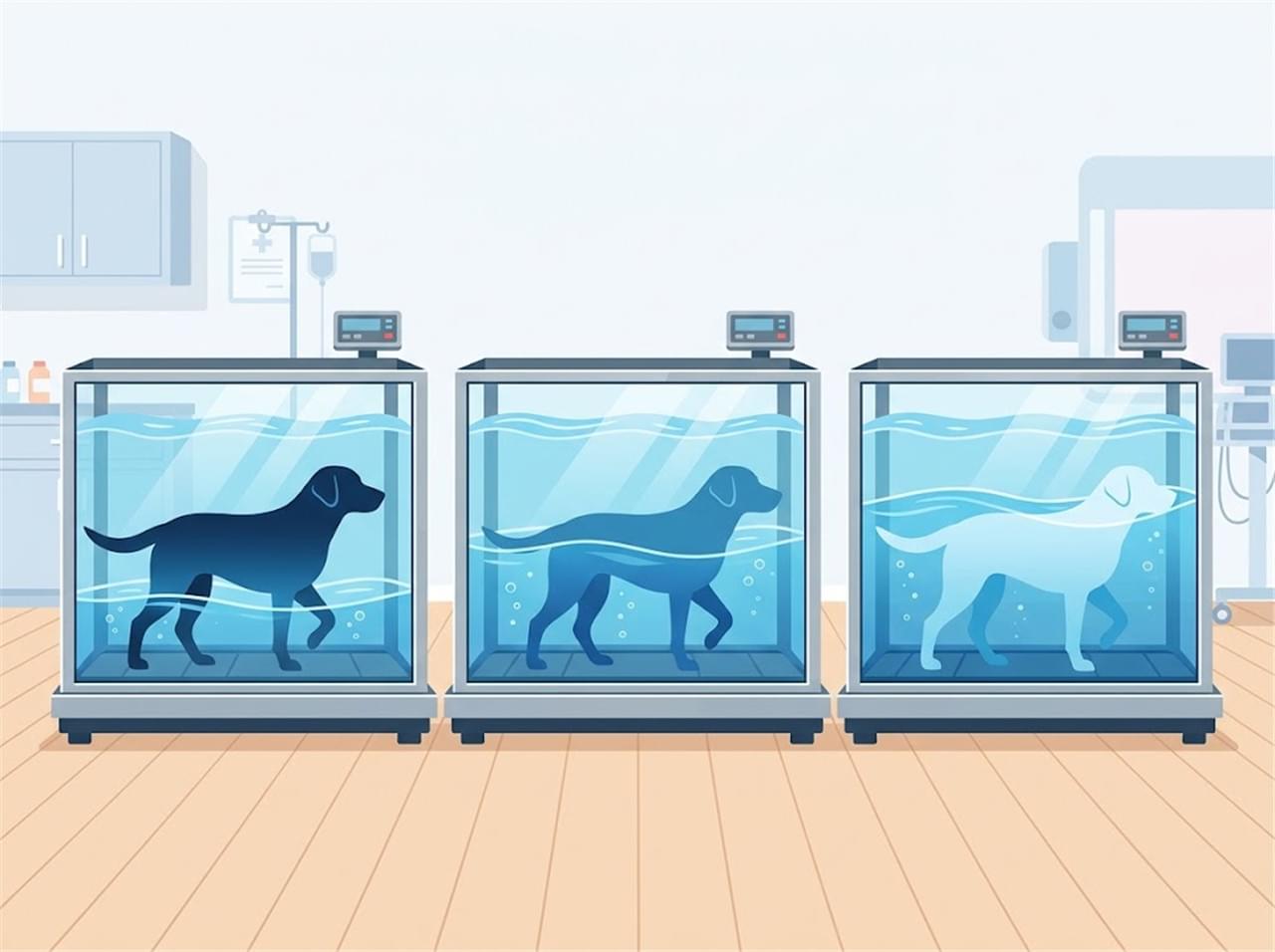
Water buoyancy reduces the effective load that joints and muscles carry with every step — and the therapist controls exactly how much by setting the water level:
| Water Level | Effective Weight (% of Body Weight) |
|---|---|
| Hip joint level | 38% of body weight |
| Greater trochanter level | 47% of body weight |
| Mid-femur level | 62% of body weight |
| Stifle joint level | 73% of body weight |
That dial matters. Early post-operative patients can practice near-weightless gait patterns on the underwater treadmill, while patients late in recovery can be progressively loaded back toward full function — all on the same machine.
The hydrodynamic bonus: walking through water demands roughly 10× more muscular effort than walking in air, thanks to water viscosity. That’s genuine muscle conditioning with almost no joint-loading stress. No land-based exercise comes close.
🩺 Clinical Applications: Who Benefits Most
Ask a room of rehabilitation veterinarians which single tool they’d keep if they could only keep one, and most will name this one. That’s not brand loyalty — it’s because the underwater treadmill for dogs sits at the intersection of almost every condition a rehab service treats, from day-three post-operative patients to aging athletes. Four groups in particular:
🐕 Post-Surgical Orthopedic Rehabilitation
- TPLO, TTA, and stifle surgery recovery
- Total hip replacement rehabilitation
- Fracture repair and bone-healing consolidation
- Forelimb procedures (elbow, shoulder)
🧠 Neurological Rehabilitation
- FCE (fibrocartilaginous embolism) recovery
- IVDD — both post-surgical and conservative management
- Degenerative myelopathy — slows functional decline
- Peripheral neuropathy rehabilitation
🏥 Medical Conditions
- Multi-joint osteoarthritis management
- Hip dysplasia after conservative management
- Obesity programs — cardiovascular conditioning with minimal joint load
🏆 Performance and Fitness
- Athletic dog conditioning and injury prevention
- Return-to-work conditioning for police and search-and-rescue dogs
For how the UWTM fits into a complete post-surgical toolkit, see Post-Operative Rehabilitation Equipment for Animals.
🛠️ Key Equipment Specifications Before You Buy
📏 Chamber Size: Matching the Underwater Treadmill to Your Patients
- Small/medium dogs (≤30 kg): 90–100 cm × 50–60 cm × 80 cm internal (L×W×H)
- Large dogs (30–60 kg): 120–140 cm × 70–80 cm × 100 cm
- Giant breeds (>60 kg) / large exotics: 160+ cm × 90+ cm walk-in type
Buying too small is the classic mistake — a Great Dane doesn’t fit a chamber built for Beagles, and there are no refunds on stainless steel.
🎛️ Underwater Treadmill Belt and Incline
- Speed range of 0.1–3.5 km/hr covers slow entry pace up to active trotting
- Anti-slip belt surface is non-negotiable — a smooth belt scares patients and causes slipping
- Motorized incline (0–10°) raises hindlimb loading without touching the water level
🌡️ Water Heating and Temperature Control
- Therapeutic range of 26–34°C with thermostatic control that hits target temperature before the patient enters
- Warm water reduces muscle spasm, increases tissue extensibility, and — quietly important — wins patient cooperation
🧼 Filtration and Hygiene
- Integrated filtration at minimum three stages: particle, UV, chemical
- UV sterilization maintains water quality between patients
- Full drain-and-refill capability is mandatory when infectious disease risk is present
🚪 Entry Systems and Safety Features
- Side-opening doors (manual or motorized) for patient entry, with a ramp — not a step-up — for post-surgical patients with limited hindlimb function
- Safety lock confirmation before filling begins
- Emergency drain release that empties the chamber in under 3 minutes
- Overflow sensor, anti-entrapment belt guard, and full electrical isolation from water per IEC 60601 medical electrical standards
📋 A Typical Underwater Treadmill Session Protocol
Here’s a standard 4–6 week post-surgical TPLO progression as a worked example:
| Week | Water Level | Belt Speed | Duration |
|---|---|---|---|
| 1–2 | Hip / GT | 0.5–0.8 km/hr | 5–10 min |
| 3–4 | Mid-femur | 0.8–1.2 km/hr | 10–15 min |
| 5–8 | Stifle | 1.0–1.5 km/hr | 15–20 min |
| 9–12 | Stifle (± incline) | 1.5–2.0 km/hr | 20–30 min |
Session frequency of 2–3 times per week is the minimum for a genuine therapeutic effect — once a week is recreation, not rehabilitation.
One honest caveat: a protocol is a starting point, not a prescription. Water level, speed, and duration all get adjusted session by session against what the patient actually shows you — weight-bearing quality, fatigue, incision status, enthusiasm. The best rehabilitation therapists treat the table above as a template written in pencil.
❓ Frequently Asked Questions
💰 What Does an Underwater Treadmill for Dogs Cost?
Quality purpose-built units run 18,000–18,000–55,000 depending on chamber size, material (stainless steel vs. acrylic), filtration, and feature set. Installation — drainage, water supply, electrical — adds another 3,000–3,000–10,000 to the project. A solid small-animal practice setup lands at roughly 22,000–22,000–28,000 fully installed.
📈 How Many Sessions Per Day Can an Underwater Treadmill Run?
A properly maintained unit handles 6–10 sessions daily at 20–30 minutes each, including fill, drain, and clean time. At session fees of 75–75–120, a unit running at 70% capacity generates 28,000–28,000–55,000 in annual revenue — meaning an underwater treadmill for dogs typically pays back a $25,000 investment within 18–30 months.
🏊 Is Aquatic Treadmill Therapy Different from Swimming Pool Therapy?
Yes, and the difference is control. Aquatic treadmill therapy governs gait mechanics and loading precisely through water level, belt speed, and incline. A swimming pool gives full buoyancy but no load control or directed gait patterning — better for cardiovascular conditioning and general mobility, less targeted for orthopedic gait retraining. Most serious programs use both modalities at different recovery phases.
🎯 Key Takeaways
The underwater treadmill works because it’s honest physics: buoyancy unloads, viscosity strengthens, warmth relaxes, and the belt walks the patient back to function one controlled step at a time. Match the chamber to your patient population, respect the session protocols, and anchor your program decisions in the WSAVA rehabilitation guidelines and AVMA rehabilitation standards — then let the results walk for themselves. 🐾