The question is blunt, and the answer is measurable: the right veterinary ICU equipment, deployed correctly, saves lives. That’s not marketing — it’s a consistent finding across veterinary emergency and critical care literature, where monitoring capability, oxygen delivery quality, and fluid management precision each independently reduce adverse outcomes in critical patients.
This guide connects specific veterinary ICU equipment purchases to specific survival gains. If you want the honest version of how to improve survival rates with ICU equipment, skip the brochures and follow the evidence. For the complete framework, see our Veterinary ICU & Critical Care Equipment: Complete Guide.
📈 The 4 Evidence Links: Veterinary ICU Equipment That Saves Lives
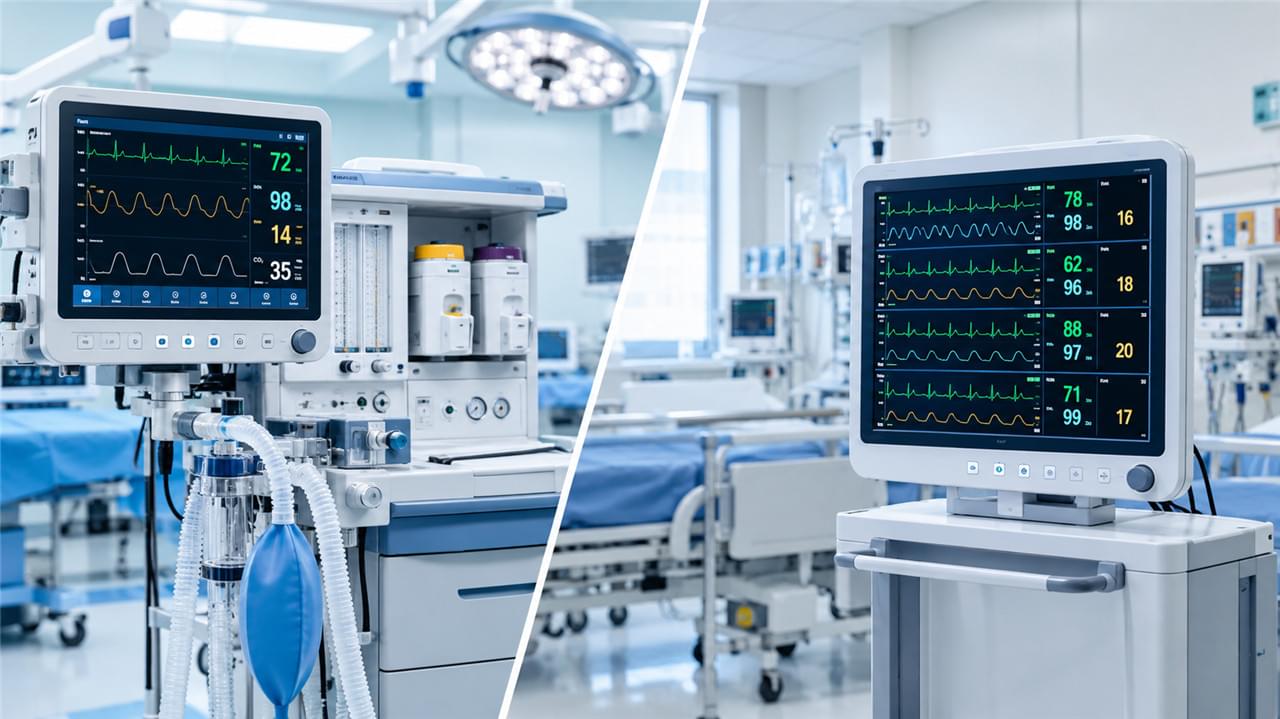
Evidence Link 1: Continuous Monitoring — The Highest-Impact Veterinary ICU Equipment
Studies in human and veterinary critical care keep landing on the same conclusion: continuous multi-parameter monitoring catches deterioration far sooner than periodic nursing assessment.
Picture a patient whose SpO₂ falls from 96% to 80% over 20 minutes:
- On continuous monitoring: the alarm trips at ≤94%, a nurse responds within 1–2 minutes, and oxygen is started before cyanosis ever appears
- On 2-hourly nursing checks: the decline goes unnoticed; the patient is found cyanotic and hypotensive 90+ minutes later
The same logic applies to ECG. Catching an arrhythmia before hemodynamic compromise means treating it with antiarrhythmic drugs instead of running a full resuscitation.
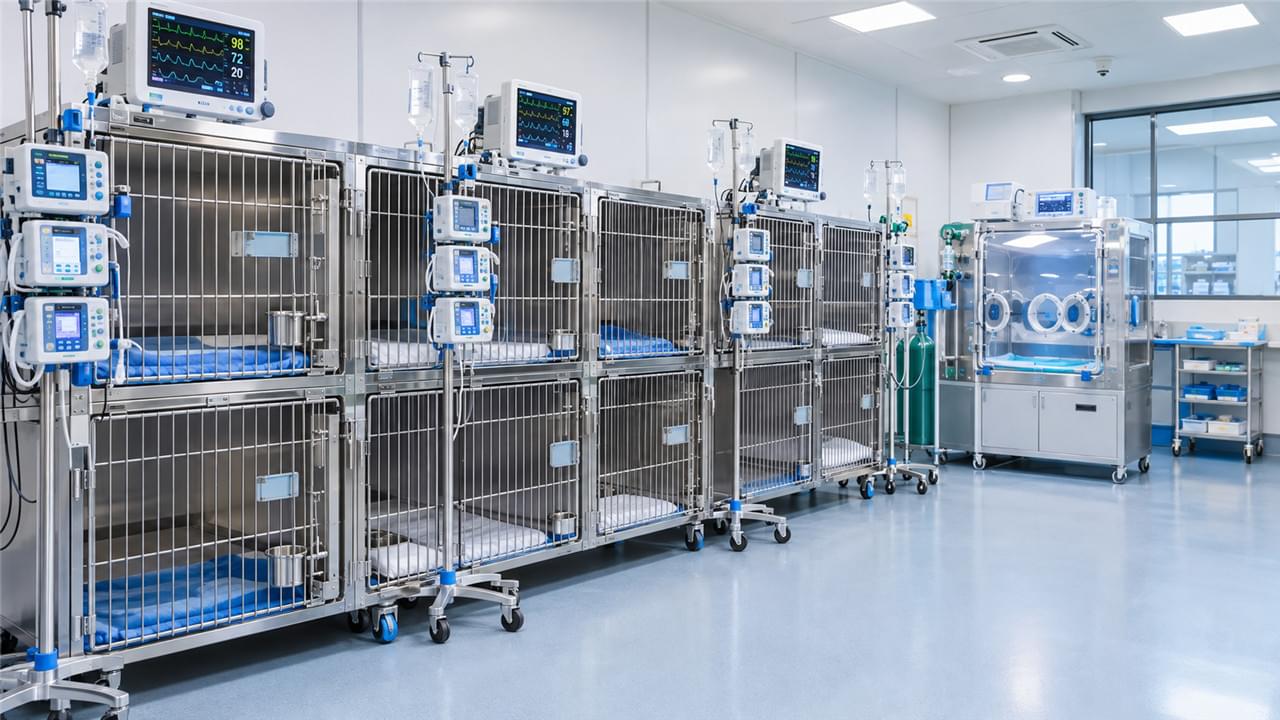
Equipment investment: continuous multi-parameter monitoring at the cage level.
Evidence Link 2: Fluid Precision — Veterinary ICU Equipment That Prevents Overload
Fluid therapy is the most common treatment in the ICU — and fluid errors, in both directions, are among the most common causes of ICU complications.
Overload complications:
- Interstitial edema (pulmonary edema in cats at very low overload thresholds)
- Dilutional coagulopathy
- Respiratory compromise from pleural effusion
Hypovolemia complications:
- Tissue hypoperfusion → organ dysfunction → multi-organ failure
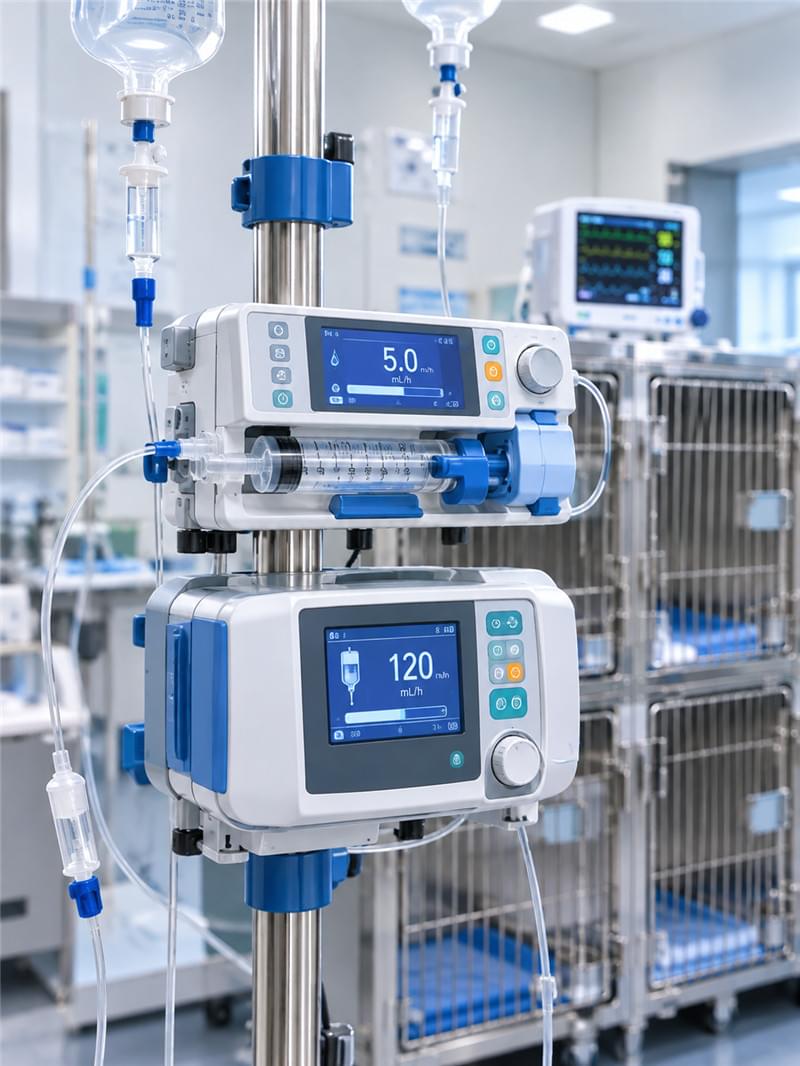
Syringe pumps for veterinary ICU use deliver precise volumes at 0.1–99 mL/hr. That precision is essential for feline patients, where even 5–10 mL/hr of overdelivery compounds over 24 hours into clinically significant fluid excess. A manual fluid bag cannot get you there.
Equipment investment: syringe pumps and volumetric infusion pumps with drug library function.
Evidence Link 3: Warming — Veterinary ICU Equipment That Prevents Fatal Hypothermia
Perioperative hypothermia (below 36°C) directly drives three complications:
- 🩸 Coagulopathy: coagulation enzyme activity drops roughly 10% per 1°C of temperature loss
- ❤️ Cardiac arrhythmias: ventricular fibrillation risk climbs markedly below 30°C
- 💉 Extended drug metabolism: hypothermic patients recover more slowly from anesthesia, lengthening ICU stay and complication risk
Active warming — heated cage floors, forced-air blankets, warmed IV fluids — is veterinary ICU equipment that prevents these problems rather than treating them after the fact.
In one veterinary study, perioperative hypothermia was associated with a 3.4× increased risk of post-operative complications versus normothermic patients. That difference tracked entirely with the presence or absence of active temperature management.
Equipment investment: heated ICU cage systems + fluid warming devices.
Evidence Link 4: Oxygen Delivery — Veterinary ICU Equipment for Hypoxic Patients
Hypoxemia is a routine finding in ICU patients — sepsis, shock, respiratory disease, and post-anesthetic hypoventilation all drag arterial oxygen saturation down. For every minute of tissue hypoxia below SpO₂ 90%, the risk of neurological damage, cardiac dysfunction, and renal injury climbs.
Oxygen cages that hold a controlled FiO₂ restore oxygenation quickly in conscious, non-cooperative patients who won’t tolerate a mask or intubation. For cats with respiratory compromise — where any restraint can precipitate fatal respiratory arrest — an oxygen cage is genuinely lifesaving veterinary ICU equipment.
Equipment investment: oxygen cages or ICU cages with oxygen hood capability, plus an oxygen concentrator or piped O₂.
🎯 Building a Survival-Optimized ICU: Equipment Priorities by Impact
| Equipment | Survival Impact | Priority |
|---|---|---|
| Multi-parameter cage-side monitor | Very High | P1 — Required |
| Syringe pump + volumetric pump | High | P1 — Required |
| Oxygen concentrator + cage O₂ delivery | Very High | P1 — Required |
| Heated ICU cage system | High | P1 — Required |
| Crash cart + defibrillator | Critical for reversible arrests | P1 — Required |
| Blood gas analyzer | High for shock/respiratory cases | P2 — Early upgrade |
| ICU ventilator | High for respiratory failure | P2–P3 by case mix |
| Central monitoring station | Moderate (staffing efficiency) | P3 |
If you’ve already invested in monitoring depth, the next step is making sure those signals reach the right person fast — our breakdown of Vital Signs Monitoring Systems for Veterinary ICUs covers central stations and alarm routing. For outcome benchmarks that frame this whole conversation, the WSAVA global guidelines are the reference to keep handy.
❓ Frequently Asked Questions
Q: What is the single most impactful veterinary ICU equipment investment for survival?
A: Continuous multi-parameter monitoring at the cage side. Every other piece of veterinary ICU equipment enables treatment — monitoring enables detection. You can’t treat a deterioration you never saw. Practices that move from 2-hourly checks to continuous monitoring consistently report fewer adverse events and fewer emergency interventions.
Q: Does ICU investment make financial sense for a small animal general practice?
A: Yes, on several fronts: referral retention (cases that used to be transferred out stay in-house), higher revenue per case (ICU nursing, fluid therapy, monitoring fees), reduced liability exposure through documented continuous monitoring, and real differentiation in markets where few practices offer overnight ICU capability.
Q: What survival improvement can a clinic realistically expect from upgrading ICU equipment?
A: Direct attribution is hard because patient populations differ. But veterinary critical care literature consistently shows that practices meeting VECCS facility standards — continuous monitoring, oxygen delivery capability, fluid pump precision — report survival rates 15–30% higher for matched critical care conditions than practices relying on general ward monitoring only. The AVMA critical care resources are a useful starting point for gap-analysis against those standards.
✅ The Bottom Line
Buy the four P1 items before anything else: continuous monitoring, fluid pumps, oxygen delivery, and active warming. Each one maps to a documented survival benefit — not a sales pitch. And remember the hierarchy underneath the whole list: monitoring detects, everything else treats. Get detection right first, and every other piece of veterinary ICU equipment you buy afterward works harder.