The veterinary hospital is inherently stressful for its patients: unfamiliar smells, sounds, and surroundings; separation from their social group; pain or illness; handling by strangers. Stress in hospitalized animals is not merely a welfare concern — it is a clinical complication. Reducing stress in hospitalized animals through facility design is both a welfare imperative and an evidence-based strategy for improving outcomes, and it starts with the walls, not the handling.
For the broader ward design and equipment context, see the Veterinary Nursing, Housing & Daily Care Equipment Guide.
💔 Why Stress in Hospitalized Animals Becomes a Clinical Problem
The physiological effects of sustained stress in hospitalized animals include:
- ⚠️ Elevated cortisol: impairs immune function, delays wound healing, prolongs recovery
- 🍽️ Reduced food intake: stressed patients frequently stop eating — directly undermining healing capacity
- ❤️ Cardiovascular impact: sustained sympathetic activation elevates heart rate and blood pressure — a genuine complication in cardiac patients
- 😮💨 Respiratory effects: cats under acute stress risk fatal open-mouth breathing and laryngeal spasm
Reducing hospital stress is therefore a direct intervention in the clinical trajectory of every patient — not a courtesy.
🚪 Principle 1: Species Separation
🐕🐈 Species Separation: The Biggest Lever Against Stress in Hospitalized Animals
The single most impactful facility design decision for stress in hospitalized animals is complete species separation:
- Dog and cat wards in entirely separate rooms — not opposite sides of a shared room
- No shared air circulation between dog and cat ward areas
- No visual contact between species anywhere in hospital flow: intake, triage, ward, recovery, discharge
- Separate entrances where possible, or a separation lobby where dogs and cats only pass in motion, never wait
Why this matters for cats specifically: the smell of dogs — particularly dog urine — is a primary fear trigger. A cat that can smell or see dogs from an adjacent cage carries sustained cortisol elevation through the entire hospitalization, no matter how gentle the handling.
🔇 Principle 2: Acoustic Management
🎧 Acoustic Design That Lowers Stress in Hospitalized Animals
Sound is the most pervasive stressor shaping stress in hospitalized animals across any shared environment. A single barking dog produces 90–100 dB — physically painful sound pressure for feline hearing.
Design and equipment solutions for low-stress veterinary ward design:
- 🧱 Sound-absorbing wall panels: acoustic foam or fabric-wrapped panels cut reverberation in hard-surfaced ward rooms
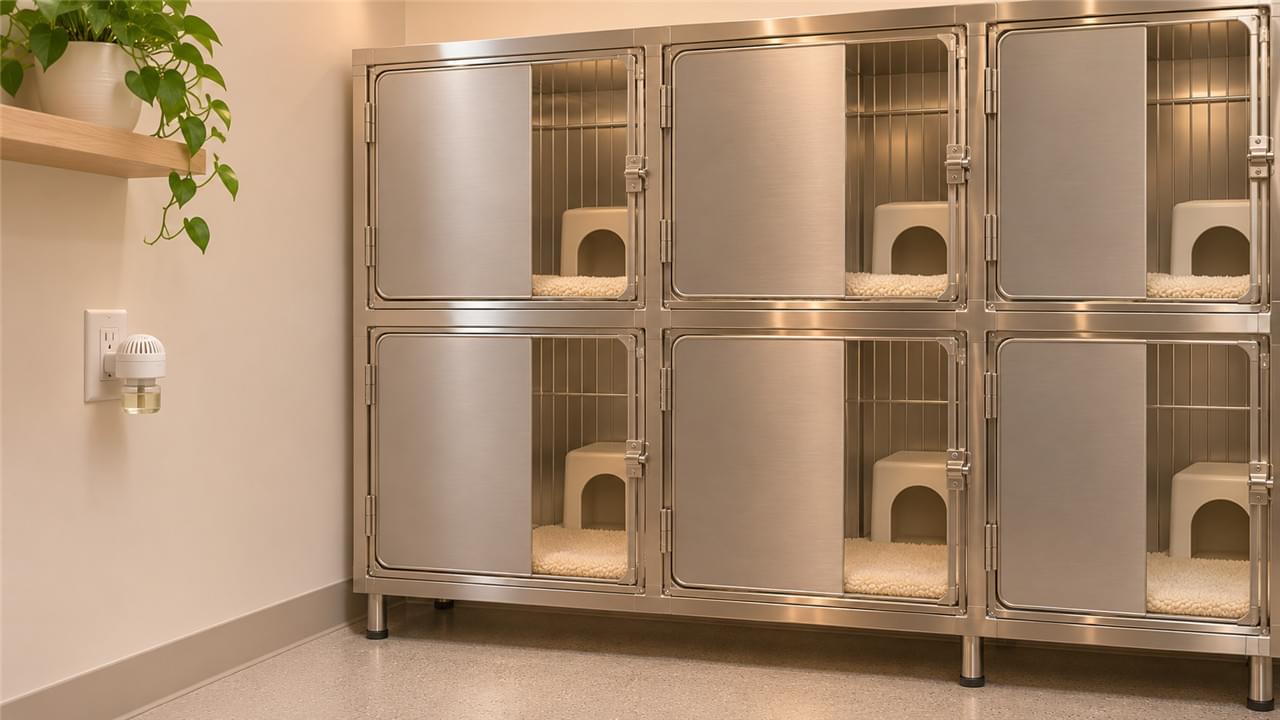
- 🚪 Solid cage fronts with viewing windows: solid doors remove the visual triggers that start barking chains
- 🎵 White noise or classical music: clinically validated through the “Through a Dog’s Ear” / “Through a Cat’s Ear” series — reduces arousal responses in both species
- ⏰ Exercise timing management: scheduling dog exercise away from high-activity care periods flattens peak noise events
🙈 Principle 3: Hiding and Privacy for Cats
📦 Hiding Spaces: The Best-Studied Fix for Stress in Hospitalized Animals
The most evidence-supported welfare intervention for hospitalized cats is a hiding option:
- 📦 Small cardboard boxes in the cage (disposable, single-use)
- 🏠 Commercial hide boxes (cardboard or fabric, cleaned between patients)
- 🧣 Privacy wrap over the cage front — towel or purpose-made panel
Studies consistently show cats with hiding access display significantly lower behavioral stress scores, reduced cortisol, and faster return to food intake than cats without. Commercial options include single-use paper pulp hide boxes from veterinary suppliers and privacy front panels offered as cage accessories — cheap, boring, and remarkably effective.
🌸 Principle 4: Pheromone Technology
💨 Synthetic Pheromone Diffusers That Ease Stress in Hospitalized Animals
Synthetic pheromone products have a demonstrated effect on hospital-related stress:
Dog Appeasing Pheromone (DAP / Adaptil):
- Synthetic analog of the appeasing pheromone from lactating bitches
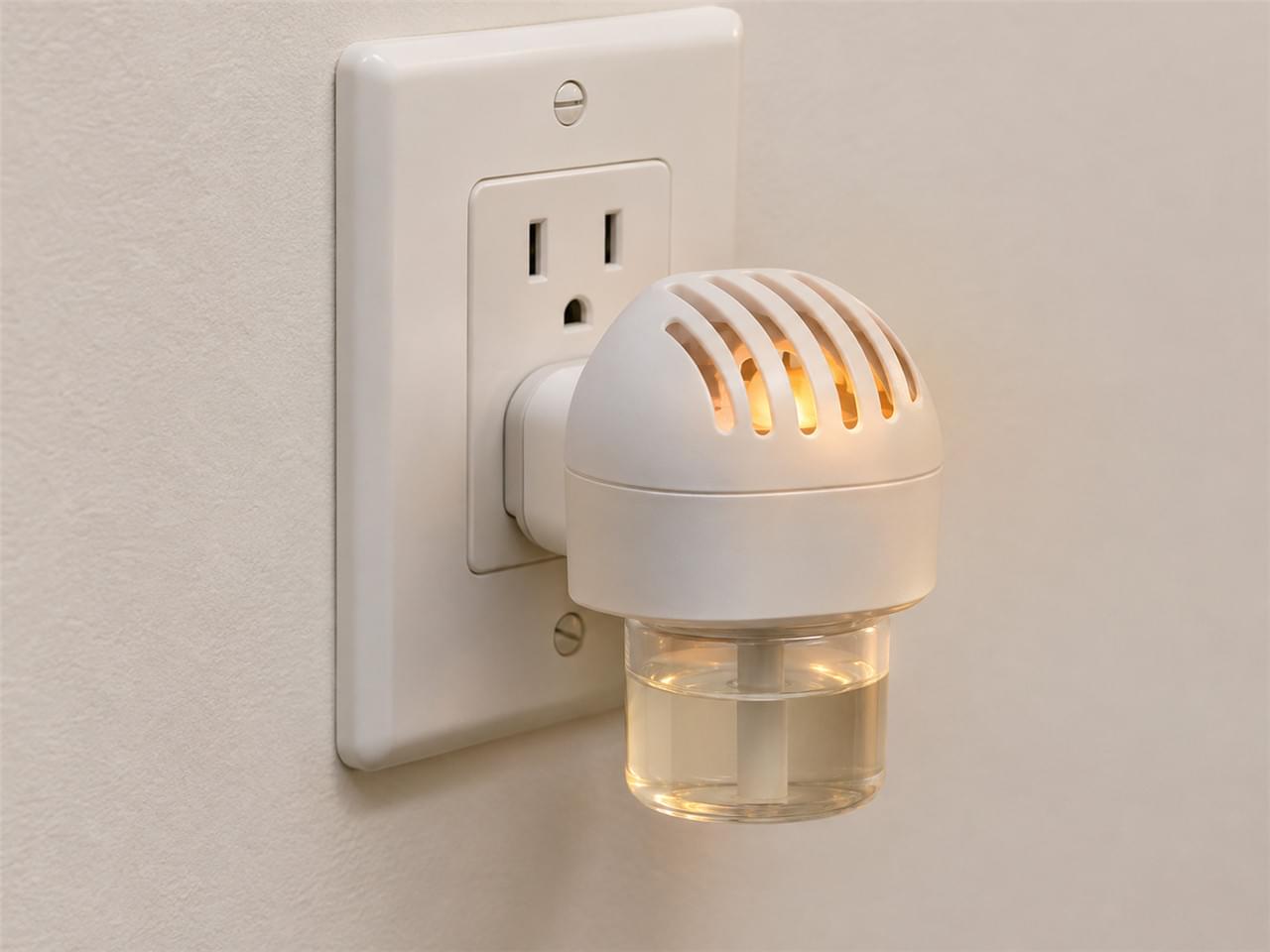
- Plug-in diffuser (covers ~50–70 m²), collar, or spray
- Effective for thunderstorm phobia, kennel/travel anxiety, hospitalization stress
- Evidence: multiple double-blind RCTs show significant reduction in stress behaviors
Feliway (Feline Facial Pheromone F3):
- Synthetic analog of the calming pheromone cats deposit by facial rubbing
- Diffuser, spray, and Classic vs. Multicat formulations
- Evidence: reduced inter-cat aggression, hiding behavior, and urine spraying
Implementation: one Feliway diffuser per 50 m² of cat ward, one DAP diffuser per 50 m² of dog ward, replaced monthly as directed.
🎾 Principle 5: Visual Barriers and Enrichment
🧩 Enrichment That Finishes the Job of Reducing Stress in Hospitalized Animals
Visual barriers within species: even between dogs of the same ward, solid side panels — rather than bars — in cage bank construction prevent the chain-barking response that elevates arousal across the entire ward.
Enrichment programs:
- 🐕 Dogs: rotating puzzle feeders, Kong-type toys, scheduled human interaction time
- 🐈 Cats: appropriate perch height (they prefer elevated resting), paper bags, scent enrichment
- 🦎 Exotics: species-appropriate foraging opportunities, substrate depth, hide complexity
Enrichment is the layer that turns a quiet ward into a genuinely calm one.
❓ Frequently Asked Questions
Q: How much does a stress-reduction facility design approach add to clinic build cost?
A: The major elements are species-separated rooms (often already required by local compliance), acoustic panels (50–50–150 each, typically 10–20 per ward), and pheromone diffusers (25–25–40/month ongoing). Total additional cost over a standard ward design is typically 3,000–3,000–8,000 for a new clinic build — modest against the welfare and clinical efficiency returns.
Q: Does stress reduction affect how quickly hospitalized animals recover?
A: Yes — demonstrably. Feline studies consistently show cats in low-stress housing resume eating 24–48 hours earlier than cats in high-stress environments, and early food intake is a direct recovery accelerator. The clinical implication: a cat in a well-designed low-stress ward may be dischargeable 1–2 days earlier than an equivalent patient upstairs from a barking ward.
Q: Should clinics invest in white noise machines specifically?
A: White noise generators or sound-conditioning speakers are a low-cost investment (150–150–500 per ward) with documented benefit. The mechanism is masking of sudden sharp sounds — cage doors, alarms, barking onset — that trigger startle responses, while continuous moderate background sound lowers overall arousal reactivity. One of the most cost-effective single stress-reduction investments available.
🎯 Key Takeaways
Reducing stress in hospitalized animals through facility design comes down to five build-time decisions: full species separation, disciplined acoustics, hiding access for every cat, synthetic pheromone diffusers on a replacement schedule, and enrichment that treats the mind as part of the patient. A low-stress veterinary ward design shortens stays, speeds appetite, and calms wards measurably — anchor the standards in the WSAVA animal welfare and low-stress handling guidelines and AVMA animal welfare guidelines. For the housing these principles attach to, see How to Choose Veterinary Cages and Hospital Housing Systems. Build calm in — patients can’t ask for it. 🐈