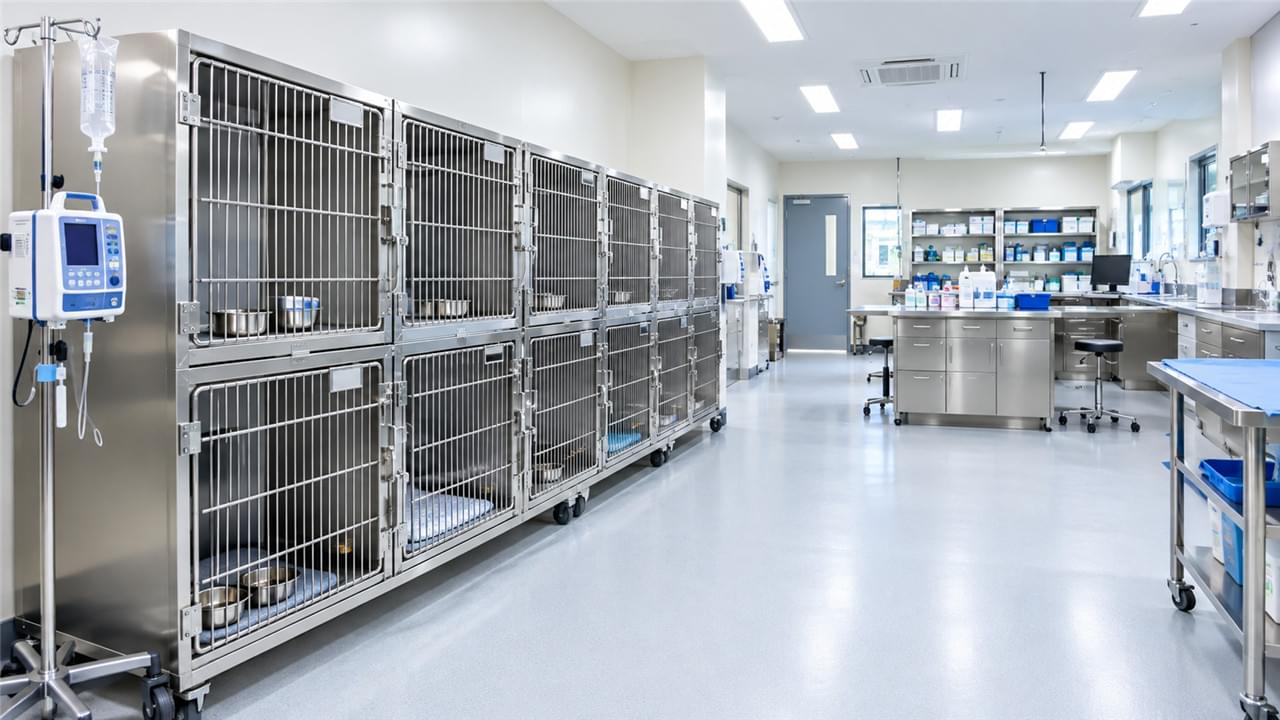
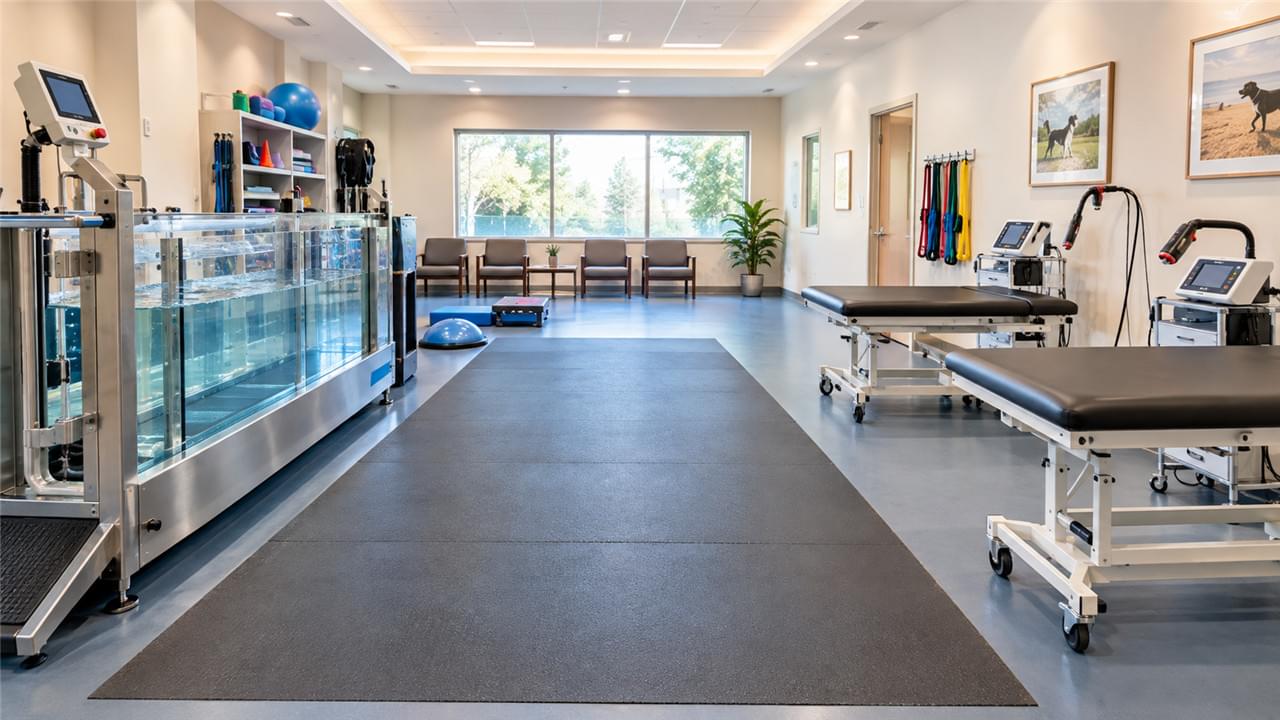
A hospital’s clinical outcomes are built on its nursing infrastructure. The quality of your veterinary nursing equipment determines how well hospitalized patients are monitored, how efficiently staff run daily ward operations, and how effectively stress-related complications are prevented. Investing in nursing equipment isn’t a secondary decision after the “serious” clinical systems — it is patient care quality, expressed in steel and fabric.
This guide covers the full spectrum of veterinary nursing, housing, and daily care equipment: cage selection and ward design, temperature control, nursing stations, grooming and hygiene tools, and the growing discipline of stress-reduction facility design. Seven pillars, one goal — a ward that heals instead of merely holds.
For broader setup context, see the Complete Guide to Veterinary Hospital Equipment Setup.
🏨 1: The Hospital Ward — Design and Equipment Principles
🧘 Patient Housing Philosophy
Modern ward design runs on a “low-stress handling” philosophy: every element of the patient environment should minimize anxiety, because stress itself is a clinical complication. The cortisol response to a stressful hospital stay impairs immune function, delays wound healing, prolongs recovery, and kills appetite — meaning your ward design is quietly treating or poisoning every patient in it.
Core ward design principles, supported by the WSAVA wellness guidelines:
- Species separation: dogs and cats housed in separate wards with zero visual or auditory cross-contamination
- Noise management: barking in a dog ward can hit 90–100 dB — sound-attenuating wall materials and well-timed exercise rotations take the peaks off
- Lighting cycles: natural or simulated day/night lighting supports normal circadian rhythms in hospitalized patients
Notice what these principles imply: they’re equipment decisions, not just floor-plan decisions. The veterinary nursing equipment you place in the ward — cage fronts, wall materials, lighting fixtures — either supports the low-stress philosophy or quietly undermines it. Plan them together.
🛏️ Cage Systems: The Core of Veterinary Nursing Equipment
Cage systems are where veterinary nursing equipment earns its keep or fails it. For general ward caging (comprehensive ICU cage guidance deserves its own deep dive):
- Stainless steel modular cage banks — built for relentless disinfection
- Variable size units, cat-sized through giant breed
- Isolation capability for infectious disease patients
- Drainage integrated at cage level
When auditing veterinary cage systems, run your hand along the welds and door latches before you look at the price list. Cheap stainless shows up as rough seams that trap organic material, doors that rattle all night, and latches that fail within a year of round-the-clock use. Quality modular systems cost more upfront and less every year after.
Bedding and comfort complete the housing picture — and bedding is the piece of veterinary nursing equipment patients touch all day, every day, so it’s the easiest place to cut corners and the fastest place to notice:
- Disposable paper-backed fleece (single-use) — the cross-contamination killer
- Reusable vetbed or vet fleece, machine-washable, for extended-stay patients
- Orthopedic memory foam for senior or recumbent patients
For a full walkthrough of sizing, materials, and configurations, see How to Choose Veterinary Cages and Hospital Housing Systems.
🌡️ 2: Temperature Control and Patient Comfort
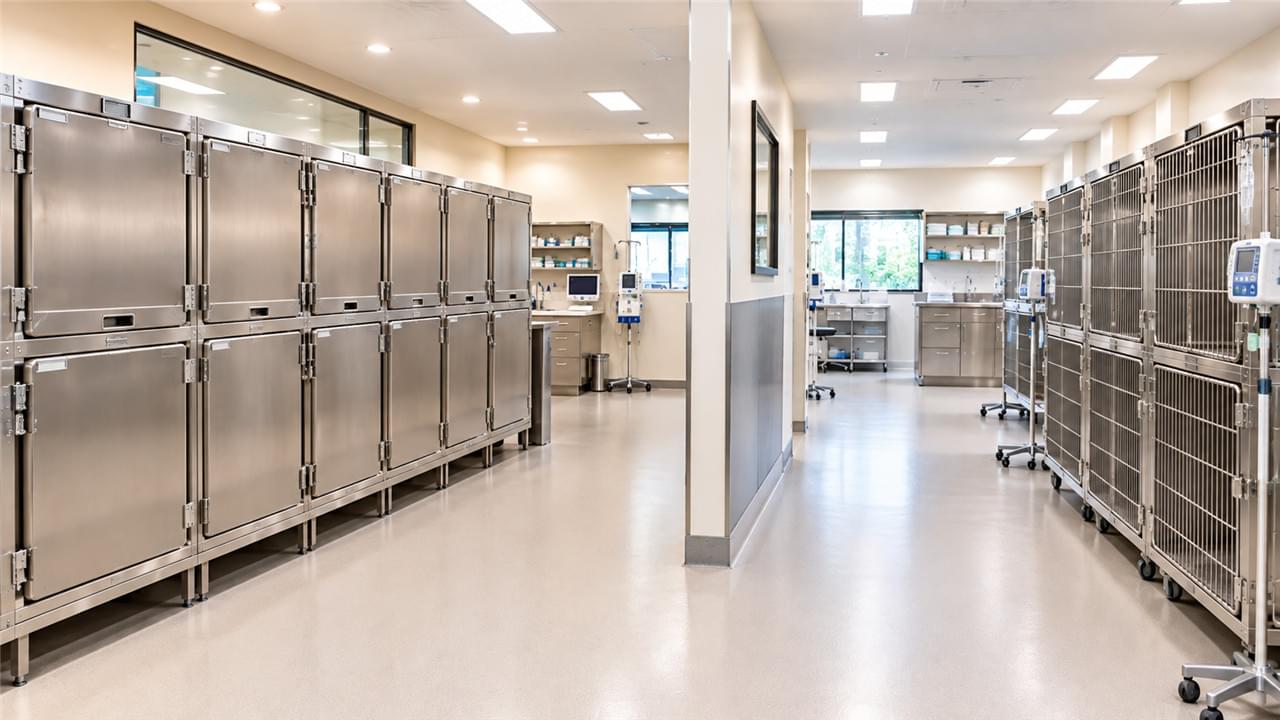
Temperature support is the pillar of veterinary nursing equipment that works silently in the background — until it fails. Thermoregulation failure is the silent complication of hospitalization. Post-surgical patients, neonates, small exotics, and geriatrics all run compromised temperature regulation — and none of them can tell you they’re cold.
Ward temperature equipment essentials:
- Room-level HVAC: dog wards 18–22°C, cat wards 20–24°C, neonatal ward 22–28°C
- Heated cage surfaces: thermostatically controlled heated floor panels per cage unit
- Incubators: for neonates, exotic birds, reptiles, and small mammals needing precise thermal environments
- Infrared thermometers: rapid spot-checks without rectal probe drama
Two practical notes from the ward floor. First, heated cage surfaces are only safe with a reliable thermostat and an alarm — overheating injures far more small patients than underheating. Second, place at least one incubator where staff can observe it from the nursing station at all times; neonates deteriorate faster than any other patient group, and visibility buys minutes that matter.
For detailed temperature management guidance, see Temperature Control and Comfort in Animal Wards.
💉 3: The Nursing Station — Equipment and Workflow
🧰 Treatment and Procedure Area
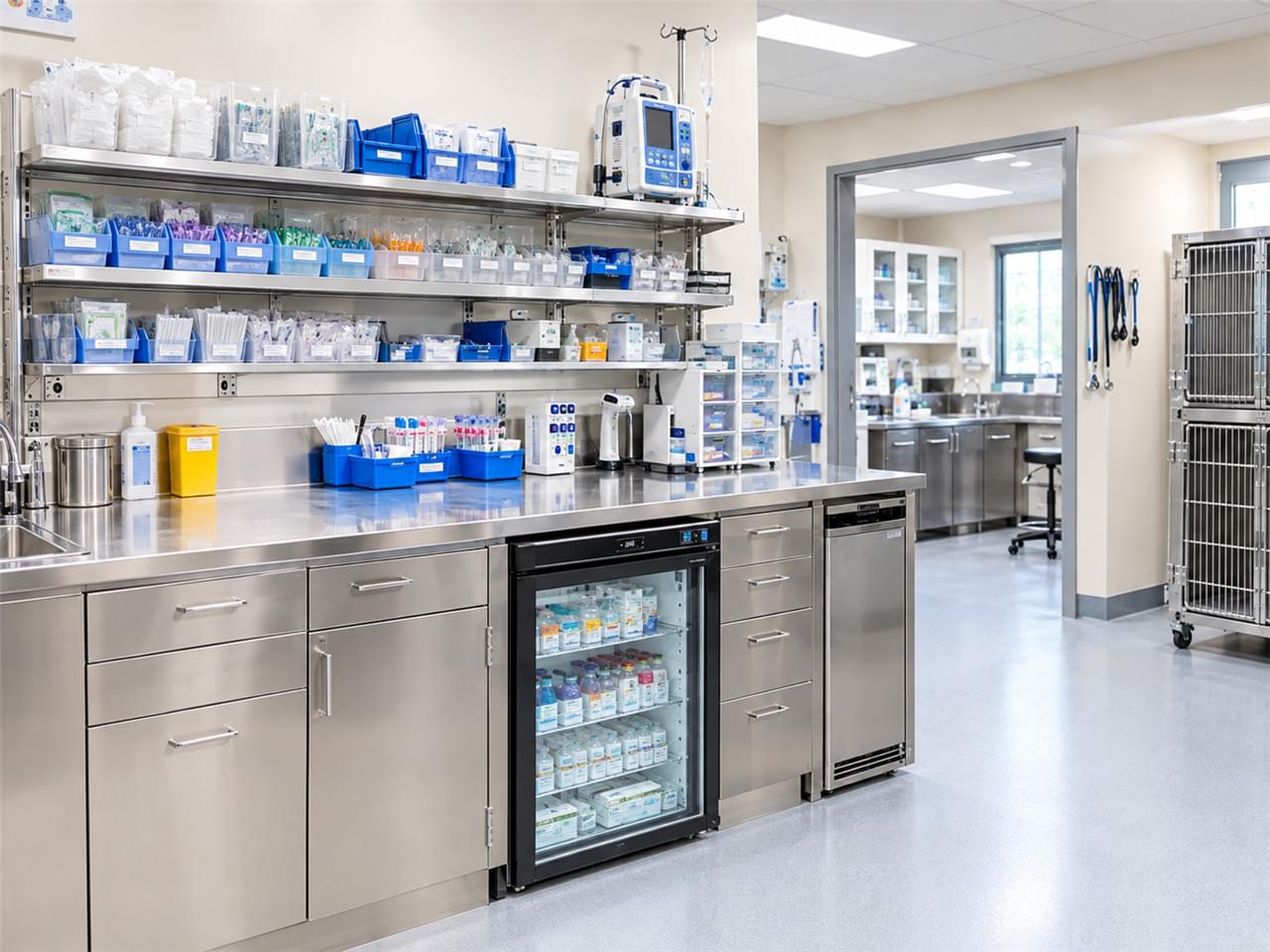
The treatment room is the hub of veterinary nursing equipment in daily use. If the ward is where patients live, this is where nursing actually happens — so stock it like it matters:
- Stainless steel treatment table — height-adjustable preferred, your back will thank you
- IV fluid preparation station: sharps bin, fluid warmer, catheter supplies, label printer
- Drug calculation aids: laminated dosing charts or an integrated PMS drug calculator
- Syringe pumps / IV pumps: at least two syringe pumps per treatment station
- Consumables storage: organized, labeled bins for IV catheters, syringes, bandaging, urinary catheters
📟 Ward Monitoring: Handheld Veterinary Nursing Equipment
Nursing rounds move fast, so this tier of veterinary nursing equipment must be grab-and-go — handheld, accurate, and everywhere:
- Handheld pulse oximeter: rapid SpO₂ checks without dragging out a full monitor
- Digital thermometers: multiple units, because one is never where you need it
- Handheld Doppler: blood pressure spot-checks on potentially hypotensive patients
- Glucose meters: for diabetic and critically ill patients on frequent monitoring schedules
💊 Medication Management
- Drug refrigerator: dedicated pharmaceutical-grade unit (2–8°C) with temperature log
- Controlled drug cabinet: lockable, bolted to the wall, with dispensing records
- Label printer: patient-specific IV line labels — cheap insurance against medication errors
One more unglamorous essential: a dedicated sharps-and-spoilage disposal workflow that everyone actually follows. Medication management safety is 20% equipment and 80% habit, and the equipment you buy should make the safe habit the easy one.
✂️ 4: Grooming and Hygiene Equipment
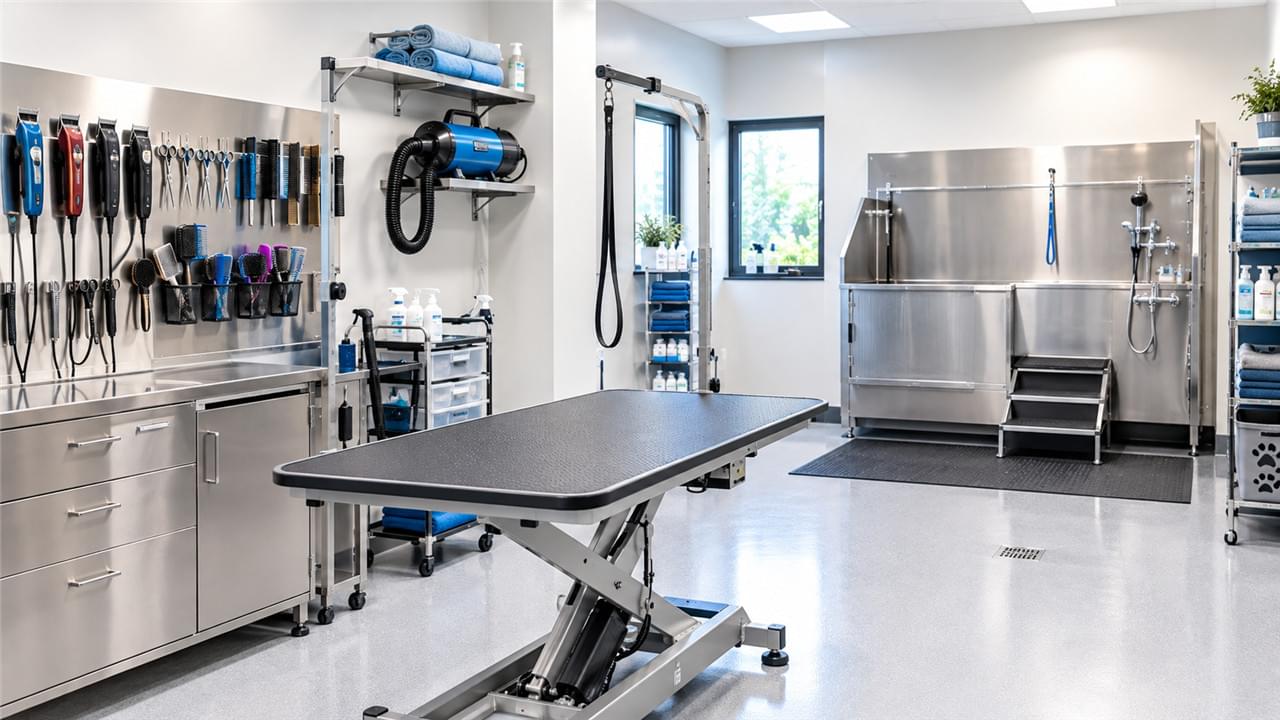
Grooming and hygiene are clinical nursing activities, not cosmetic extras. The veterinary nursing equipment in this section prevents skin breakdown, infection, and mite infestation in hospitalized patients — none of which cares how the patient looks.
🐕 Essential Grooming Equipment
This corner of veterinary nursing equipment gets underestimated until the first long-stay patient arrives matted and miserable:
- Veterinary grooming table: height-adjustable with non-slip rubber surface; grooming arm and noose for safe restraint
- Professional clippers: surgical prep clippers plus general grooming clippers — two different jobs
- High-velocity dryer: essential after baths or surgical preps; cuts patient chilling dramatically
- Bathing system: walk-in tub or wall-mounted shower for larger patients, plumbed hot/cold with hand-shower
- Nail grinders and clippers: routine nail care for long-stay patients
Bathing frequency deserves a clinical note: hospitalized patients rarely need full baths, but incontinent and recumbent patients need spot-cleaning daily to prevent urine scald and skin breakdown. A bathing system that’s fast to run and easy to drain gets used; one that’s awkward gets skipped, and the patient pays for it.
For detailed guidance, see Grooming & Hygiene Equipment for Veterinary Clinics.
🩹 Surgical Site Hygiene
- Wound-care trolley: dressing materials, sterile saline, antiseptics, wound irrigation syringe set
- E-collar station: full size range from cat-sized to giant breed, within reach of every post-surgical patient
An e-collar station sounds trivial until the midnight surgery recovery where nobody can find the right size. Keep the full range stocked, wall-mounted, and visible — the right collar at arm’s reach protects surgical sites from the licking that undoes a repair.
😺 5: Reducing Stress in Hospitalized Animals
Stress reduction in hospitalized animals has moved from nice-to-have to clinical imperative. The veterinary nursing equipment investments here are modest; the patient outcomes are not.
👁️ Visual and Auditory Barriers
The cheapest stress reduction in hospitalized animals is often a sheet of acrylic: patients stress over what they can see, so blocking the sightline to the next patient changes their whole hospital stay.
- Cage privacy panels: solid front panels or attached screens reduce visual threat from neighbors — especially critical for cats
- Cat-specific ward: solid ceiling separation from the dog ward, no exceptions
- Sound-absorbing wall panels in high-volume dog wards
🌸 Pheromone Diffusers
- Dog Appeasing Pheromone (DAP/Adaptil) diffusers in dog wards
- Feliway (feline facial pheromone) diffusers in cat wards
- Multiple veterinary studies demonstrate measurable reductions in stress indicators
Diffusers are the lowest-effort veterinary nursing equipment in this entire guide: plug them in, keep refills on the autoship list, and let the chemistry work in the background. Just remember they’re an adjunct, not a substitute for the structural fixes above.
🧸 Enrichment: The Overlooked Veterinary Nursing Equipment
Enrichment is veterinary nursing equipment in the truest sense — it changes patient physiology:
- Rotating enrichment toys for extended-stay dogs (rotation prevents habituation)
- Hiding boxes and igloos for cats — essential, full stop. Cats without hiding access in a cage show significantly elevated cortisol
- Soft classical music or species-appropriate audio through the ward sound system
For comprehensive facility-design guidance, see Reducing Stress in Hospitalized Animals Through Facility Design.
🔁 6: Workflow Optimization Through Nursing Equipment Design
Dedicated deep dive: Workflow Optimization Through Nursing Equipment Design.
Layout is where veterinary nursing equipment choices become daily time savings or daily friction. The core principles:
- Equipment zoning: all nursing procedure equipment collocated in one treatment area — never scattered across rooms
- Mobile carts: medication carts and dressing trolleys go to the patient’s bedside, not the other way around
- Documentation integration: tablet-based rounds documentation updates the PMS record in real time, with no return trips to the station
The unifying idea: every piece of veterinary nursing equipment should either come to the patient or sit where the work happens. Equipment placed “wherever there was space” generates a permanent tax of extra steps, and extra steps at scale mean fewer rounds per shift.
🧼 7: Hygiene Infrastructure and Disinfection Discipline
The best veterinary cage systems are only as safe as the cleaning routine behind them:
- Terminal cleaning between every patient: bedding and waste out → rinse → hospital-grade disinfectant at full contact time → rinse → dry
- Weekly deep cleans covering cage hinges, drainage ports, and under-cage surfaces
- Monthly autoclave of removable internal components where possible
- UV-C units as an additive terminal-disinfection layer in high-risk areas (isolation rooms, post-infectious discharge) — never a replacement for chemical disinfection
Written protocols beat good intentions. Post the terminal-cleaning sequence on the ward wall, rotate deep-clean responsibility on a named schedule, and audit monthly — disinfection discipline is what keeps every other piece of veterinary nursing equipment safe to reuse.
❓ Frequently Asked Questions
🧽 How Often Should Veterinary Hospital Cages Be Disinfected?
Between every patient, without exception. Terminal protocol: remove all bedding and waste, rinse with water, apply hospital-grade disinfectant at the manufacturer’s recommended contact time, rinse, dry. Add weekly deep cleaning of hinges, drainage ports, and under-cage surfaces, and monthly autoclaving of removable internal components.
💰 Which Veterinary Nursing Equipment Is Most Underinvested?
Field observation is remarkably consistent: IV fluid management precision. Many general practices still run IV fluids by gravity drip without pump control — an approach that routinely delivers both too little and too much fluid, particularly in cats and small patients. Syringe pumps at 800–800–2,500 are a high-impact, low-cost fix that directly improves outcomes and nursing efficiency.
💡 Should Veterinary Wards Use UV Disinfection Equipment?
UV-C units have a real role in terminal room disinfection in high-risk areas — isolation rooms and post-discharge cleaning of infectious cases. They’re specialized veterinary nursing equipment, not magic: they don’t replace chemical surface disinfection but add an airborne-pathogen reduction layer. For everyday ward disinfection, chemicals remain more practical and cost-effective.
📚 Related Articles in This Series
- How to Choose Veterinary Cages and Hospital Housing Systems
- Temperature Control and Comfort in Animal Wards
- Workflow Optimization Through Nursing Equipment Design
- Grooming & Hygiene Equipment for Veterinary Clinics
- Reducing Stress in Hospitalized Animals Through Facility Design
🎯 Key Takeaways
Great veterinary nursing, housing, and daily care equipment doesn’t shout for attention — it shows up as calmer patients, cleaner cages, faster rounds, and fewer complications. Build the ward around low-stress principles, keep thermoregulation and fluid precision tight, treat grooming and enrichment as clinical work, and audit your veterinary nursing equipment against these seven pillars once a year — ward standards drift quietly otherwise. Let welfare standards like the AVMA animal welfare in veterinary practice guide the details. Your patients can’t tell you what the ward feels like. Their recovery times will. 🐾