Grooming and hygiene equipment occupies a clinical position that is easy to underestimate: it directly shapes skin health, surgical site preparation quality, wound care, and the physical condition of long-stay hospitalized patients. Veterinary grooming is not cosmetic — it is a nursing function, and the tools behind it deserve the same procurement rigor as your monitors and pumps.
This guide covers the five essential categories of grooming and hygiene equipment for veterinary clinics in daily clinical use. For the broader nursing infrastructure context, see the Veterinary Nursing, Housing & Daily Care Equipment Guide.
🛏️ Category 1: Grooming Tables
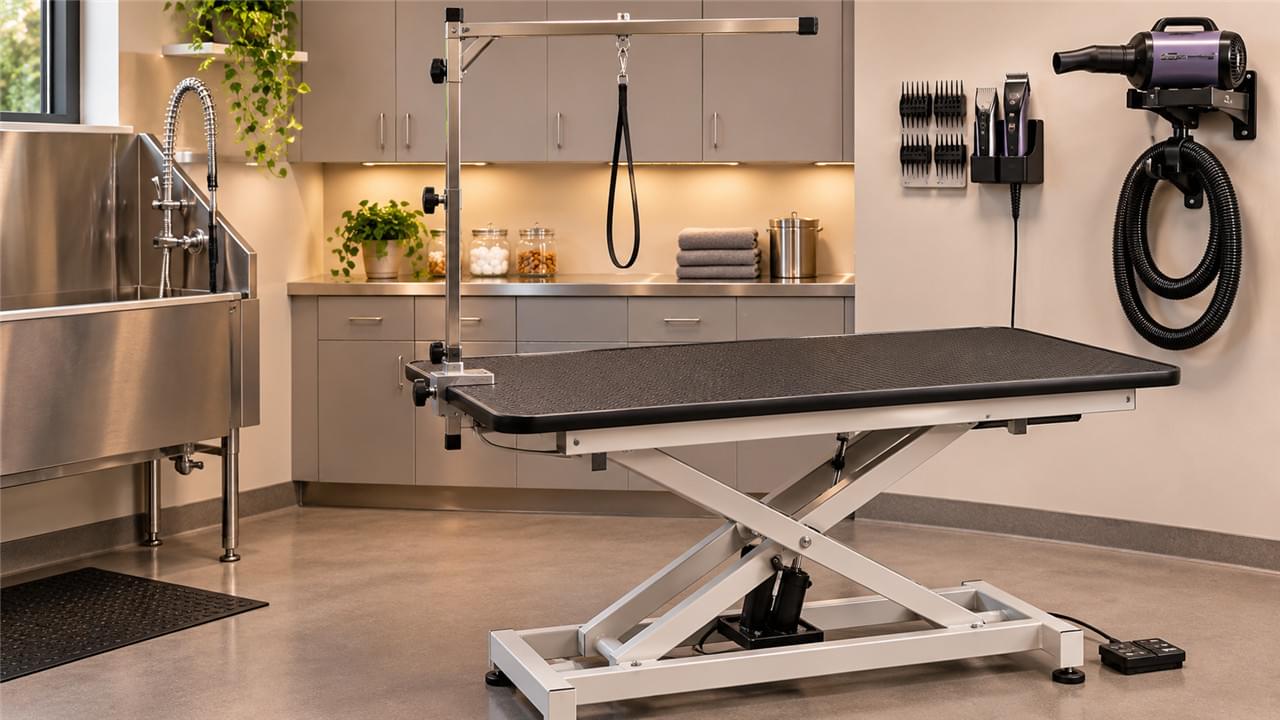
🦴 Professional Grooming Tables: The Core of Grooming and Hygiene Equipment
- Non-slip rubber surface (minimum 8mm thick) — prevents patient falls during standing procedures
- Height-adjustable hydraulic or electric lift, 55–90 cm working range
- Weight capacity: 150 kg minimum for large breed handling
- Grooming arm with adjustable noose — quick-release safety mechanism mandatory, so a falling patient is immediately releasable
Why the grooming table anchors any grooming and hygiene equipment budget — uses well beyond cosmetics:
- ✂️ Surgical site hair clipping and preparation
- 🩹 Wound assessment and bandage changes for standing patients
- 🔍 Dermatology examinations that benefit from flat table access
- 🐾 Nail trimming and ear care in general practice
🐇 Pediatric and Exotic Animal Handling Boards
Smaller, lower-height tables for rabbits, birds, and exotic small mammals: non-slip surfaces are critical — exotic species injure easily on slick surfaces — and side-access ports or transparent enclosures allow calm handling.
✂️ Category 2: Clippers and Shaving Equipment
🔪 Clippers and Shavers Inside the Grooming and Hygiene Equipment Kit
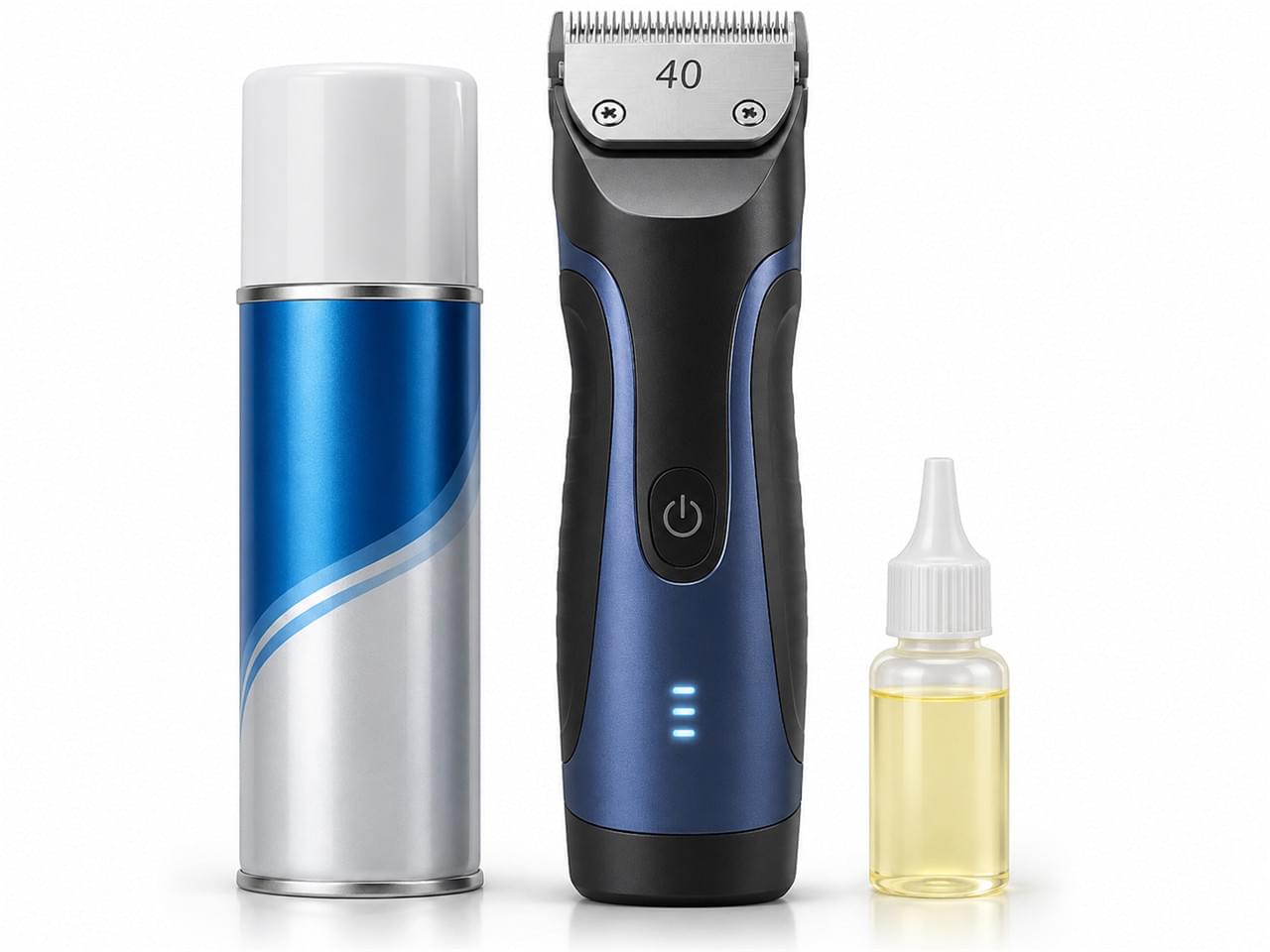
Surgical site preparation clippers — the workhorse of pre-op prep:
- Blade: #40 surgical blade (0.25mm cut), the standard for veterinary surgical site preparation
- Motor: rotary preferred for precision and low noise — quieter means less patient stress
- Cooling: blade cooling spray is essential; hot blades cause thermal skin burns during extended clipping
- Weight: under 400g to reduce hand fatigue in prolonged prep
General grooming clippers: #7F, #10, and #30 blades cover different coat lengths; cordless designs reduce trip hazards; oil blades after every use and replace by hours of use, not visual inspection.
Clinical-grade electric shaver: foil-type with medical-grade head for close shaving without blade contact risk — periocular preparation before ophthalmic surgery is the classic case. Single-use foil caps handle infection control between patients.
🛁 Category 3: Veterinary Bathing Systems
🚿 Bathing Systems: The Wet Half of Grooming and Hygiene Equipment
Walk-in tub for large patients:
- Minimum 100×80×70 cm internal dimensions for large breed dogs
- Non-slip floor with anti-fatigue grip
- Plumbed hot/cold water with adjustable hand shower
- Side-access step or ramp — never a step-up over a high wall, which is unsafe for post-surgical or arthritic patients
- Drain: minimum 50mm floor drain with hair catch basket
Table-level station for small patients: integrated trough with drain at grooming table height, warm-air dryer outlet for immediate drying — suited to cats, small dogs, and exotics.
Bathing chemistry matters as much as the tub: veterinary-formulated shampoos only (medicated, antiseborrheic, antifungal, insecticidal — never human products), pre-dilution dispensing to avoid waste and inconsistent strength, and warm water rinses — room-temperature water reads as discomfort to the patient and raises stress. Well-designed veterinary bathing systems quietly prevent half the drama on bath day. 💧
💨 Category 4: Drying Equipment
🌬️ Dryers That Complete the Grooming and Hygiene Equipment Set
High-velocity (force) dryers — the fastest and loudest members of the grooming and hygiene equipment lineup:
- 20,000–40,000 FPM air velocity — unheated air, pure velocity lifting coat and accelerating evaporation
- Prevents chilling from wet coats, loosens dead coat, and prevents post-bath dermatitis in double-coated breeds
- Check decibel ratings before purchase; some force dryers are dramatically louder than others
Cabinet dryers: enclosed heated cabinet at adjustable 25–45°C for slow, calm, hands-free drying — the preferred route for cats and nervous small breeds, with no airflow stress at all.
🩺 Category 5: Surgical Site Preparation Equipment
⚕️ Surgical Prep: Where Grooming and Hygiene Equipment Gets Clinical
Surgical site prep is the most clinically consequential work the grooming and hygiene equipment in your clinic will ever do:
Electric razor + antiseptic sequence:
- Clip hair with surgical prep clippers (#40 blade)
- Remove debris and clipped hair with vacuum
- Apply antiseptic scrub — chlorhexidine or povidone-iodine per your surgical protocol
- Allow full contact time before draping
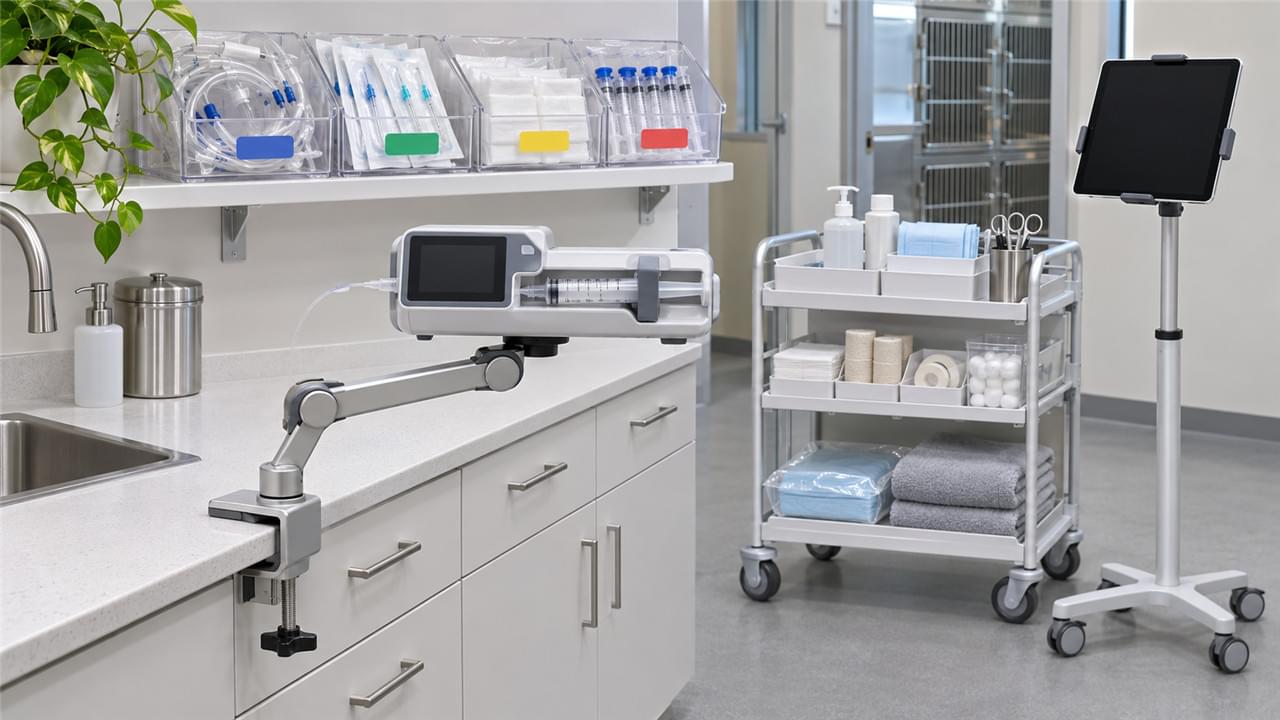
Surgical prep kit: sterile gauze and bowls, pre-packaged sterile scrub sponges, and sterile cotton-tip applicators for precise antiseptic work in fold areas.
❓ Frequently Asked Questions
Q: Can human clippers be used for veterinary surgical preparation?
A: Not recommended. Human clippers are built for hair very different from dog and cat coats — especially dense double-coated undercoats. Veterinary surgical site preparation clippers handle mixed coat textures without clogging or overheating; human units raise the risk of blade heating (thermal skin injury), incomplete hair removal, and mid-procedure failure.
Q: How should grooming equipment be disinfected between patients?
A: Table surfaces: hospital-grade disinfectant with proper contact time between every patient. Clipper blades: wipe with 70% isopropyl alcohol, then oil. For suspected dermatophytosis, dedicate blades that can be soaked in 1:10 dilute bleach for 10 minutes before reuse. Bathing equipment: veterinary surface disinfectant between patients; scrub drains weekly.
Q: Is professional grooming a revenue service worth offering?
A: Yes — especially with medical grooming capability: skin conditions, medicated baths, and coat management for patients with concurrent dermatological or orthopedic issues. Medical grooming commands a premium over salon pricing and builds retention. A complete grooming station (3,000–3,000–8,000) typically pays back within 12–18 months at moderate utilization. 💰
🎯 Key Takeaways
A clinical grooming and hygiene equipment lineup comes down to five categories: adjustable grooming tables, coat-specific clippers, properly plumbed bathing systems, drying gear matched to patient temperament, and a disciplined surgical prep kit. Treat grooming as nursing, not cosmetics, and anchor your protocols in the WSAVA dermatology and skin care guidelines and AVMA veterinary hygiene standards. For the ward-side counterpart, see Reducing Stress in Hospitalized Animals Through Facility Design. Healthy skin is discharge criteria — buy the tools accordingly. 🐕