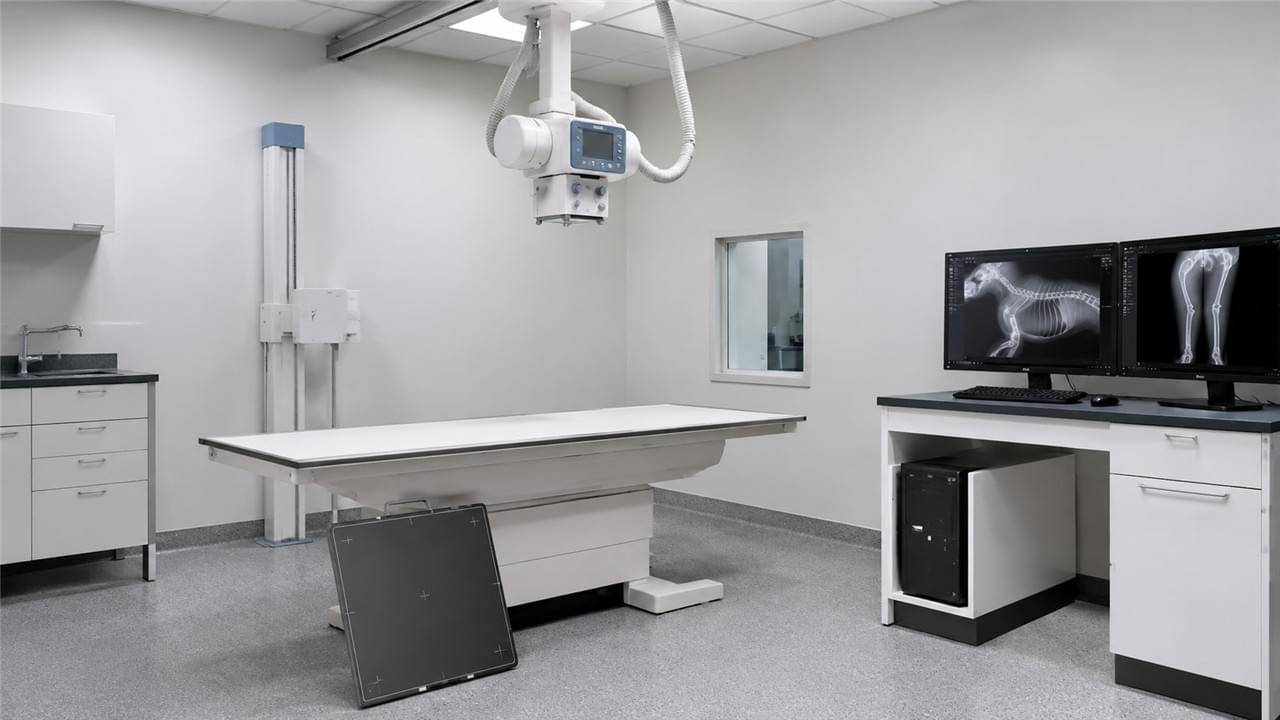
In-house veterinary lab equipment or an external reference laboratory? That choice is one of the most financially significant decisions a veterinary practice makes. Both models have legitimate applications — and the right answer depends on your caseload volume, case mix, clinic philosophy, and financial position. There is no universal winner, only the right fit for your practice.
This guide offers an objective framework for evaluating in-house lab vs external lab for veterinary practices — the financial, clinical, and operational trade-offs at every decision point. For the full diagnostic context, see Veterinary Diagnostic Equipment: From Basic Exams to Advanced Imaging.
⚖️ The Core Trade-Off: Speed vs. Specialization
In-house veterinary lab equipment delivers results in 5–20 minutes — enabling same-visit treatment decisions, cutting client wait time, and lifting case revenue per consultation. External reference laboratories offer an essentially unlimited menu of specialized tests that no clinic system can replicate, but with 12–48 hour turnaround.
The core question for any practice weighing in-house lab vs external lab for veterinary practices is speed versus specialization: which tests you run, at what frequency, and what the clinical and financial cost of waiting is for each category. There’s no universal “better” — only the right balance for your caseload.
🧪 What In-House Labs Do Well
Tests Where In-House Veterinary Lab Equipment Wins
When speed decides the outcome, in-house veterinary lab equipment is the right call for:
- High-frequency routine panels: Pre-anesthetic chemistry, senior wellness CBC + chemistry, monitoring panels for diabetic or CKD patients
- Time-critical diagnostics: Emergencies where treatment can’t wait 24 hours (DKA, Addisonian crisis, acute hepatopathy, suspected toxin exposure)
- Same-visit treatment confirmation: Checking response to treatment within the visit (e.g., post-fluid BUN/creatinine in urinary obstruction)
- Fecal and urine sediment cytology: Basic in-house microscopy covers most parasitology and cytology needs in general practice
The Financial Case for In-House Veterinary Lab Equipment
At moderate caseload:
- A combined CBC + chemistry panel generates 45–45–120 revenue per run (market-dependent)
- A hematology + chemistry combined analyzer at 20,000–20,000–35,000 typically reaches full ROI in 12–18 months at a 3-vet practice running 10–20 panels daily
- Ongoing reagent cost is roughly 3–3–8 per CBC and 5–5–15 per chemistry panel — well below client charge rates
That math is why in-house veterinary lab equipment keeps winning volume in general practice — the economics compound with every panel you run.
🏥 What External Labs Do Well
What In-House Veterinary Lab Equipment Can’t Replace
External reference labs remain indispensable for:
- Histopathology and cytopathology: Requires pathologist interpretation — no in-house equivalent exists
- Advanced microbiology: Culture and sensitivity with extended sensitivity panels
- Hormonal assays: ACTH stimulation, T4/TSH, progesterone, insulin:glucose ratio — radioimmunoassay or chemiluminescent technology
- PCR/molecular diagnostics: Vector-borne panels, respiratory pathogen PCR, exotic species profiles
- Toxicology: Heavy metal screens, drug residue testing, specific toxin confirmation
- Specialist panels: Bile acids, UPC, vitamin B12/folate, cobalamin
These tests make up a small share of total volume at most general practices, but carry a disproportionate share of diagnostic value in complex cases. The AVMA veterinary laboratory standards are a solid reference for what quality laboratory work should look like in either setting.
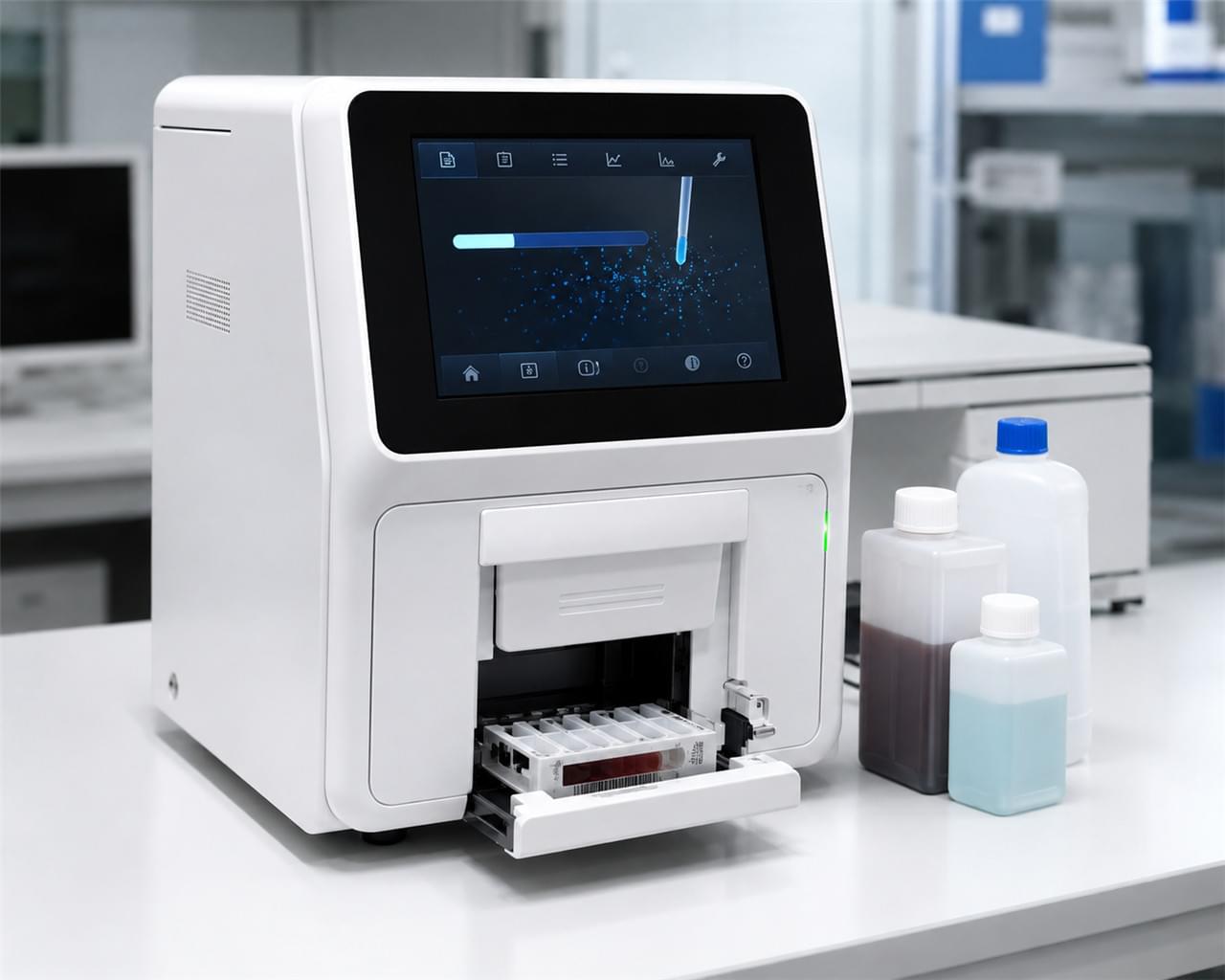
🔀 The Hybrid Model: The Optimal Approach for Most Practices
How Most Practices Use In-House Veterinary Lab Equipment
For most general practices, the clinically and financially optimal approach is a hybrid model — in-house for the routine, external for the complex:
| Test Category | Best Source |
|---|---|
| CBC, chemistry panel, urinalysis | In-house |
| Blood gas and electrolytes | In-house |
| Rapid tests (heartworm, FIV/FeLV, parvovirus) | In-house |
| Histopathology / cytology (pathologist read) | External lab |
| Culture and sensitivity | External lab |
| Hormonal assays (T4, ACTH, insulin) | External lab |
| PCR panels | External lab |
| Specialty / low-frequency tests | External lab |
This hybrid lab model for veterinary practice delivers in-house speed where it matters most while keeping the specialist menu of external labs within reach — it’s how in-house veterinary lab equipment and external partners work best together. Not a compromise: the best of both models.
🛠️ Choosing In-House Analyzer Equipment: Key Criteria
Choosing In-House Veterinary Lab Equipment: 5 Key Criteria
If you’re ready to invest in in-house veterinary lab equipment, evaluate analyzers on five things:
- Species validation: Does the manufacturer publish species-specific reference ranges and validation studies for your patient population?
- Reagent cost and availability: What’s the cost per test for your most frequent panels? Is local reagent supply reliable?
- Analyzer footprint and power requirements: Do your bench dimensions and electrical supply accommodate the analyzer?
- PMS integration: Does the analyzer export directly to your practice management software via HL7/LIS interface?
- Service and support: What’s the service response time in your market? Is a loaner available during repairs?
A good in-house chemistry analyzer earns its keep on criteria 1 and 2 — everything else is operational detail you can negotiate.
❓ Frequently Asked Questions
Q: At what patient volume does in-house lab become financially justified?
A: A general benchmark: if your practice averages 5+ chemistry panels per day (pre-anesthetic, wellness, and monitoring combined), an in-house chemistry analyzer is financially justified in most markets. Hematology analyzers typically hit ROI at slightly lower volumes given lower reagent costs. Run the simple math — (annual panel volume × revenue per panel) vs. (equipment cost + annual reagents + maintenance) — and that’s your in-house veterinary lab equipment payback period.
Q: Can in-house analyzers replace external labs entirely?
A: No — and any practice claiming otherwise is underserving its patients. Histopathology, culture/sensitivity, most hormonal assays, and PCR panels require external infrastructure that no clinic can replicate. In-house and external labs are complementary, not competing. A well-functioning practice uses both.
Q: How do I choose between the major veterinary analyzer brands (Idexx, Heska, Mindray, etc.)?
A: Evaluate species validation breadth, reagent cost, local service quality, and PMS integration. Brand reputation matters, but the decisive factors are local service availability — a 4-week repair wait is clinically unacceptable — and reagent supply chain reliability. Ask existing users for local reference visits before purchase.
✅ The Bottom Line
The decision isn’t in-house OR external — it’s how to combine both intelligently. Build your in-house veterinary lab equipment around high-frequency, time-critical tests, and route the rest to a reference lab you trust. The WSAVA laboratory diagnostic guidelines offer a useful baseline for quality expectations in both directions. And once your lab mix is set, keep improving the pipeline — see Diagnostic Workflow Optimization for Veterinary Hospitals for what comes next.