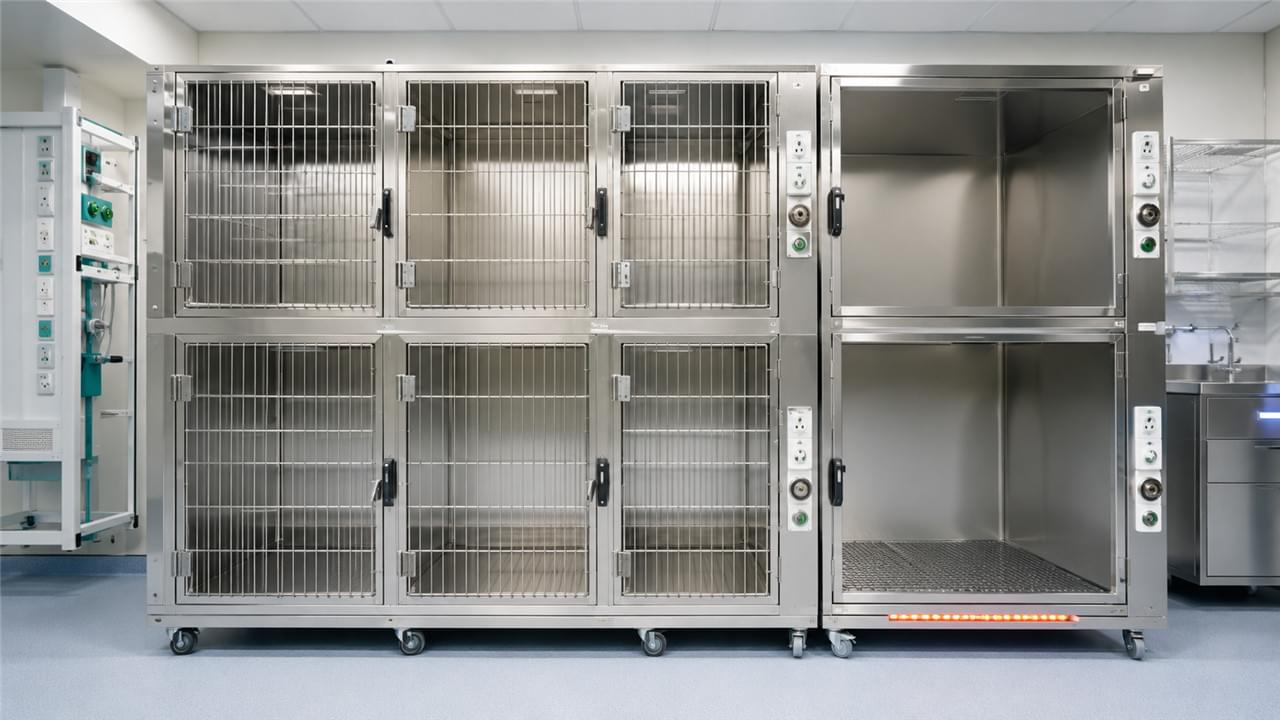
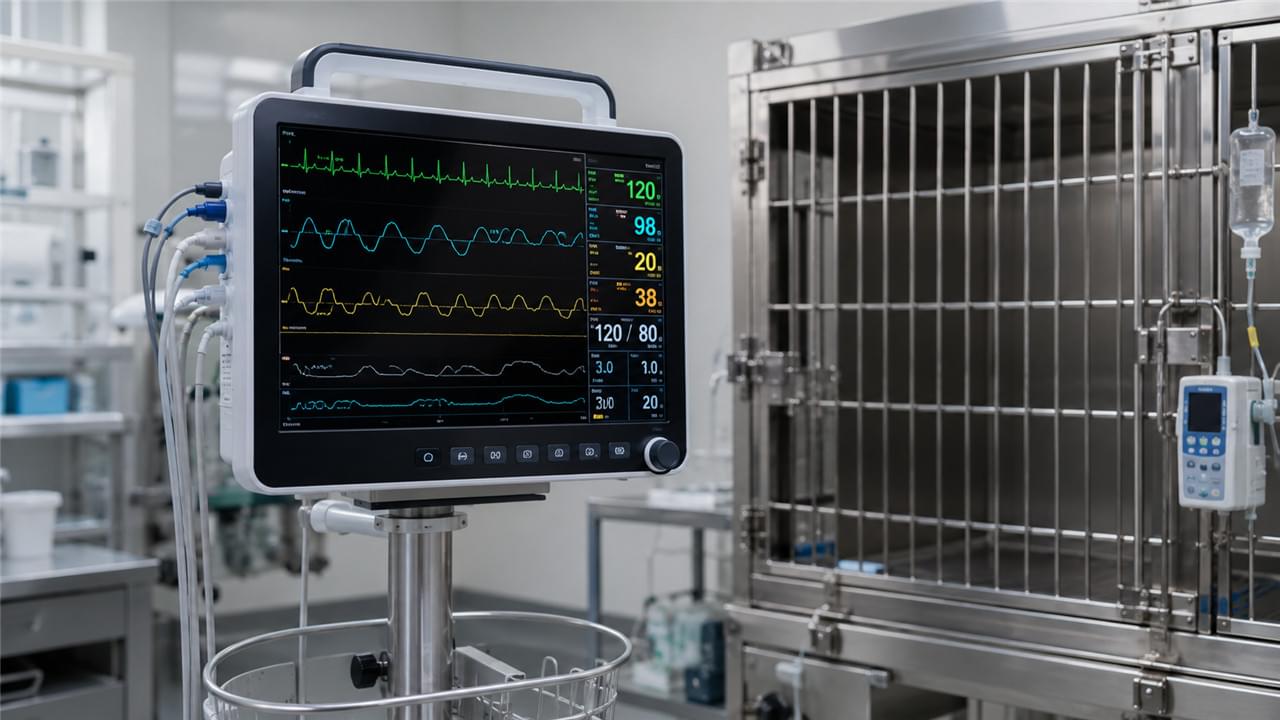
ICU cage systems are far more than a place to put a sick animal. The right cage is an active microenvironment — one that supports thermoregulation, delivers supplemental oxygen, gives your nursing team real access, and contains contamination, all at the same time. Get this piece of infrastructure wrong and every other critical care investment works harder than it should.
This guide walks through selecting ICU cage systems from materials and sizing to heating technology and infection control — the decisions that determine whether your critical care ward helps patients recover or merely holds them. For the complete equipment picture, start with our Veterinary ICU & Critical Care Equipment: Complete Guide.
🌡️ Why Temperature Control Is a Critical Care Priority
Hypothermia is one of the most common — and most preventable — complications in hospitalized veterinary patients. Effective temperature control in veterinary care isn’t a comfort feature; it’s a survival intervention. The consequences of letting a patient drift cold are serious:
- ❤️ Cardiac arrhythmias develop below 33°C in most species
- 🩸 Coagulopathy impairs clotting and raises perioperative bleeding risk
- 🛡️ Impaired immune function prolongs recovery and invites infection
- 💉 Prolonged drug metabolism — anesthetics and opioids clear more slowly in hypothermic patients, extending sedation and delaying recovery
Post-surgical patients, neonates, toy breeds, and cats carry the highest risk. Active warming — through heated cage floors, fluid warmers, and patient warming devices — needs to begin before the patient ever reaches the ICU from the OR. That’s why modern ICU cage systems treat heat as core infrastructure, not an accessory bolted on later.
🏥 ICU Cage Systems: Types and Configurations
Stainless Steel: The Workhorse of Modern ICU Cage Systems
Stainless steel remains the standard for veterinary ICU environments, and for good reason:
- Fully autoclavable internal surfaces
- Compatible with hospital-grade disinfectants without material degradation
- Modular configurations let you customize cage unit size to your patient population
Single-wall vs. double-wall construction:
- Single-wall: standard; adequate for most ICU applications
- Double-wall: thermally insulated, holds internal temperature more efficiently — preferred for neonatal and exotic patient housing
Polymer and Walk-In ICU Cage Systems for Every Patient
Not every patient fits the standard steel bank, and the best ICU cage systems plan for that reality up front. Two alternatives earn their place:
Polymer (high-density polyethylene) systems:
- Lighter weight than stainless steel
- Good thermal insulation properties
- ⚠️ Some polymer systems can’t withstand autoclave temperatures — verify cleaning compatibility with the specific product before you buy
Walk-in / large animal kennels:
- Required for giant breed dogs, large exotics, or post-surgical orthopedic patients that can’t be housed in standard units
- Internal dimensions: minimum 120×100×100 cm for giant breed use
- Full-door or split-door access lets nurses work while the patient remains ambulatory
🔥 Temperature Control Technology Inside Modern ICU Cage Systems
Heated Floors: The Heart of ICU Cage Systems
Heated ICU cage floors embed an electric resistance element directly into the cage floor, thermostatically controlled to a target temperature (28–38°C for most applications). The patient lies directly on the warmed surface — the highest thermal contact efficiency of any option. One safety requirement is non-negotiable: a thermostat with over-temperature cutoff to prevent burns.
Forced-Air and Water Pads: Warming Beyond the Cage Wall
Two complementary warming technologies work alongside heated floors:
- 💨 Forced hot air warming (Bair Hugger-type): inflatable disposable blanket connected to a hot air generator. High convective warming efficiency — the standard for active rewarming of hypothermic patients, and in the OR. Limitation: it isn’t integrated into the cage structure, so it requires patient-side placement.
- 💧 Circulating warm water pads: silicone pads connected to a temperature-controlled water recirculation unit. Very even heat distribution with low burn risk — ideal for placement under bedding inside a cage.
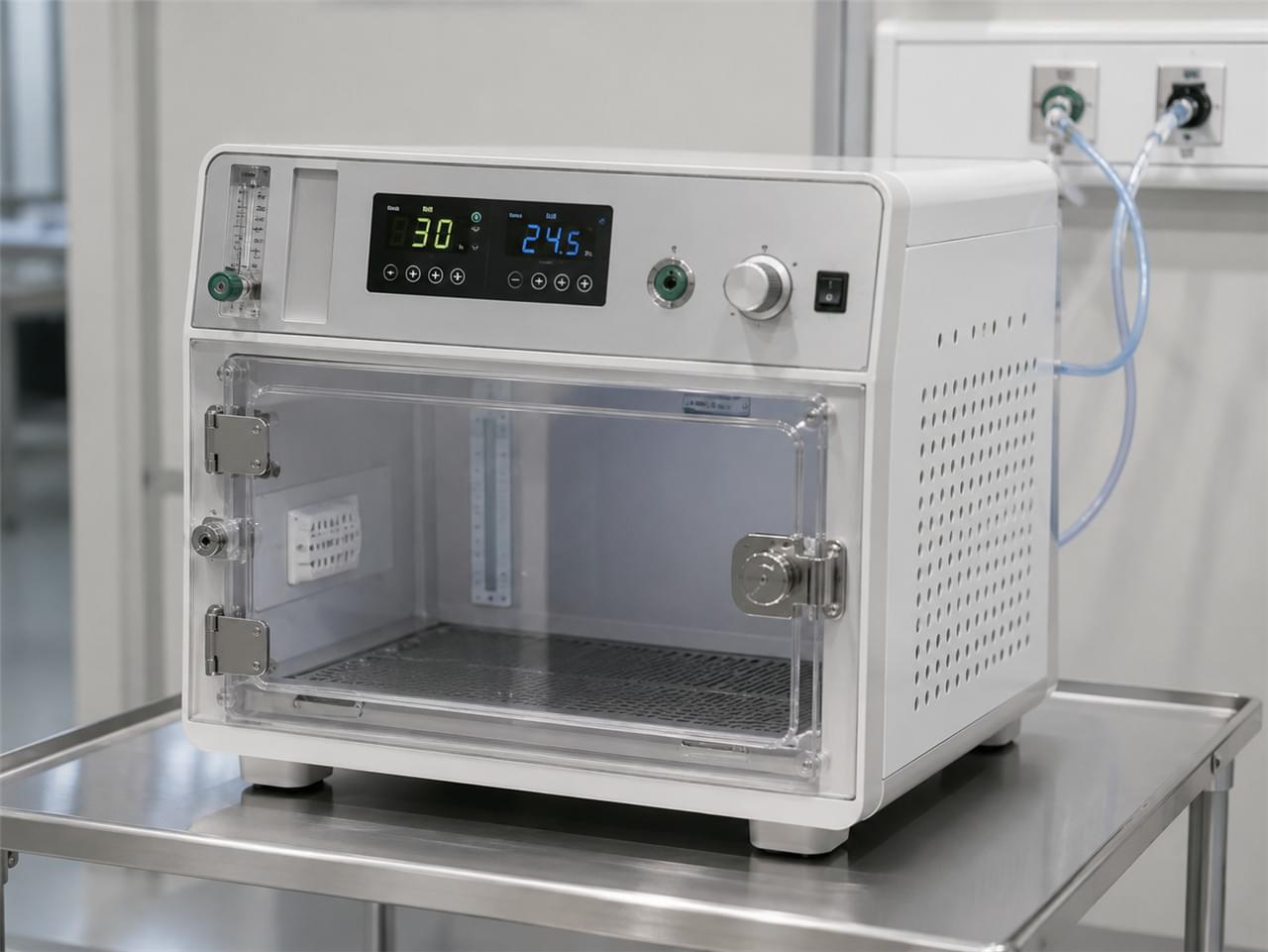
Incubators: Miniature ICU Cage Systems for Neonates
🐣 For your smallest and most fragile patients, an incubator is effectively a fully enclosed ICU cage system with combined temperature and humidity control. It’s required equipment for neonates, small exotic species, and post-surgical birds or reptiles — and integrated oxygen inlets allow controlled FiO₂ without moving the patient.
🫁 Oxygen Integration: The Veterinary Oxygen Cage Advantage
Every one of your ICU cage systems should include a dedicated oxygen delivery capability. The options ladder up:
- Oxygen inlet ports: welded connection points on the cage wall, feeding from a wall O₂ supply or concentrator
- Oxygen hoods: fitted transparent hoods placed over the front of the cage, inflated with oxygen to reach 30–40% FiO₂ — no patient restraint needed
- Veterinary oxygen cage (full environment): the premium solution — a sealed cage with active FiO₂ control plus temperature and humidity management, the most effective non-invasive oxygen delivery for severely dyspneic patients
When you compare ICU cage systems side by side, oxygen capability is the feature that separates true critical care housing from ordinary hospitalization. For respiratory emergencies in cats, the veterinary oxygen cage with environmental control is the gold standard — it’s a species for which any restraint for mask delivery is itself a mortality risk.
🧼 Infection Control Built Into ICU Cage Systems
Contamination between ICU patients is a constant biosecurity challenge, and the best ICU cage systems are designed to fight it structurally rather than relying on cleaning discipline alone. Design features that pull their weight:
- 🧱 Solid side and top panels between adjacent cage units (prevents aerosol spread)
- 🚰 Individual cage drainage to a central drain system — no shared drain pans
- 🔧 Removable rubber door seals for cleaning
- 🏷️ Color-coded cage identification for isolation patients
If your practice manages infectious disease patients in the ICU, a physically separate isolation cage bank with independent exhaust ventilation is the minimum requirement — not a nice-to-have.
❓ Frequently Asked Questions
Q: What size ICU cage range does a small animal practice need?
A: At minimum: 2× small cat/small dog units (≤10 kg patients), 2× medium units (10–30 kg), and 1× large unit (30–50 kg). That covers 5 ICU patients across the typical small animal weight range simultaneously. A sixth isolation unit is strongly recommended.
Q: How do I prevent burns with heated ICU cage floors?
A: Always place an absorbent fleece or towel between the patient and the heated surface — never a patient directly on bare heated flooring, especially unconscious or obtunded patients who can’t respond to discomfort. Set the thermostat to the lower end of the therapeutic range (28–32°C) and reassess patient position and contact every 15–30 minutes.
Q: Is an oxygen concentrator adequate as an ICU oxygen source, or is piped oxygen necessary?
A: Medical-grade concentrators (10 L/min output) are clinically adequate for most small animal ICU oxygen supplementation. Two limitations: they produce roughly 90–95% pure oxygen (not 100%), and at maximum output they can only supply one high-flow patient at a time. Practices running multiple simultaneous high-flow patients — acute respiratory distress, oxygen cage use — benefit from piped O₂ or cylinder backup alongside concentrators.
✅ The Bottom Line
Think of your cage bank as a clinical instrument, not furniture. Prioritize stainless steel modular units with solid infection control features, add heated floors with safety cutoffs, and spec oxygen integration from day one — retrofitting is always more expensive. And pair the cage plan with a stocked emergency setup; our checklist on Emergency Equipment Every Veterinary Hospital Should Have covers that side. For facility-level standards, the WSAVA global guidelines and AVMA policy resources are the references worth keeping on hand.
A well-chosen cage doesn’t just house critical patients. It buys your team time, protects fragile patients from avoidable complications, and quietly does half the nursing work around the clock.