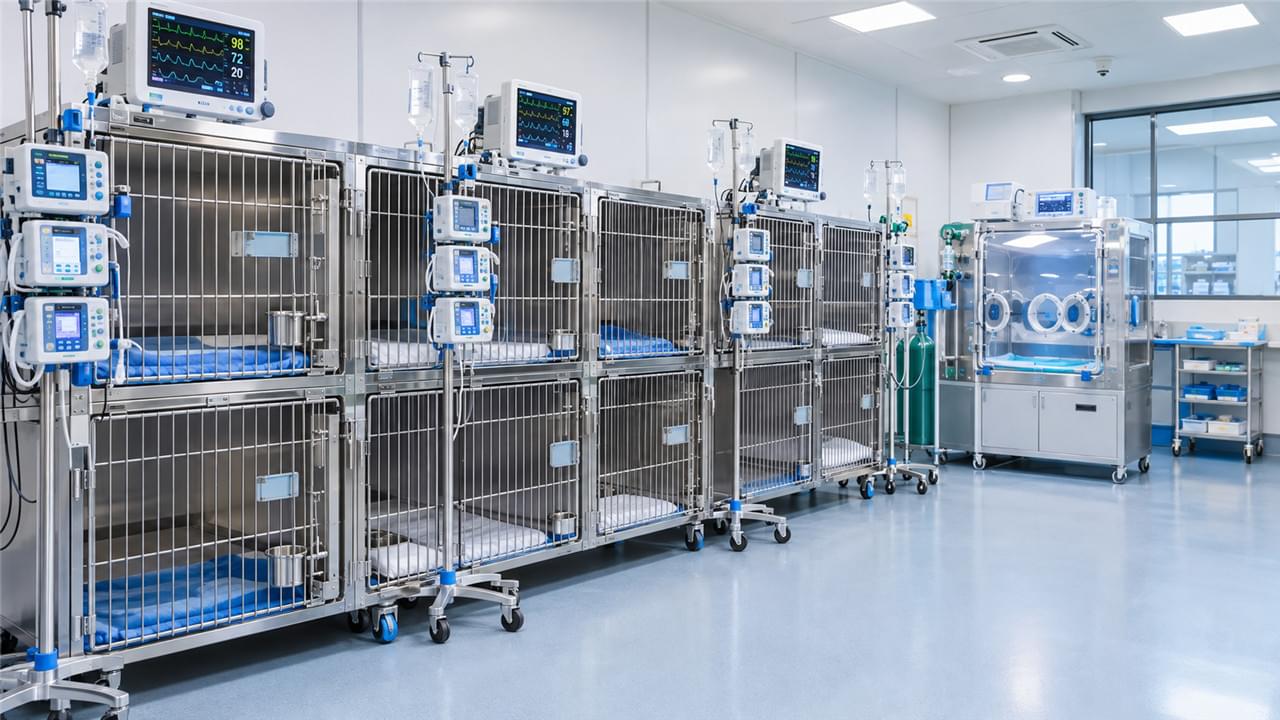
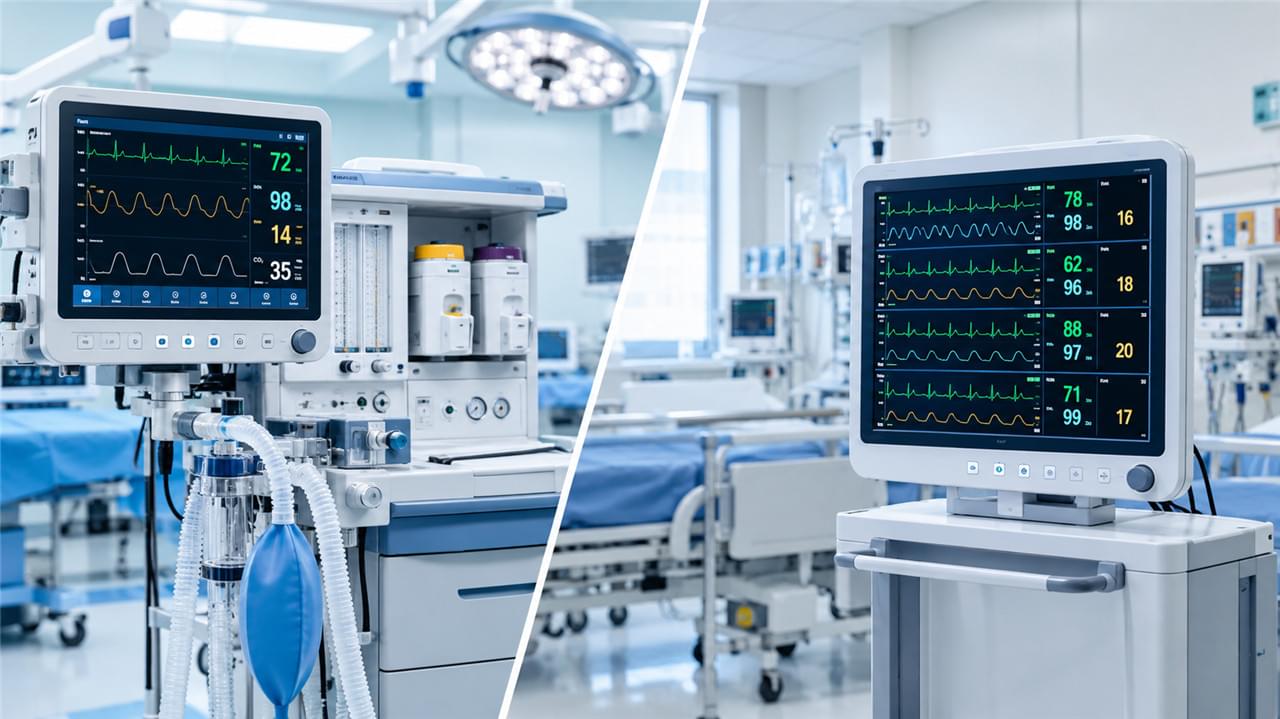
Selecting the right surgical equipment is one of the most important investments any veterinary practice can make. Choosing Veterinary Surgery Table and OR Lights isn’t simply about purchasing stainless steel furniture or bright lighting—it directly influences surgical precision, staff comfort, workflow efficiency, and patient safety.
🏥 A well-designed operating room allows veterinarians to work confidently during both routine and complex procedures. The right surgery table supports accurate patient positioning, while high-quality LED operating lights reduce shadows and improve tissue visibility throughout the procedure.
If you’re planning a complete surgical suite, don’t miss our guide to Veterinary Surgical Suite Equipment: Systems, Standards & Selection, which explains how every major surgical system works together to improve efficiency and clinical outcomes.
In this guide, you’ll learn how to compare different veterinary surgery tables, evaluate modern surgical lighting systems, and choose equipment that matches your clinic’s current needs while supporting future growth.
Why Choosing Veterinary Surgery Table and OR Lights Matters
Many clinics prioritize anesthesia machines and patient monitors when designing an operating room. While those systems are undeniably critical, the surgery table and overhead lighting form the foundation of every procedure.
An inappropriate table can make patient positioning difficult, increase surgeon fatigue, and reduce access during surgery. Likewise, insufficient lighting creates shadows that interfere with delicate tissue identification, potentially increasing surgical risks.
💡 Investing in ergonomic tables and professional-grade LED surgical lights improves:
- ✅ Surgical accuracy
- ✅ Staff comfort during long procedures
- ✅ Workflow efficiency
- ✅ Infection control
- ✅ Overall patient safety
According to the WSAVA surgical standards, operating room equipment should support consistent aseptic technique, efficient workflow, and optimal visualization throughout every surgical procedure.
Veterinary Surgery Tables: Types and Applications
Every clinic performs different procedures, making it essential to understand which table configuration best matches your caseload. A thoughtful veterinary surgery table selection guide should consider not only today’s needs but also future service expansion.
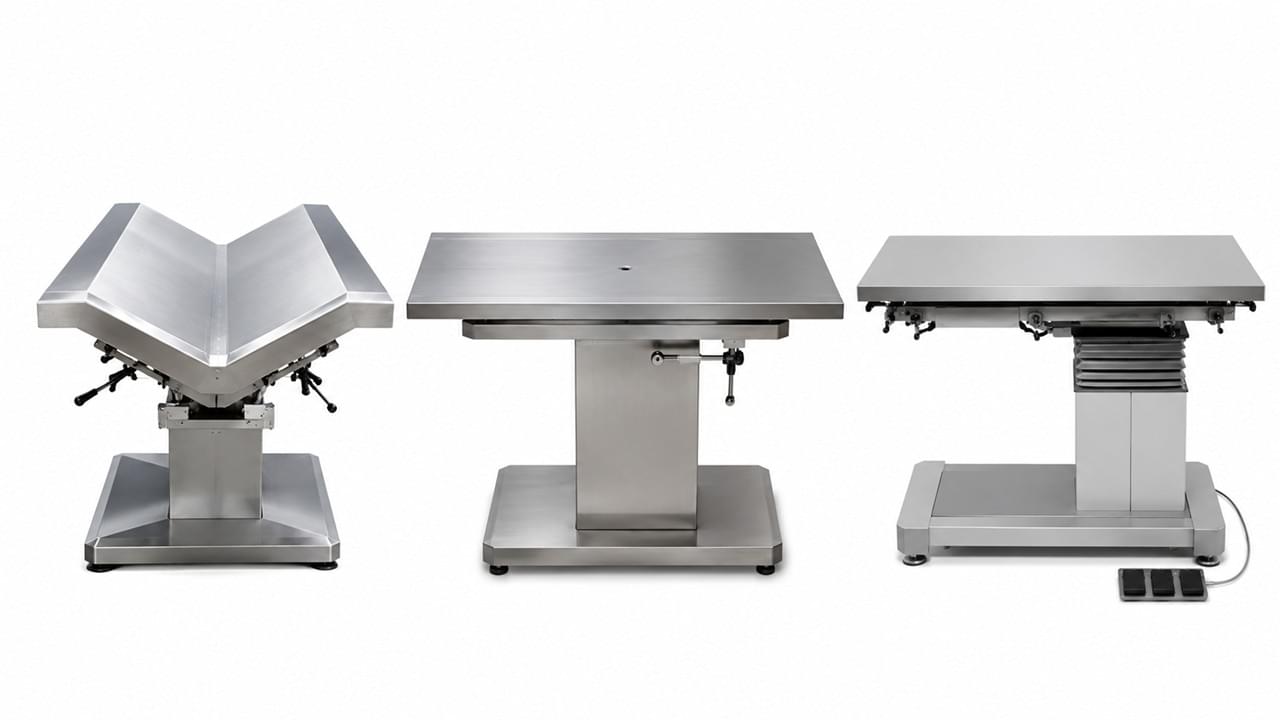
V-Top Surgery Tables
V-top (cradle-top) tables remain one of the most popular options for companion animal practices because their angled design naturally stabilizes patients in dorsal recumbency.
Ideal applications
- Soft tissue surgery
- Spay and neuter procedures
- Gastrointestinal surgery
- Splenectomy
- Cystotomy
- Thoracic surgery
✅ Advantages
- Excellent patient stability
- Less need for positioning aids
- Simple surgical preparation
- Efficient fluid drainage
⚠ Limitations
The fixed V-shaped surface makes lateral positioning more difficult, reducing flexibility for many orthopedic procedures.
Flat-Top Surgery Tables
Flat-top tables offer maximum versatility and are commonly found in specialty hospitals or referral centers where procedures vary considerably.
Instead of relying on the table shape itself, surgeons use positioning accessories such as foam wedges, vacuum positioning devices, and sandbags.
Best suited for
- Orthopedic surgery
- TPLO procedures
- Hip replacement
- Ophthalmic surgery
- Exotic animal surgery
- Multi-surgeon operations
💡 Clinics planning to expand into orthopedic services often prefer flat-top systems because they accommodate a much wider range of surgical positioning requirements.
Hydraulic vs. Electric Lift Tables
One of the most overlooked aspects of Choosing Veterinary Surgery Table and OR Lights is ergonomic height adjustment.
Long surgeries performed at an incorrect working height contribute to chronic neck, shoulder, and back injuries among veterinary surgeons.
Hydraulic Lift Tables
Hydraulic models use a foot-operated pump to raise or lower the tabletop.
Pros
- Reliable mechanical design
- No electrical connection required
- Lower maintenance costs
- Ideal for budget-conscious clinics
Electric Lift Tables
Electric lift tables allow smooth height adjustments using foot switches or hand controls.
Pros
- Minimal physical effort
- Faster positioning
- Better for heavy patients
- Improved workflow in high-volume hospitals
🏥 Clinical Tip: If multiple surgeons of different heights regularly share the same operating room, an electric lift table often provides the greatest long-term ergonomic benefits.
Tilting Surgery Tables
Tilting functionality significantly expands a table’s surgical capabilities.
Most premium systems provide:
- Trendelenburg positioning
- Reverse Trendelenburg positioning
- Left lateral tilt
- Right lateral tilt
These adjustments improve surgical exposure by allowing gravity to reposition abdominal organs naturally, reducing manual tissue retraction during many abdominal procedures.
For referral hospitals performing advanced thoracic or cardiovascular surgeries, tilt capability is often considered essential rather than optional.
Key Specifications for Veterinary Surgery Table Selection
Before purchasing any table, compare the technical specifications rather than focusing solely on price.
| Specification | Recommended Standard |
|---|---|
| Weight capacity | 150–200 kg or higher |
| Material | 316 stainless steel |
| Height adjustment | Hydraulic or electric |
| Drainage | Integrated drain channel |
| Imaging compatibility | Radiolucent tabletop if fluoroscopy is used |
| Table width | 50–70 cm |
| Table length | 100–140 cm |
| Support column | Single central column preferred |
✅ Choosing corrosion-resistant stainless steel helps extend equipment lifespan while simplifying cleaning and disinfection.
Veterinary OR Lights: Choosing the Right Illumination
Even the most experienced surgeon cannot perform at their best without proper lighting.
Modern LED veterinary OR lights for clinics provide exceptional brightness, color accuracy, and shadow control while generating very little heat around the surgical field.
Unlike older halogen systems, LED technology offers more consistent illumination throughout its service life while reducing operating costs.
LED vs. Halogen Surgical Lights
Although halogen lights were once the standard in veterinary operating rooms, LED technology has become the preferred choice for modern practices due to its superior performance and lower operating costs.
| Feature | LED Surgical Lights | Halogen Surgical Lights |
|---|---|---|
| Lifespan | 50,000+ hours | 2,000–5,000 hours |
| Heat generation | Very low | High |
| Energy efficiency | Excellent | Moderate |
| Color Rendering Index (CRI) | ≥95 | 90–95 |
| Color stability | Consistent throughout lifespan | Gradually deteriorates |
| Maintenance | Minimal | Frequent bulb replacement |
🏥 Best Practice: Unless you’re upgrading an existing legacy system with strict budget limitations, LED surgical lights are almost always the better long-term investment.
Beyond energy savings, LED systems produce significantly less radiant heat, helping reduce tissue drying during lengthy procedures while improving surgeon comfort.
Single vs. Dual-Satellite Veterinary OR Lights
Another important consideration when Choosing Veterinary Surgery Table and OR Lights is the number of light heads required.
Single-Satellite Configuration
Single-head systems are suitable for:
- Small animal general practices
- Routine soft tissue surgeries
- Low- to medium-volume surgical schedules
- Budget-conscious clinics
Advantages include:
- Lower purchase cost
- Easier installation
- Simplified positioning
- Reduced maintenance
For clinics primarily performing routine procedures such as spays, neuters, and mass removals, a high-quality single-head LED light is often sufficient.
Dual-Satellite Configuration
Dual-head surgical lights provide two independently adjustable light sources that work together to eliminate shadows from multiple angles.
They are particularly valuable for:
- Orthopedic surgery
- Thoracic procedures
- Deep abdominal surgery
- Multi-surgeon operations
- Referral and specialty hospitals
✅ Why choose dual-head lighting?
Deep surgical cavities naturally create shadows that can obscure important anatomical structures. Dual-satellite systems allow each light head to illuminate the surgical field from different directions, significantly improving visibility.
💡 Clinics planning future expansion into advanced surgical services should strongly consider dual-head systems, even if current procedure volume is relatively modest.
Key Specifications for Veterinary OR Lights
Not all surgical lights deliver the same clinical performance. Evaluating technical specifications helps ensure consistent illumination throughout every procedure.
| Specification | Recommended Value |
|---|---|
| Illuminance | ≥50,000 lux (80,000–160,000 lux for specialty hospitals) |
| Color Rendering Index (CRI) | ≥95 |
| Color Temperature | 4,000–5,000 K |
| Adjustable Light Field | 18–28 cm |
| Focal Depth | ±10 cm |
| Mounting Style | Ceiling-mounted articulated arm |
📌 Buying Tip: High CRI values allow surgeons to distinguish subtle tissue color differences more accurately, which is especially important during vascular and soft tissue procedures.
Sterility Considerations for OR Lights
Lighting performance is only one part of the equation. Infection control should also influence your purchasing decision.
Surgical light handles should always be designed for sterile operation by using either:
- Autoclavable removable handles
- Disposable sterile handle covers
⚠ Common Mistake: Budget lighting systems sometimes include permanently fixed handles that cannot be sterilized properly. This creates an unnecessary contamination risk inside the sterile field.
When comparing manufacturers, always verify that sterile handling accessories are included as standard rather than optional extras.
Integrating Surgery Tables and OR Lights
Choosing each piece of equipment independently can lead to workflow problems later.
Instead, evaluate the surgery table and lighting system as a complete operating room solution.
Consider factors such as:
- Ceiling height
- Light arm reach
- Table height adjustment range
- Equipment pendants
- HVAC diffuser placement
- Anesthesia machine positioning
- Monitor locations
A properly planned layout minimizes mechanical interference while allowing unrestricted access around the patient from every direction.
If you’re still planning your facility layout, our guide How to Design an Efficient Veterinary Operating Room explains how room dimensions, workflow, infection control, and equipment placement work together to create a safer and more efficient surgical environment.
Common Mistakes When Choosing Veterinary Surgery Table and OR Lights
Even experienced buyers occasionally overlook important details.
Avoid these common purchasing mistakes:
❌ Buying based solely on price instead of long-term clinical value
❌ Choosing tables without sufficient weight capacity for large-breed patients
❌ Ignoring ergonomic height adjustment
❌ Selecting lights with inadequate CRI or brightness
❌ Forgetting to verify sterile handle options
❌ Purchasing equipment without considering future service expansion
❌ Failing to coordinate ceiling-mounted equipment before installation
🏥 Thinking several years ahead often results in lower total ownership costs than replacing undersized equipment prematurely.
How to Choose the Right Combination for Your Clinic
The ideal combination depends largely on your caseload, available space, and long-term development plans.
Small Companion Animal Clinics
Recommended configuration:
- ✅ V-top surgery table
- ✅ Electric height adjustment
- ✅ Single-head LED surgical light
This setup balances affordability with excellent performance for routine soft tissue procedures.
Mixed Animal Practices
Recommended configuration:
- ✅ Flat-top table with removable V-top insert
- ✅ Electric lift system
- ✅ High-output LED lighting
This arrangement provides flexibility for treating patients of different sizes and species.
Specialty and Referral Hospitals
Recommended configuration:
- ✅ Premium electric lift table
- ✅ Multi-directional tilting functions
- ✅ Dual-satellite LED surgical lights
- ✅ High-CRI illumination
- ✅ Heavy-duty weight capacity
Although the initial investment is higher, this configuration supports advanced orthopedic, neurological, thoracic, and minimally invasive procedures while improving surgeon ergonomics and workflow efficiency.
Final Thoughts
Choosing veterinary surgical equipment should never be viewed as simply checking items off a purchasing list. Choosing Veterinary Surgery Table and OR Lights is a strategic investment that affects surgical precision, clinician comfort, patient safety, and the long-term efficiency of your operating room.
The ideal setup combines a stable, ergonomic surgery table with high-quality LED lighting that delivers bright, shadow-free illumination. By focusing on technical specifications, workflow integration, and future clinical needs rather than upfront cost alone, veterinary practices can create an operating room that continues to perform reliably for many years.
For a broader understanding of surgical suite planning, equipment integration, and purchasing priorities, be sure to explore our guide on Veterinary Surgical Suite Equipment: Systems, Standards & Selection. In addition, reviewing the WSAVA surgical standards and AVMA veterinary surgery guidelines can provide valuable best practices for equipment selection, surgical workflow, and patient safety.
Frequently Asked Questions
❓ Is a V-top or flat-top surgery table better for a general veterinary clinic?
For most companion animal practices focused on routine soft tissue procedures, a V-top table offers excellent patient stability and efficient positioning. However, if your clinic also performs orthopedic or specialty surgeries, a flat-top table—or a modular system with interchangeable inserts—provides greater versatility.
❓ What brightness should a veterinary OR light provide?
A minimum illuminance of 50,000 lux is generally recommended for routine veterinary surgery. Referral hospitals and specialty centers often benefit from lighting in the 80,000–160,000 lux range, particularly for deep cavity or orthopedic procedures where enhanced tissue visualization is essential.
❓ Are mobile surgical lights a good alternative to ceiling-mounted lights?
Mobile floor-standing lights are useful as backup or supplemental illumination, but they should not replace ceiling-mounted systems as the primary surgical light. Ceiling-mounted LED lights offer superior shadow control, save valuable floor space, and provide better positioning flexibility during surgery.
❓ Should I choose hydraulic or electric lift tables?
Hydraulic tables are dependable, cost-effective, and require little maintenance, making them suitable for many smaller clinics. Electric lift tables, however, provide smoother height adjustments, improve ergonomics, and are generally the preferred option for high-volume practices or hospitals with multiple surgeons.
✅ Key Takeaways
- ✔ Select a surgery table based on your most common procedures and anticipated future services.
- ✔ Choose LED surgical lights for better illumination, lower heat output, and reduced maintenance.
- ✔ Prioritize ergonomics, weight capacity, and durable stainless-steel construction.
- ✔ Plan surgery tables and OR lights as an integrated operating room system rather than independent purchases.
- ✔ Follow recognized guidance such as the WSAVA surgical standards and AVMA veterinary surgery guidelines to support safe, efficient, and compliant surgical environments.