Veterinary emergency equipment is the difference between a two-minute code that ends in a discharge and one that ends in a conversation no one wants to have. A patient can slide from stable to cardiac arrest in under two minutes — and when it happens, the outcome depends almost entirely on what’s within arm’s reach and whether your team can use it without thinking. This isn’t a luxury list. It’s the patient safety baseline for any clinic that anesthetizes or hospitalizes patients, and the veterinary emergency equipment standard below reflects what RECOVER-aligned practices actually stock.
Here’s the complete, clinically validated list of emergency equipment every veterinary hospital should have. For the broader critical care context, start with our Veterinary ICU & Critical Care Equipment: Complete Guide.
🚨 The Crash Cart: Command Center of Veterinary Emergency Equipment
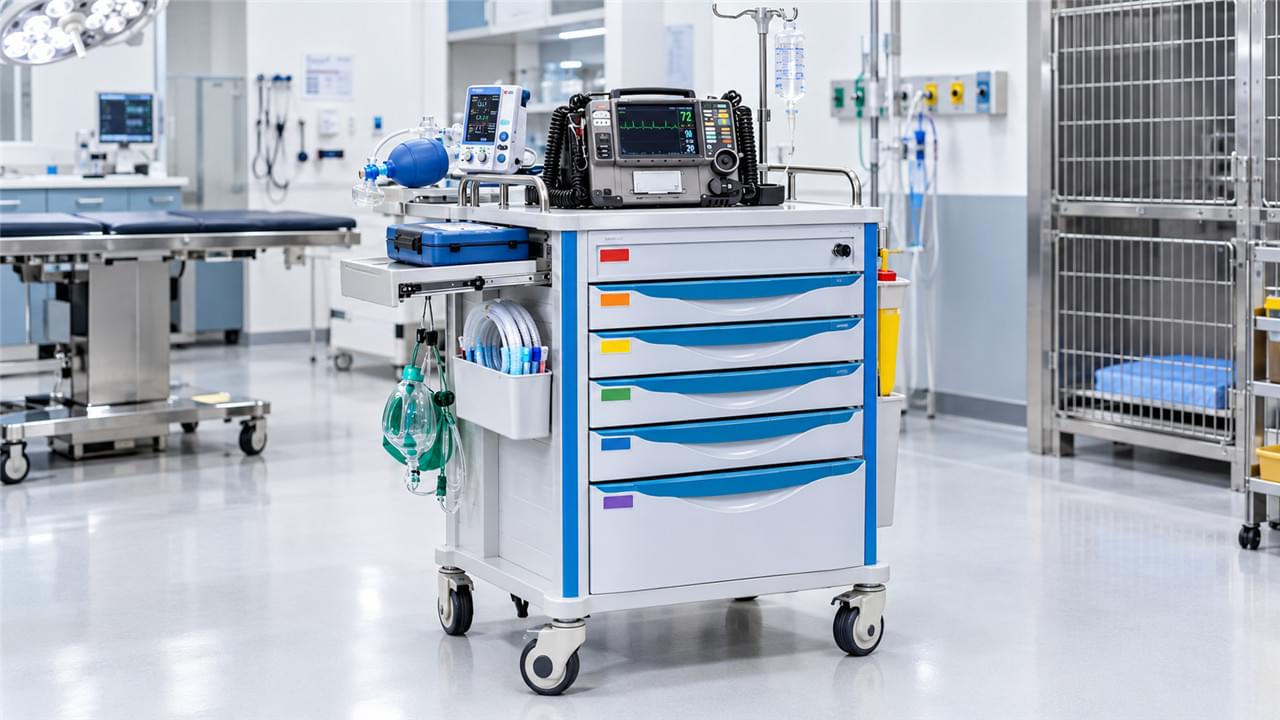
The crash cart must be organized, stocked, and ready for immediate use — not assembled from three storage rooms while a patient codes. Four principles separate a real emergency asset from a rolling cabinet:
- 📍 Location: in or immediately adjacent to every surgical suite and ICU ward — accessible within 10 seconds of a code call
- 🗂️ Organization: a consistent drawer layout that never changes; muscle memory saves lives when seconds count
- 🔍 Inspection: daily check of equipment condition and drug expiry by a designated staff member
- ♻️ Restocking: immediate restock after any use, with signed verification by the responsible person
A laminated contents map taped inside the top drawer keeps everyone honest — the full veterinary crash cart checklist follows below.
One more thing worth saying out loud: the most expensive veterinary emergency equipment in the world is worthless if it’s locked in a back room nobody can reach at 2 a.m. Accessibility is a spec, not a suggestion.
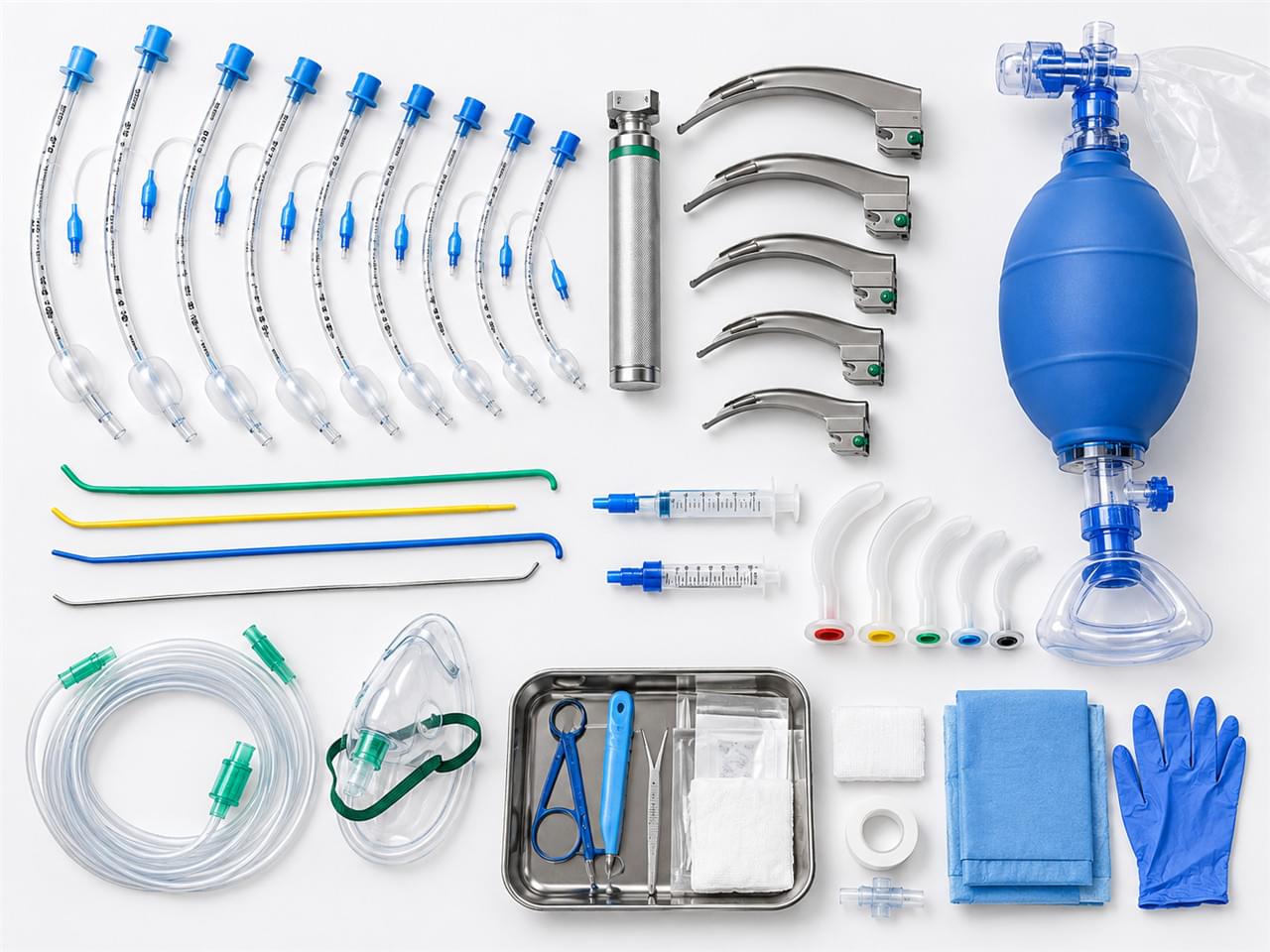
🧰 Crash Cart Contents: The Complete Checklist
Airway Management: The Front Line of Veterinary Emergency Equipment
Nothing else on the cart matters if you can’t secure an airway — this is where every veterinary emergency equipment audit should start:
- Endotracheal tubes: full size range 2.5mm–14mm ID (silicone cuffed, minimum 2 of each size)
- Laryngoscope handle (standard and pediatric) with Miller 0, 1, 2 blades and Macintosh 2, 3 blades
- Stylet/intubation guide for difficult intubations
- Laryngeal mask airways (LMA) — sizes 1, 1.5, 2, for when intubation fails
- Nasopharyngeal airway tubes (cats and small dogs)
- 14G × 3.25″ over-needle catheters for an emergency percutaneous tracheotomy kit
Ventilation and Oxygenation: Keep the Veterinary Emergency Equipment Breathing
- Self-inflating manual resuscitation bag (Ambu bag) — adult and pediatric sizes
- Oxygen supply connection (wall outlet or portable cylinder, minimum 1L)
- Oxygen mask set (sizes 0–5 for dogs/cats)
- PEEP valve for the Ambu bag, for patients needing respiratory support
Vascular Access: Small Veterinary Emergency Equipment With Outsized Impact
- IV catheters: 14G, 16G, 18G, 20G, 22G (minimum 4 of each)
- Intraosseous needles — for rapid access in collapsed neonates or hypovolemic patients
- T-port connectors, injection caps, 1-inch medical tape
- 60 mL syringes × 6 for rapid bolus administration
- IV extension sets and blood collection sets
Emergency Drugs: The Pharmacology Half of the Kit
The core resuscitation drugs, with typical dosing for quick reference — pre-labeled so nobody is reading vials mid-code:
- ❤️ Epinephrine (1:10,000): 0.1 mg/kg IV/IO — first-line CPR
- Atropine: 0.04 mg/kg IV — bradycardia/asystole
- Lidocaine (2% without epinephrine): 2 mg/kg IV bolus — ventricular arrhythmia
- Calcium gluconate (10%): 50–100 mg/kg slow IV — hyperkalemia, hypocalcemia
- Dextrose (50%): 0.5–1 mL/kg diluted — hypoglycemia emergencies
- Naloxone: 0.01 mg/kg IV/IM — opioid reversal
- Flumazenil: benzodiazepine reversal
- Vasopressin: 0.8 IU/kg IV — CPR alternative/additive to epinephrine
Monitoring: Portable Eyes During the Code
Dedicated monitoring gear stays on the cart — borrowing from ICU beds mid-code is how confusion starts:
- Portable multi-parameter monitor (ECG + SpO₂ minimum) — separate from bedside ICU monitors
- Handheld Doppler unit for blood pressure assessment during CPR
- Pulse oximeter probes (lingual and digit types)
Defibrillators: The Non-Negotiable Veterinary Emergency Equipment
- Biphasic manual defibrillator with synchronized cardioversion capability
- External pads (adult and pediatric) AND internal paddles
- Minimum energy delivery: 4 J/kg for defibrillation (biphasic), 0.5–1 J/kg for cardioversion
- ⚠️ AEDs are NOT appropriate substitutes — they can’t deliver the precisely timed cardioversion veterinary arrhythmia management demands
Miscellaneous But Mission-Critical
Round out your veterinary emergency equipment inventory with these low-cost, high-stakes items:
- Bone marrow aspiration needle set (intraosseous access)
- Chest drain kit (tension pneumothorax decompression)
- Thoracocentesis set (14G catheter + 3-way stopcock + 60 mL syringe)
- Urinary catheter set (emergency bladder decompression)
- Surgical pack (crash tracheotomy capability)
🫀 CPR-Ready: Positioning Your Veterinary CPR Equipment
Having the right veterinary CPR equipment is half the battle; positioning it correctly is the other half. A code runs on rhythm and geography — everyone needs to know where to stand and what comes next. Per the RECOVER guidelines from the American College of Veterinary Emergency and Critical Care:
- 🛏️ Hard, flat surface at a comfortable height for chest compressions — never a soft padded table
- ⏱️ Timer or metronome to hold the 100–120 compressions-per-minute rate
- 🔄 Rotation roster board — compressor changes every 2 minutes, without negotiation
- 📋 CPR protocol reference card posted on the wall above the crash cart
For facility-level preparedness planning beyond the cart itself, the AVMA emergency resources are worth reviewing annually.
❓ Frequently Asked Questions
Q: How often should emergency drugs on the crash cart be replaced?
A: Check expiry dates at every inspection cycle (minimum monthly). Pre-drawn syringes of epinephrine and atropine are typically valid for 24 hours after drawing — most practices prepare emergency drug kits fresh weekly and replace pre-drawn syringes on a documented schedule. Never use expired drugs in an emergency; uncertain potency is a worse gamble than the inconvenience of replacement.
Q: Does every clinic need a defibrillator, or only large hospitals?
A: Any practice performing general anesthesia should have access to one. Ventricular fibrillation during or after anesthesia is an absolute indication for defibrillation — nothing else restores coordinated cardiac function. A quality biphasic veterinary defibrillator costs 2,000–2,000–8,000, which is trivial against the life-saving potential in a single arrest event.
Q: Should emergency equipment be in one crash cart or distributed across locations?
A: The primary cart holding all veterinary emergency equipment should sit centrally (near OR and ICU). Additionally, each exam room should carry a minimum satellite kit: one ET tube set (3–9mm), one laryngoscope, one Ambu bag, one oxygen mask, and pre-labeled epinephrine/atropine. That guarantees immediate airway management wherever a patient deteriorates.
✅ The Bottom Line
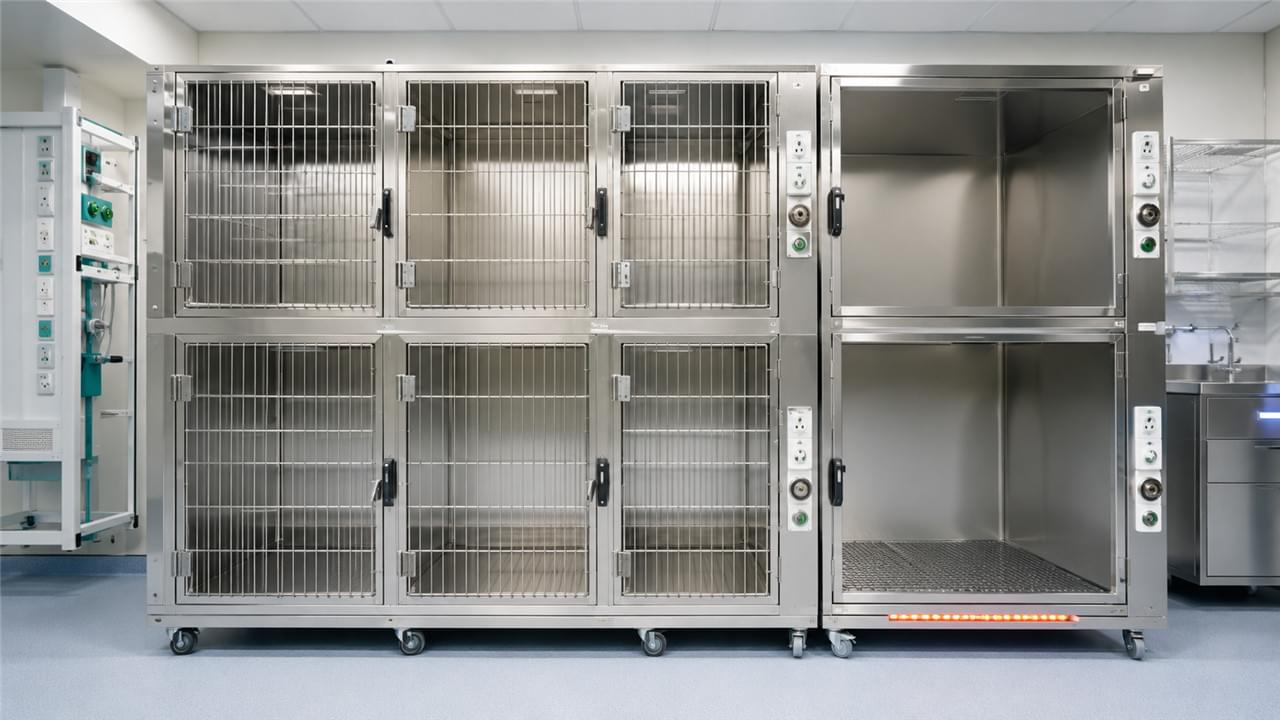
Run through this list honestly: if your cart fails two or more line items today, you’ve found your next purchase order. Audit the drawers, calendar the drug rotations, and drill the code scenario quarterly — the best veterinary emergency equipment is the kind your team can deploy half-asleep. Because when that two-minute window opens, you won’t get a second chance to restock. And once the emergency is handled, the recovery environment matters just as much — see our guide to ICU Cage Systems and Temperature Control in Veterinary Care for the post-resuscitation side.