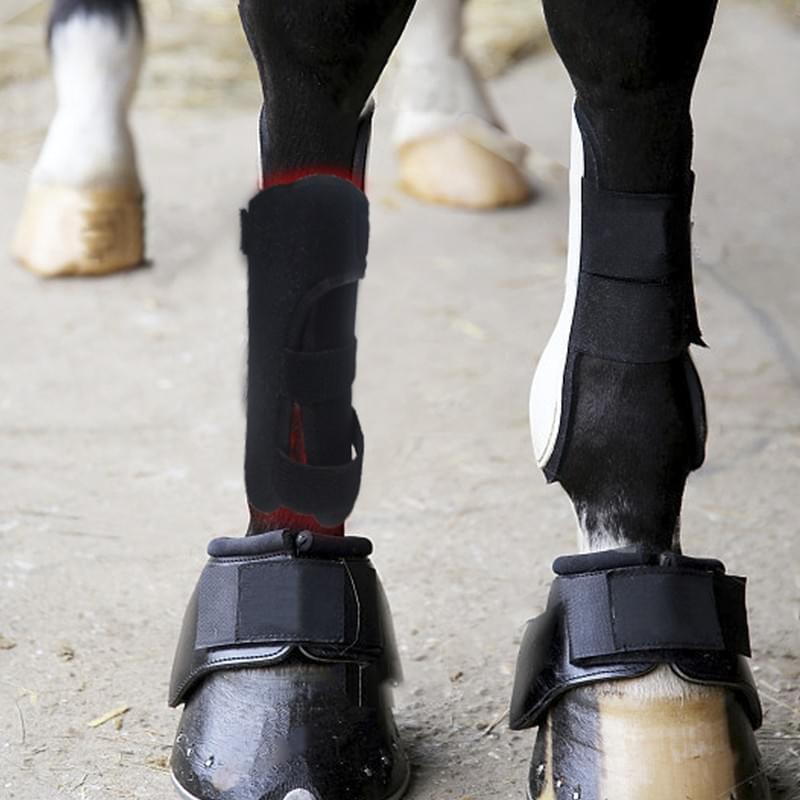
A horse’s lower leg carries half a tonne of animal above a structure no thicker than a human wrist. The superficial digital flexor tendon, deep digital flexor tendon, and suspensory ligament operate under enormous strain—and when they fail, recovery is measured in months, not weeks. This Vsun horse leg red light therapy wrap brings 96 tri-core LEDs, four distinct light modes, and three brightness levels to equine limb rehabilitation, in a wrap designed specifically for cannon bone and fetlock dimensions.
Four Therapeutic Modes for Staged Rehabilitation
Equine soft-tissue injuries progress through inflammatory, proliferative, and remodelling phases. The four modes let clinicians match the light-delivery pattern to the current recovery stage:
- Steady Mode: Constant illumination. Best for the early inflammatory phase when the goal is cellular stimulation without mechanical disturbance.
- Breathe Mode: A gentle, slow-fade rhythm that mimics the rise and fall of relaxed breathing. Useful during the proliferative phase to encourage circulation without triggering muscle guarding.
- 10 Hz Pulse: A moderate-frequency pulse that stimulates vasodilation and lymphatic drainage. Clinically preferred for subacute oedema reduction around tendon sheaths.
- 40 Hz Pulse: A higher-frequency pulse associated with improved nitric oxide release and enhanced mitochondrial respiration. Applied during the remodelling phase to support organised collagen alignment.
Three Brightness Levels for Dose Control
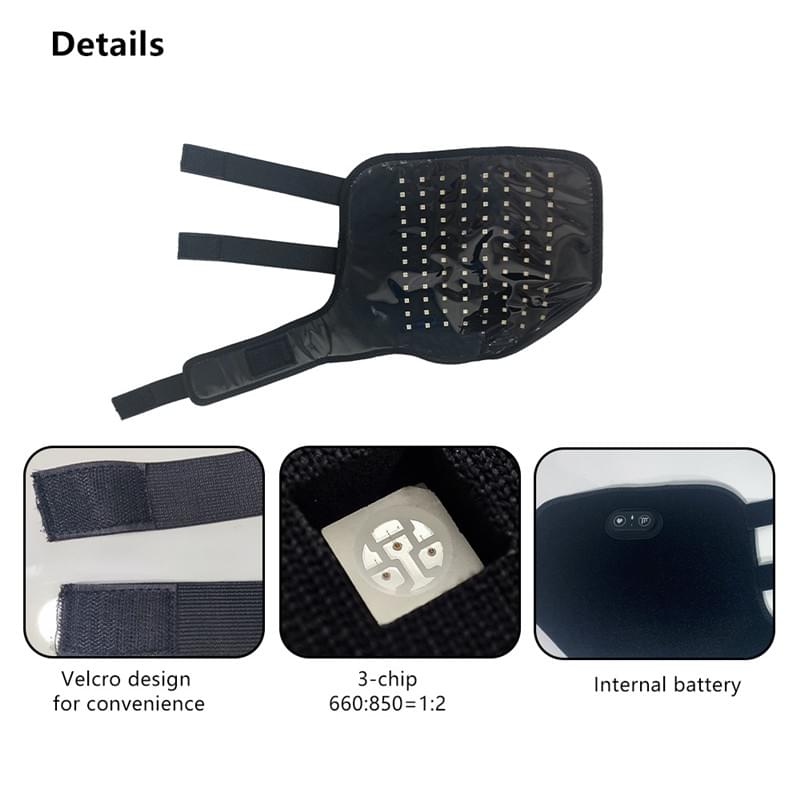
Photobiomodulation follows a biphasic dose-response curve: too little does nothing, too much suppresses the effect. The three brightness levels (L1, L2, L3) give the clinician granular control over photon flux. Start low for acute inflammation where tissue is sensitive. Increase to L2 or L3 for chronic degenerative conditions where deeper penetration and higher energy delivery are required. The 1:2 ratio of 660 nm red to 850 nm near-infrared remains constant across all brightness settings, maintaining therapeutic spectrum balance regardless of intensity.
Equip your equine practice with this therapy wrap — introductory pricing for first-time Vsun stockists.
Anatomy-Aware Design
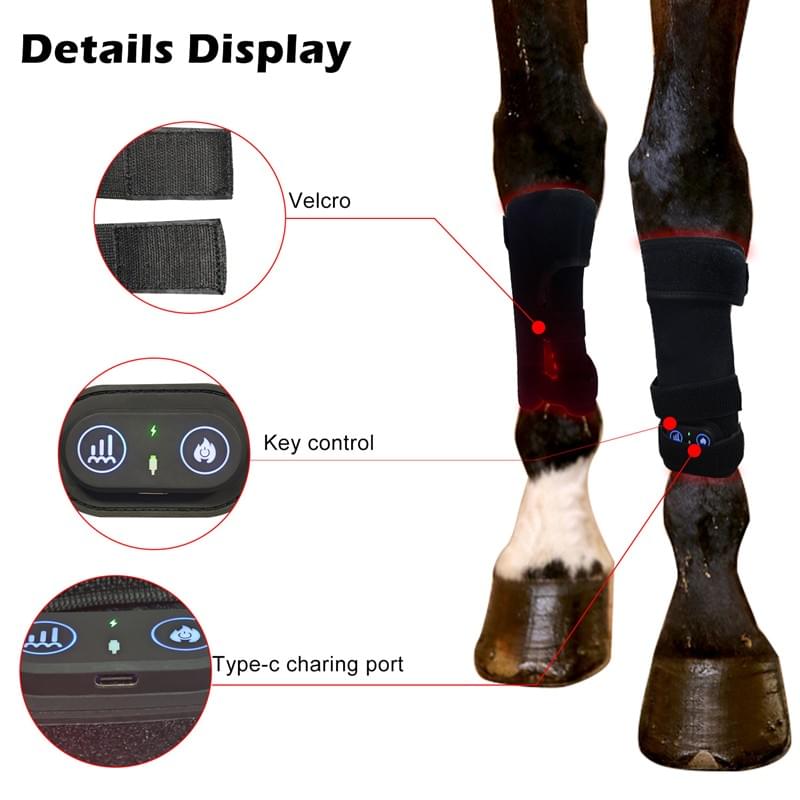
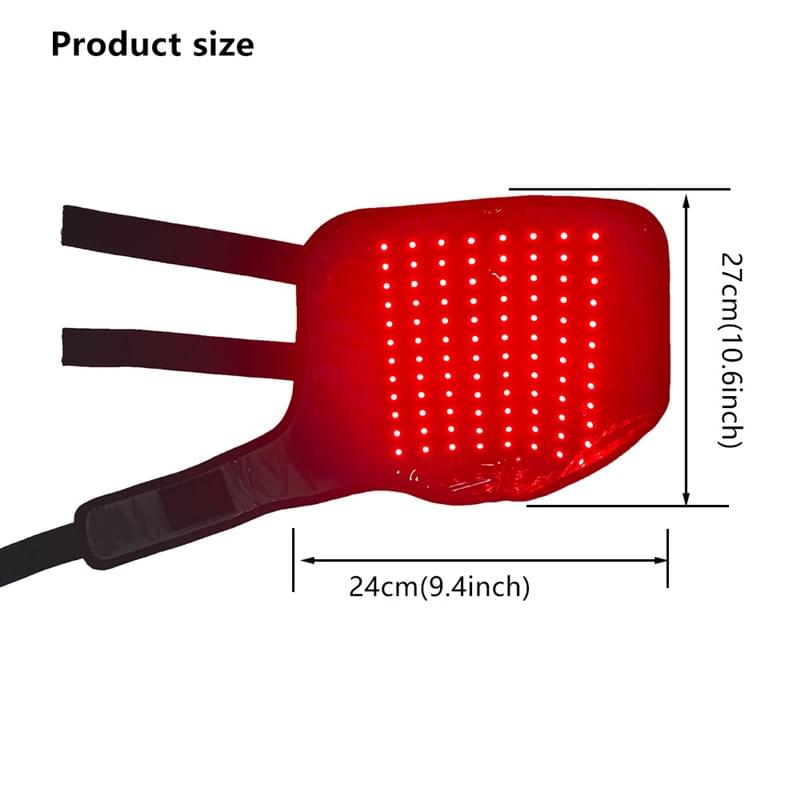
This wrap panel measures 27 cm × 24 cm—large enough to cover the full cannon region from just below the carpus or tarsus down to the fetlock, but compact enough not to interfere with a horse’s natural stance. The built-in lithium battery eliminates cords that can spook patients or snag on stall fixtures. Type-C USB charging via a standard port means barn staff can recharge with the same cable used for their phone.
A dual-button controller separates mode selection from power and brightness. The left button cycles through the four modes; the right button handles on/off and brightness cycling. Long-press the right button for three seconds to power down. This separation prevents accidental mode changes when adjusting brightness mid-session—a small design detail that matters when treating a horse that may shift its weight at any moment.
Technical Specifications
| Total LEDs | 96 (tri-core: 660 nm + 850 nm × 2 per LED) |
|---|---|
| Wavelength Ratio | 660 nm : 850 nm = 1 : 2 |
| Operating Voltage | DC 5V |
| Rated Power | 10 W |
| Panel Size | 27 × 24 cm (10.6 × 9.4 in) |
| Modes | 4 (Steady / Breathe / 10 Hz / 40 Hz) |
| Brightness Levels | 3 (L1, L2, L3) |
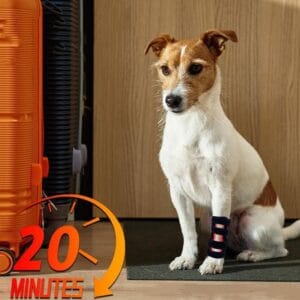
| Timer | 20 minutes (auto-off) |
| Power Source | Built-in Li-ion battery (rechargeable) |
| Charging | USB Type-C |
| Attachment | Adjustable Velcro straps |
Clinical Indications
| Injury Type | Suggested Mode & Level |
|---|---|
| Acute superficial digital flexor tendonitis | Steady, L1 (days 1–7) |
| Subacute suspensory desmitis | Breathe, L2 (days 7–21) |
| Chronic degenerative joint disease (fetlock) | 40 Hz Pulse, L3 (ongoing maintenance) |
| Post-exercise recovery (performance horses) | 10 Hz Pulse, L2 (post-workout) |
| Lymphangitis / cellulitis (adjunctive) | 10 Hz Pulse, L2 (daily until resolved) |
Lower-limb injuries sideline more horses than any other category of musculoskeletal pathology. This horse leg red light therapy wrap gives equine veterinarians a drug-free, non-invasive tool that spans the entire rehabilitation timeline—from acute inflammation to chronic maintenance—with mode and intensity control tuned for equine anatomy.
Browse the full Vsun equine therapy range or request a veterinary price list.