Choosing the right pet cages for animal hospitals is far more than a design decision—it directly impacts your clinic’s efficiency, infection control, and, most importantly, your patients’ comfort and recovery speed. Whether you’re equipping a new veterinary clinic or upgrading your current setup, the right cage setup can enhance both medical outcomes and client satisfaction.
Let’s walk through the top 10 tips to help you select and set up the ideal pet cages for a veterinary environment.
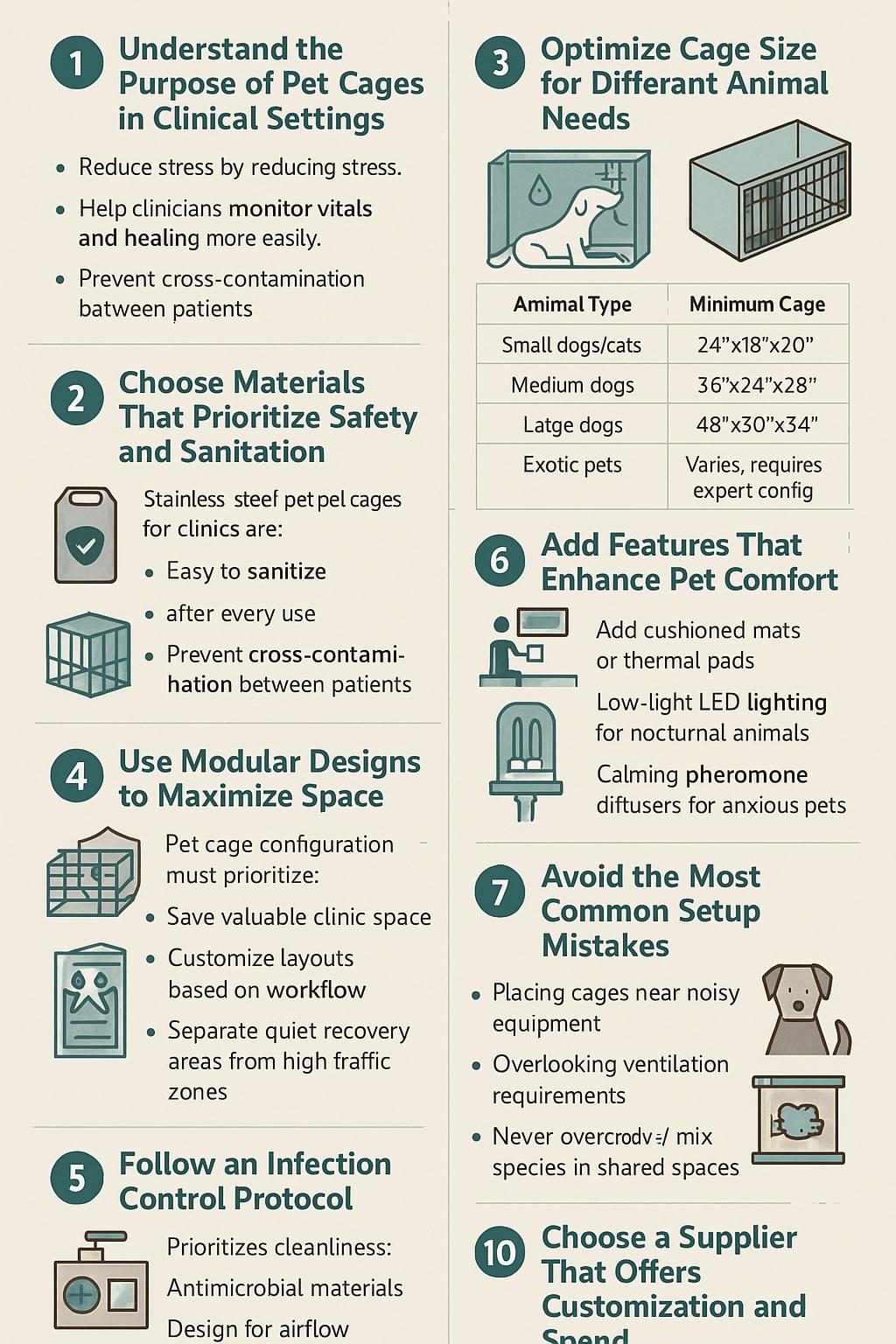
1. Understand the Purpose of Pet Cages in Clinical Settings
Inpatient animals rely on cages as their safe spaces during recovery. A cage isn’t just containment—it’s a healing environment. The right cage can:
- Promote faster recovery by reducing stress.
- Help clinicians monitor vitals and healing more easily.
- Prevent cross-contamination between patients.
This makes the pet cages for animal hospitals a critical investment in patient care.
2. Choose Materials That Prioritize Safety and Sanitation
One of the top options is stainless steel pet cages for clinics. Why?
- Easy to sanitize after every use.
- Resistant to corrosion and damage.
- Hygienic and odor-free.
For quieter environments, PVC or composite cages may be suitable as well.
3. Optimize Cage Size for Different Animal Needs
Cages must fit different sizes of pets comfortably. Here’s a quick guide:
| Animal Type | Minimum Cage Size |
| Small dogs/cats | 24″x18″x20″ |
| Medium dogs | 36″x24″x28″ |
| Large dogs | 48″x30″x34″ |
| Exotic pets | Varies; requires expert config |
Each unit should allow enough room for the animal to stand, turn, and lie down comfortably.
4. Use Modular Designs to Maximize Space
When it comes to pet cage configuration, modular and stackable designs let you:
- Save valuable clinic space.
- Customize layouts based on workflow.
- Separate quiet recovery areas from high-traffic zones.
This approach streamlines daily operations and supports better patient outcomes.
5. Follow an Infection Control Protocol
Proper pet cage configuration must prioritize cleanliness:
- Choose antimicrobial materials.
- Design for airflow to avoid moisture buildup.
- Implement top-down disinfection workflows with removable trays and barriers.
These features help meet veterinary hygiene standards and prevent disease spread.
6. Add Features That Enhance Pet Comfort
A cage isn’t just metal and bolts—it should feel like a safe haven. Add:
- Cushioned mats or thermal pads.
- Low-light LED lighting for nocturnal animals.
- Calming pheromone diffusers for anxious pets.
This kind of setup shows empathy to both patients and pet owners.
7. Avoid the Most Common Setup Mistakes
Knowing how to set up pet cages includes learning from industry errors:
- Avoid placing cages near noisy equipment.
- Don’t overlook ventilation requirements.
- Never overcrowd or mix species in shared spaces.
Proper setup helps prevent injury, illness, and stress.
8. Consider Specialty Requirements for Exotics
Birds, reptiles, and rodents need special enclosures:
- Temperature control and UV lighting.
- Horizontal space for movement.
- Escape-proof, species-specific enclosures.
Each cage type should reflect the animal’s natural habitat to minimize stress.
9. Use Smart Monitoring Tools When Possible
Today’s pet cages for animal hospitals can integrate digital tech:
- Motion sensors and cameras for remote monitoring.
- Temperature and humidity sensors.
- Automatic alerts for cage door tampering or pet distress.
These upgrades improve patient safety and free up vet techs’ time.
10. Choose a Supplier That Offers Customization and Speed
Brands like Vsun Vet provide:
- OEM branding (logo, color, size).
- Low MOQ policies, perfect for small clinics.
- International logistics support with fast delivery.
This makes it easier to get cages that match your brand and your budget.
✅ Final Thoughts
Your clinic’s cages aren’t just furniture—they’re essential medical equipment. Investing in quality, properly configured pet cages for animal hospitals results in:
- Smoother clinic operations.
- Faster patient recovery.
- Happier pet parents.
Whether you’re replacing old units or building a new space, use this pet cage configuration guide to make smart, compassionate choices.
🔗 Ready to Upgrade?
Explore customized, premium pet cage solutions from Vsun Vet.
👉 Get a quote or request a free consultation today.