Veterinary equipment budgeting is often the point where new veterinary clinic projects either succeed—or quietly fall apart.
Under-budgeting creates capability gaps that are costly to fix later, while poor veterinary equipment budgeting decisions in the wrong areas can be just as damaging—diverting funds away from critical diagnostic tools into low-impact purchases like waiting room décor.
Understanding how to budget veterinary equipment for new clinics requires more than rough estimates. It’s a structured process that combines clinical priority planning, real-world cost benchmarking, and financial strategy.
This guide walks you through a practical, step-by-step framework to help you allocate your budget wisely. If you’re planning a full clinic setup, you can also refer to the Complete Guide to Veterinary Hospital Equipment Setup for a broader overview.
Step 1: Establish Your Total Equipment Budget Range
Before diving into categories, define your total equipment budget. Costs vary significantly depending on clinic size, service scope, and equipment tier.
Typical Equipment Budget by Clinic Scale (2026)
| Clinic Scale | Typical Equipment Budget (USD) |
| 1–2 vet small animal clinic | $80,000 – $180,000 |
| 3–5 vet general practice | $200,000 – $450,000 |
| Multi-specialty / emergency center | $500,000 – $1,500,000+ |
These figures exclude construction, FF&E (furniture, fixtures & equipment), IT infrastructure, and working capital. In most cases, equipment accounts for 25–40% of the total project cost.
Common Financing Options
New clinic owners typically combine multiple funding sources:
- Bank loans:Often equipment-secured, with ~5–8% annual interest
- Equipment leasing:Preserves upfront cash and improves liquidity
- Supplier financing:Some vendors offer promotional rates (0–3%)
- Government grants:Depending on local healthcare or agricultural policies
For deeper financial planning guidance, refer to:
AVMA Practice Financial Resources → https://www.avma.org/resources-tools/practice-management
Step 2: Veterinary Equipment Budgeting Framework with Category Allocation Chart
Not all equipment contributes equally to clinical outcomes or revenue. A structured allocation model helps prevent misinvestment.
Recommended Budget Allocation by Category
| Equipment Category | Recommended Allocation |
| Diagnostic Imaging (X-ray, ultrasound) | 25–35% |
| Surgical & Anesthesia Systems | 20–28% |
| In-House Laboratory Equipment | 10–15% |
| Patient Monitoring & ICU Equipment | 8–12% |
| Dental Station | 5–10% |
| Sterilization & Infection Control | 5–8% |
| Examination & Consultation Equipment | 3–5% |
| Contingency / Miscellaneous | 5–10% |
Why This Matters
Diagnostic imaging and surgical systems directly influence:
- Case acceptance rates
- Service capabilities
- Revenue per patient
These are also the hardest and most expensive systems to retrofit later, so they should be prioritized early.
For clinical standards and best practices, see:
WSAVA veterinary practice standards → https://wsava.org/global-guidelines/
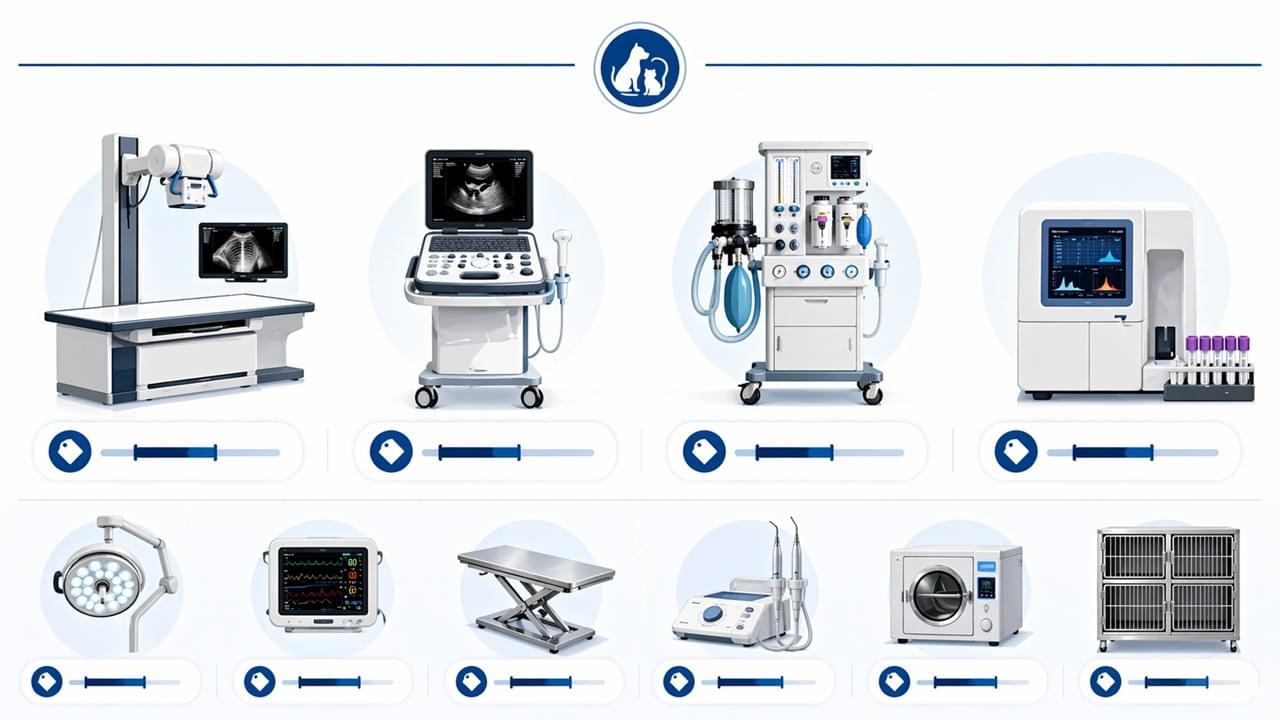
Step 3: Apply Cost Benchmarks by Equipment Category (2026)
Use these market benchmarks to validate supplier quotes and avoid overpaying.
Diagnostic Imaging
- Digital X-ray system (with software): $18,000 – $55,000
- Portable ultrasound (basic): $8,000 – $22,000
- Dental X-ray system: $4,000 – $12,000
Surgical & Anesthesia
- Anesthesia machine (with vaporizer): $4,500 – $14,000
- Multi-parameter monitor: $3,500 – $9,000
- LED surgical light: $2,500 – $7,000
- Surgery table (stainless, tilting): $1,800 – $5,500
In-House Laboratory
- Hematology analyzer: $6,000 – $18,000
- Chemistry analyzer: $8,000 – $25,000
- Combined system bundle: $12,000 – $35,000
Sterilization & Infection Control
- Class B autoclave (23L+): $4,000 – $10,000
- Ultrasonic cleaner: $800 – $2,500
Hospital Caging
- Modular stainless cage system (10-unit): $6,000 – $18,000
Step 4: Budget for Hidden Costs (Critical)
The purchase price is only part of the story. Many clinics underestimate the true cost of ownership, leading to budget overruns.
Key Hidden Costs to Include
- Installation & commissioning:8–15% of equipment value
- Staff training:$500–$3,000 per complex system
- Consumables (year one):10–18% of analyzer/sterilization cost
- Service contracts:5–8% annually
- Spare parts inventory:essential for high-use equipment
⚠️ Clinics that ignore these factors often face 25–30% budget overruns within the first year.
Step 5: Sequence Purchases by Revenue Impact
If capital is limited, prioritize equipment that generates immediate revenue.
Priority-Based Purchasing Plan
Priority 1 (Opening Day):
- Digital X-ray system
- Anesthesia machine
- Patient monitor
- Autoclave
- Basic exam tables
- Hematology + chemistry analyzers
Priority 2 (Month 1–3):
- Ultrasound system
- Dental station
- Cage systems
- IV pumps
Priority 3 (Month 3–12):
- Advanced imaging upgrades
- Rehabilitation equipment
- Specialist diagnostic tools
This phased approach ensures cash flow starts immediately, while allowing gradual expansion.
Frequently Asked Questions
Q: What is the ROI timeline for veterinary diagnostic equipment?
- Digital X-ray: 12–24 months
- In-house analyzers: 8–14 months
- Ultrasound: 18–30 months
This depends heavily on caseload and service pricing.
Q: Should I lease or buy veterinary equipment?
- Buy:Durable, low-obsolescence equipment (tables, cages, autoclaves)
- Lease:High-tech systems (DR imaging, analyzers) that may need upgrades within 3–5 years
A hybrid strategy is often the most practical.
Q: How much should I budget for annual maintenance?
Plan for 5–8% of total equipment value per year.
Example:
- $250,000 equipment → $12,500–$20,000 annually
Skipping maintenance often leads to 2–3× higher repair costs over time.
Final Thoughts
Effective veterinary equipment budgeting isn’t about spending more—it’s about spending strategically.
Focus on:
- High-impact diagnostic and surgical systems
- Realistic total cost planning (including hidden costs)
- Phased investment aligned with revenue growth
If you want to avoid costly setup errors, also read:
👉 Common Mistakes When Setting Up a Veterinary Clinic