Essential veterinary diagnostic equipment — not advanced imaging — answers most of the clinical questions that come through your door on any given day. Is this senior cat dehydrated? Is this puppy septic? Does this cough need antibiotics? The stethoscopes, rapid tests, and analyzers behind those calls form the operational backbone of every consultation.
This guide breaks down the must-have diagnostic tools for general small animal practice, organized by clinical use and return on investment. Think of it as your daily diagnostic checklist: equipment that earns its keep on every shift. We’ve distilled the list to eight winning picks across five clinical categories — plus a dermatology bonus. For the complete diagnostic spectrum, see our Veterinary Diagnostic Equipment: From Basic Exams to Advanced Imaging.
🩺 Category 1: Physical Examination Instruments
Physical exam instruments sit at the very top of the list for a simple reason — they’re used at literally every patient encounter, making them the highest-frequency essential veterinary diagnostic equipment you’ll ever own, and the most reliable veterinary practice diagnostic tools in your arsenal. Unit cost is low, but quality matters: cheap tools fail exactly when you need them most.
The Building Blocks of Essential Veterinary Diagnostic Equipment
🫀 Stethoscope
- Minimum grade: Littmann Classic III or equivalent
- Critical for cardiac murmur grading and respiratory assessment — crackles, wheezes, and decreased lung sounds that shift your treatment plan
- Replace the diaphragm and ear tips annually; budget for a full unit replacement every 3–5 years
👂 Otoscope
- LED illumination is non-negotiable for accurate tympanic membrane assessment
- Reusable autoclavable cones beat single-use disposables in high-volume clinics
- Critical for otitis externa characterization, foreign body detection, and tympanic evaluation
👁️ Ophthalmoscope / Slit Lamp
- Direct ophthalmoscope for fundic examination; add a slit lamp biomicroscope if you carry an ophthalmology caseload
- Essential for cataract grading, corneal ulcer depth assessment, and retinal disease screening
🩸 Blood Pressure Monitor
- Oscillometric (SunTech, Cardell) or Doppler (Parks Medical) systems
- Hypertension is diagnosed in ≥20% of feline patients over age 8 — routine BP measurement is now a clinical standard for senior wellness exams, reinforced by the WSAVA senior cat care guidelines
- Schedule regular calibration checks against a mercury sphygmomanometer
🌡️ Digital Thermometer
- Rectal digital thermometers with disposable probe covers remain the clinical gold standard
- Infrared tympanic units read faster but carry higher inter-user variability in veterinary use — stick with rectal for decisions that matter
⚡ Category 2: Point-of-Care Rapid Tests
Rapid Tests: Zero-Capital Essential Veterinary Diagnostic Equipment
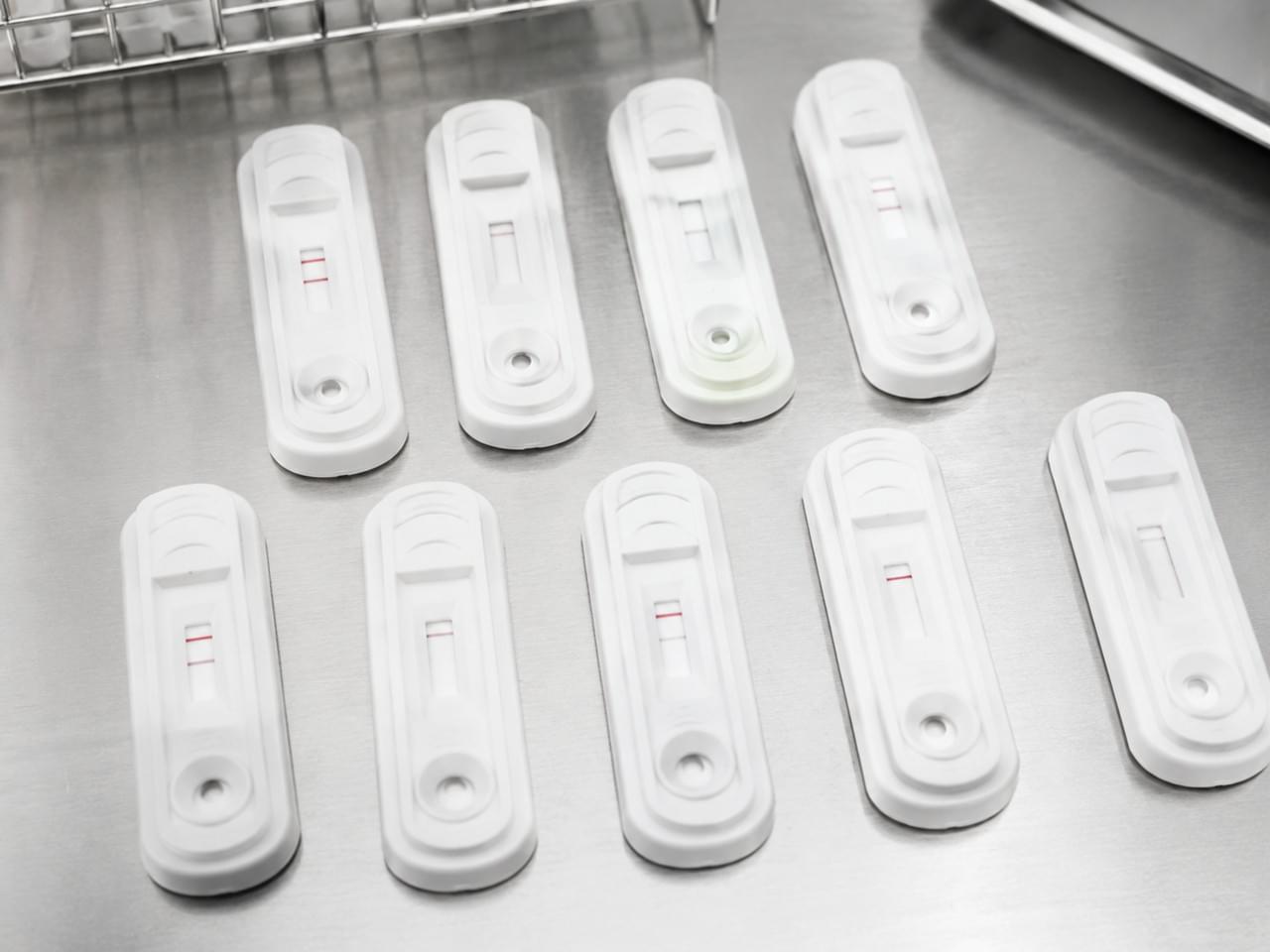
Rapid tests are the only category of essential veterinary diagnostic equipment that demands zero capital investment — you buy per-test-kit — and returns results in 10–15 minutes. They slot perfectly into a point-of-care veterinary tests strategy for high-frequency presentations:
- Heartworm antigen test (canine) — annual screening standard in heartworm-endemic regions
- Tick-borne disease serology (Ehrlichia, Anaplasma, Lyme) — combination SNAP 4Dx format
- FIV/FeLV combination test (feline) — new patients or suspected immunocompromised cats
- Parvovirus antigen test — immediate triage for suspected CPV-2 gastroenteritis
- Urine culture dipslide — practical monitoring for uncomplicated UTIs
- Cortisol rapid test (cAC, cPC) — point-of-care Cushing’s/Addison’s screening where available
🧪 Category 3: In-House Analyzers
The in-house laboratory is where essential veterinary diagnostic equipment most directly affects consultation efficiency — and where your in-house veterinary analyzers start paying for themselves on every shift.
Analyzers: The Highest-ROI Essential Veterinary Diagnostic Equipment
🩸 Hematology Analyzer
- 5-part differential CBC with 3–5 minute turnaround
- Daily applications: pre-anesthetic screening, illness severity assessment, anemia workups, treatment response monitoring
- In a two-vet practice, expect 10–25 samples per day on busy days — that’s an analyzer earning its keep
🧬 Chemistry Analyzer
- Full metabolic panel in 8–15 minutes
- Daily applications: senior wellness panels, pre-anesthetic biochemistry, organ function monitoring (post-NSAID, post-antibiotic), hepatopathy workups
- Bundled hematology + chemistry packages from a single vendor simplify integration and cut costs
🍬 Blood Glucose Meter
- Must be veterinary-validated — AlphaTrak 2 and iPet Pro are solid choices
- Daily use for diabetes management, hypoglycemia triage, and perioperative glucose monitoring
- Confirm local availability of lancets and test strips before committing to a brand
Deciding between building your lab or outsourcing? Our In-House Lab vs External Lab: Equipment Decision Guide lays out the full cost-benefit math.
💧 Category 4: Urinalysis Equipment
The Most Underrated Essential Veterinary Diagnostic Equipment
Urinalysis is arguably the most underutilized essential veterinary diagnostic equipment in general practice relative to its clinical yield. A full panel takes minutes and answers questions that would otherwise require costly bloodwork or repeated visits. The equipment itself is refreshingly simple:
- Refractometer — urine specific gravity in 30 seconds; essential for renal function and hydration assessment
- Urine dipstick reader — automated reading removes interobserver variability and documents results digitally
- Microcentrifuge — 5–10 mL tube capacity for urine sediment preparation; doubles for PCV/TS measurement
🐾 Category 5: Dermatology Diagnostic Tools
Specialty Tools That Round Out Essential Veterinary Diagnostic Equipment
Skin disease is the most common reason for veterinary consultation globally — yet this corner of essential veterinary diagnostic equipment is chronically underfunded in clinic budgets. The good news: the essentials are inexpensive and immediately productive:
- Tape preparation and skin scraping supplies — first-line for ectoparasite and superficial fungal identification
- Dermatophyte test medium (DTM) — Wood’s lamp-negative dermatophyte culture with 7–14 day incubation
- Wood’s lamp — Microsporum canis screening (remember: only about 50% of M. canis strains fluoresce, so a negative result never rules out ringworm)
- Cytology supplies — glass slides and a diff-quick stain set for ear, skin, and aspirate cytology
Standards matter at every level of practice — the AVMA diagnostic equipment standards are a useful reference when auditing your own toolkit.
✅ Building Your Daily Diagnostic Baseline
There’s no universal checklist for the right essential veterinary diagnostic equipment — it depends on your species mix, caseload, and market. But the five categories above cover the fundamentals virtually every general practice needs. Start with the physical exam essentials and rapid tests (low cost, immediate value), add analyzers as patient volume grows, then fill in urinalysis and dermatology as your workflow demands. Invest in layers, not leaps — let daily volume justify each tier.
❓ Frequently Asked Questions
Q: Which physical examination instrument is most frequently neglected in clinical quality?
A: Blood pressure monitoring, by a wide margin. Guidelines clearly recommend routine BP measurement in senior cats (>7 years) and in all cats with hyperthyroidism, CKD, or cardiac disease — yet many practices still skip it. The consequence is entirely preventable: hypertension goes undiagnosed until retinal detachment causes acute blindness.
Q: How do I maintain the accuracy of in-house diagnostic analyzers?
A: Follow the manufacturer’s QC protocol precisely. Run commercial control samples at the specified frequency — typically daily or with each reagent lot change — document every result, and pull the analyzer from clinical use if controls fall out of range until recalibration or service resolves the issue. An improperly controlled analyzer produces clinically misleading results, and misleading results harm patients.
Q: What rapid tests should a new small animal clinic prioritize for opening stock?
A: Parvovirus antigen, FIV/FeLV combination, and a heartworm + tick panel (4Dx SNAP or equivalent) cover the highest-frequency emergency and wellness applications. If your market includes reproductive services, add feline urinary SNAP CRP and progesterone strip tests to your point-of-care veterinary tests opening order.