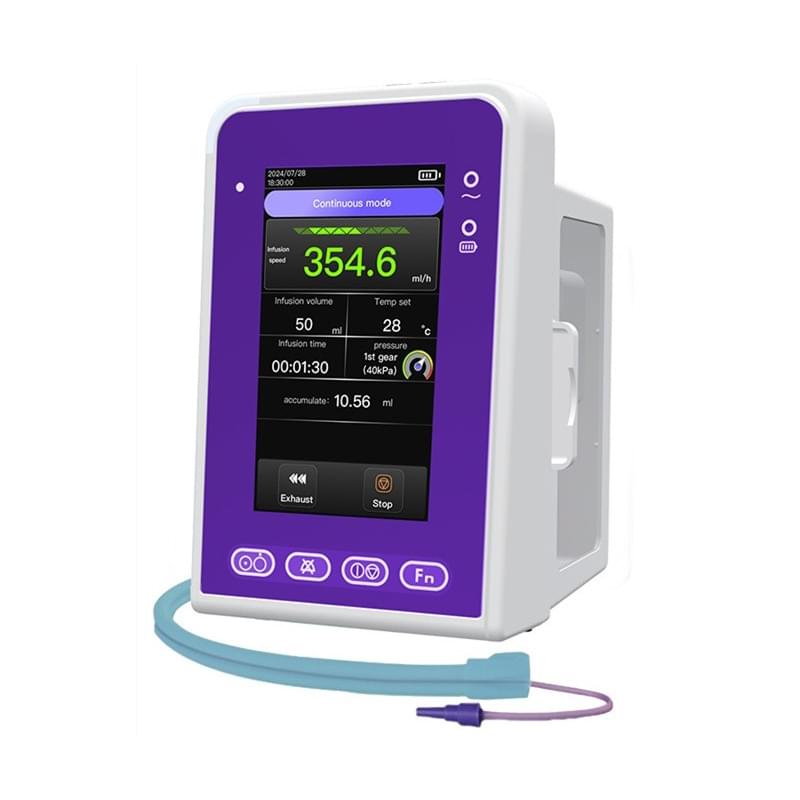
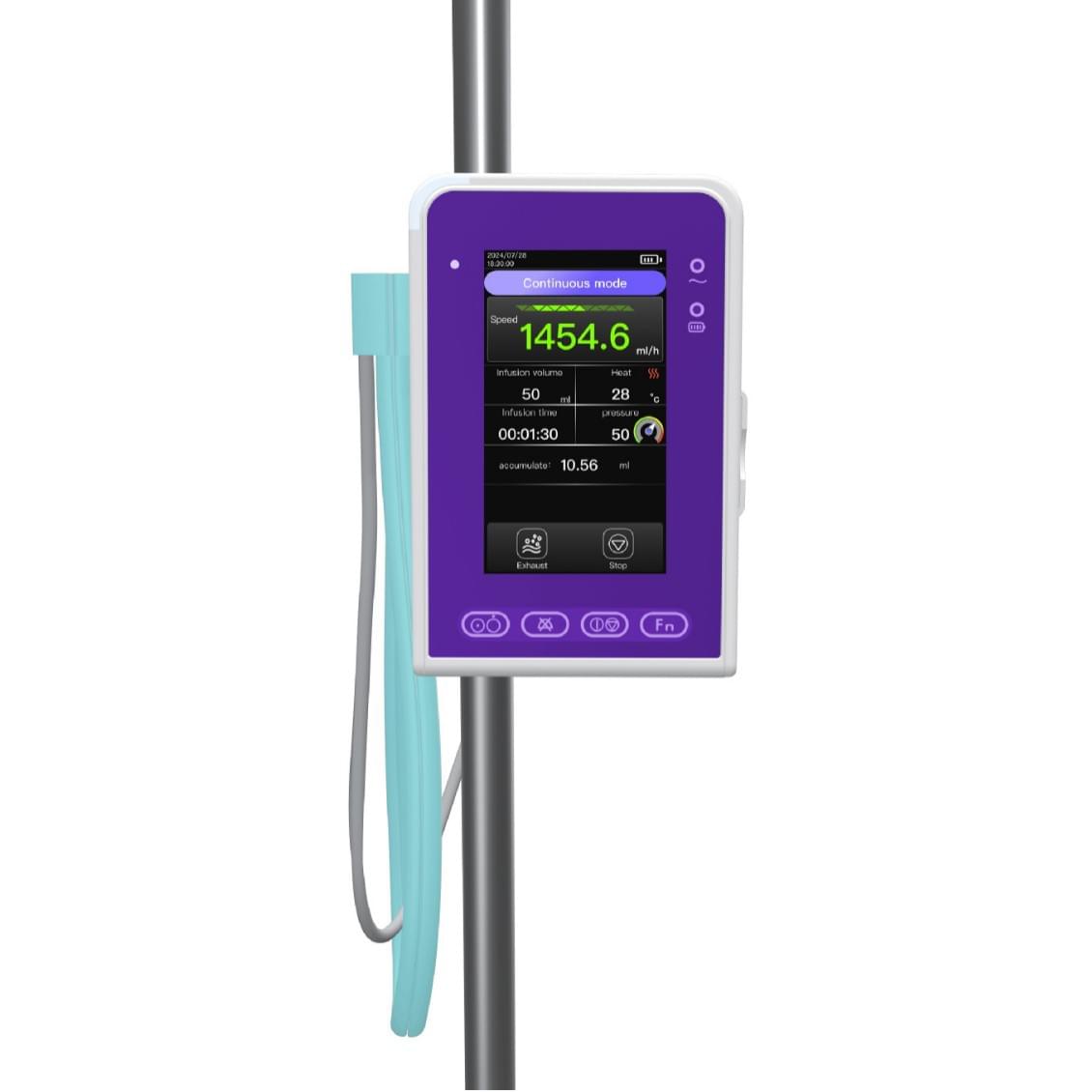
An anorexic post-operative patient cannot recover on an empty stomach, yet cold formula delivered too fast triggers vomiting and sets recovery back by days. This Vsun veterinary enteral feeding pump solves both variables simultaneously: a plug-in heated delivery tube warms formula to a clinician-set temperature between 30°C and 47°C, while six programmable feeding modes control exactly how fast and in what pattern the nutrition arrives.
Six Feeding Protocols for Every Patient Scenario
- Continuous Mode: Steady-rate delivery over extended periods. Ideal for overnight nutritional support in hospitalised patients.
- Intermittent Mode: Scheduled feeding windows with rest periods between. Mimics natural meal patterns and reduces gastric overload risk.
- Time-Volume Mode: Set the total formula volume and desired delivery window. The pump calculates the rate—useful when working around treatment schedules.
- Scientific Feeding Mode: Gradual rate ramp-up from a low starting flow to the target rate over a clinician-defined period. Designed for patients transitioning from parenteral to enteral nutrition.
- Pulse Mode: Rhythmic bursts of formula delivery that more closely approximate natural peristaltic flow. Emerging evidence suggests improved tolerance in small-breed dogs.
- Flush Mode: Delivers a rapid 100–2,000 ml/h flush to clear the feeding tube between formula changes or medication administrations.
Heat Where It Matters
This pump doesn’t pre-warm a bag and hope the temperature holds. A plug-in heating tube wraps the full length of the delivery line, applying gentle warmth from the pump outlet all the way to the patient connection point. Temperature is adjustable in 0.1°C increments from 30°C to 47°C, with a real-time display on the 5-inch LCD touchscreen. Cold formula is one of the most common triggers for feeding intolerance in veterinary patients; maintaining physiological temperature throughout the delivery path significantly reduces regurgitation events.
Voice prompts announce mode changes, completion alerts, and alarm conditions in clear spoken English—helpful when the clinician’s hands are occupied with patient restraint or tube placement. The parameter range-lock function prevents accidental rate changes once a feeding protocol has been set, adding a layer of safety in busy multi-staff environments.
Inquire about pricing for your hospital — bundled feeding-tube starter kits available.
Network-Ready for Centralised Monitoring
This feeding pump connects to a workstation network, allowing a single nurse station to monitor multiple feeding pumps across different wards simultaneously. Flow rates, delivered volumes, and alarm states appear on one screen, reducing the need for physical rounds during overnight feeding protocols.
The display backlight can be set to automatic (ambient-light-responsive) or manual with a configurable 1–10 minute auto-off timer. This preserves battery life during transport and avoids disturbing light-sensitive patients during night feeds.
Technical Specifications
| Flow Range | 1–2,000 ml/h (1 ml/h step) |
|---|---|
| Flush Speed | 100–2,000 ml/h |
| Flow Accuracy | ±5% or 1 ml/h |
| KTO Rate | 1–100 ml/h |
| Temperature Range | 30–47°C (0.1°C step) |
| Display | 5-inch medical LCD touchscreen |
| Heating Method | Plug-in full-wrap delivery tube heater |
| Dimensions | 23 × 20 × 27 cm |
| Weight | 2.5 kg |
| Power Consumption | 20 VA (excl. heater) |
| Connectivity | Workstation network ready |
| Alerts | Voice + on-screen + audible alarm |
Mini Case Study: Feline Hepatic Lipidosis Recovery
A 6-year-old domestic shorthair presenting with hepatic lipidosis at a referral hospital in Kuala Lumpur was placed on this feeding pump in Scientific Feeding Mode. Formula temperature was maintained at 38°C with a 6-hour ramp from 5 ml/h to a target of 18 ml/h. Over 72 hours, the cat tolerated all scheduled feeds without a single regurgitation event. The attending clinician noted that the gradual-rate ramp and tube-length heating were the two features most responsible for the complication-free transition to enteral support.
For any practice managing critical-care nutrition, this veterinary enteral feeding pump brings together temperature control, protocol flexibility, and networked oversight in a device purpose-built for animals—not repurposed from human paediatric wards.
Review all Vsun fluid management devices or get a tailored hospital quotation.